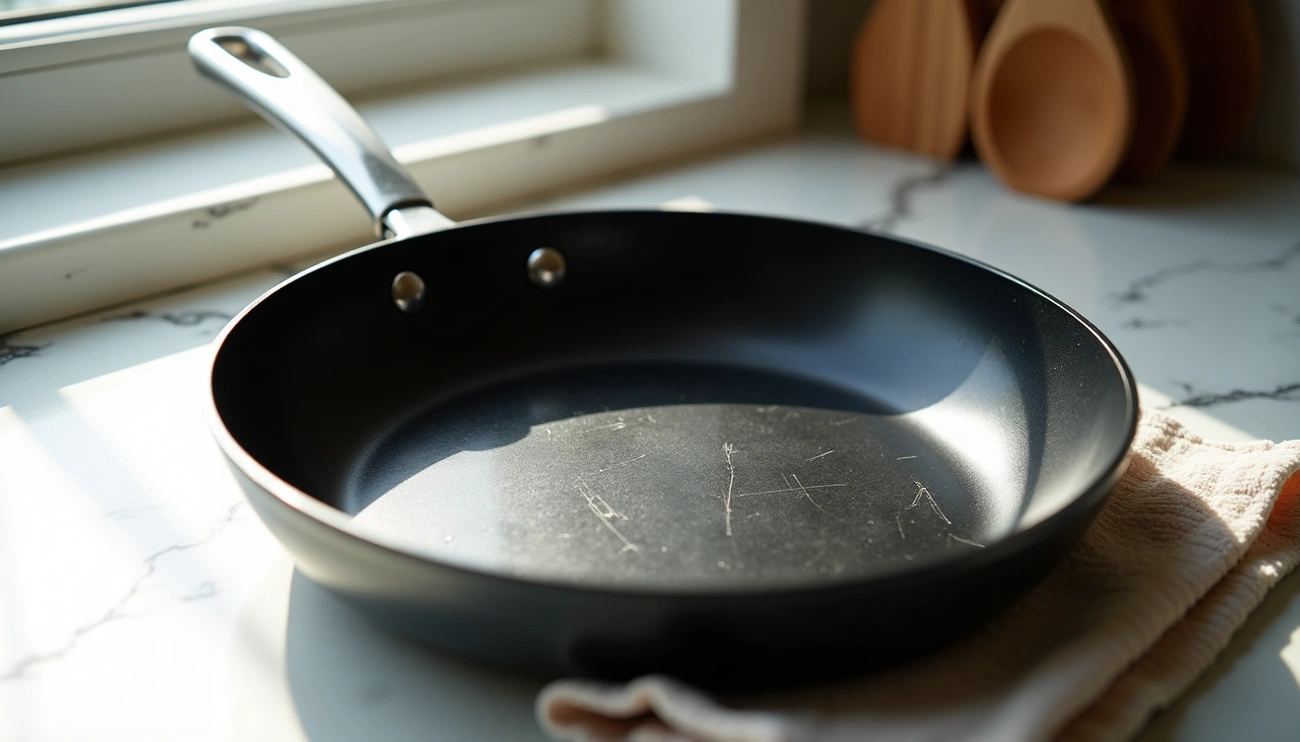
It is safe to use a scratched Calphalon pan if the scratches are minor and the PTFE nonstick coating remains intact. PTFE is non-toxic and passes through the body if small particles are ingested. Replace the pan if scratches are deep, expose bare metal, or cause flaking or peeling.
How to Tell If Your Calphalon Pan Is Scratched
Determining whether your Calphalon cookware has scratches requires careful inspection. Identifying scratches early can help you make informed decisions about continued use or replacement of your pan.
Check under good lighting
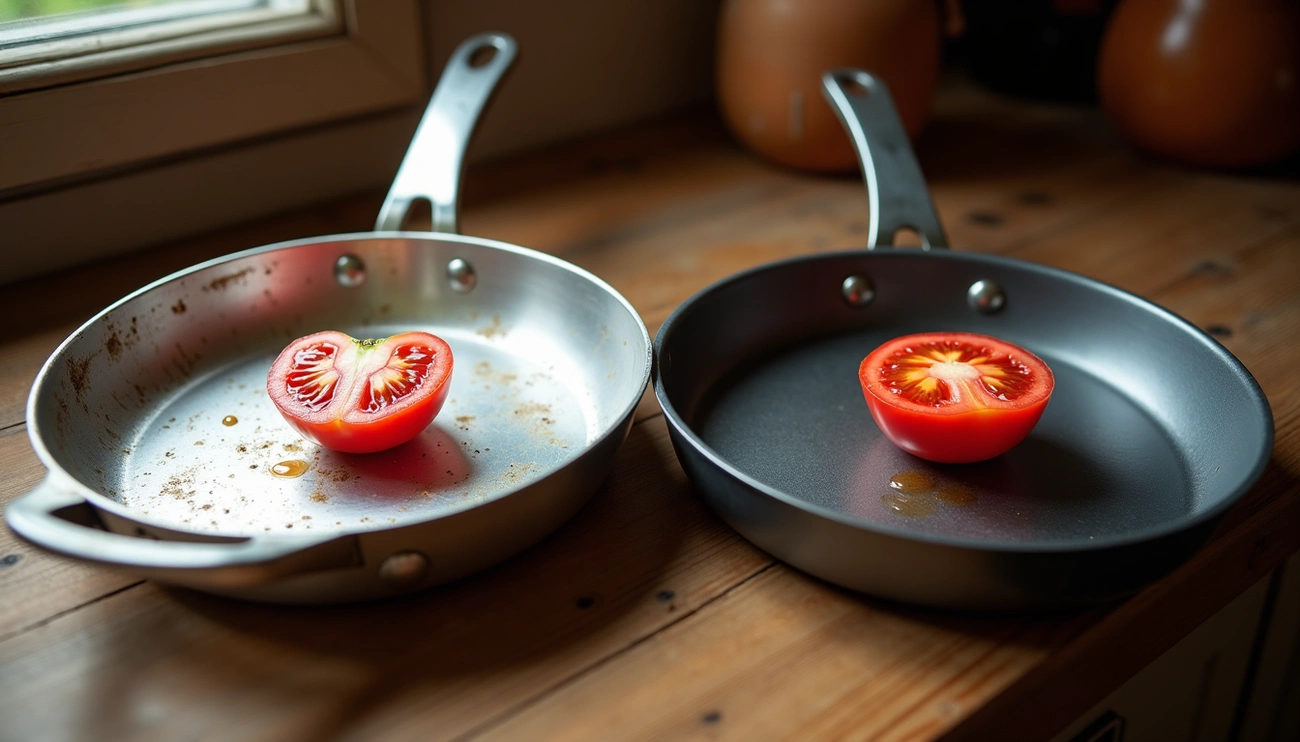
Proper lighting reveals subtle damage that might otherwise go unnoticed. Position your pan under a bright light source and examine it thoroughly. Look for any grooves or lines across the surface that indicate scratching. Additionally, note the overall appearance – a dull surface typically suggests scratching, while a shiny metal finish indicates the pan is still in good condition. The contrast between scratched and unscratched areas becomes more visible when light reflects differently off these surfaces.
Run your fingers across the surface
Your sense of touch can detect damage that might be difficult to see. Gently run your fingertips along the cooking surface of your Calphalon pan. If you feel any bumps or ridges, your pan likely has scratches. A properly maintained non-stick surface should feel completely smooth. This tactile test is particularly useful for identifying minor scratches that might be missed during visual inspection. Regardless of how careful you are with your cookware, some scratching may occur over time, even when using nylon or silicone utensils.
Cook a test meal to observe performance
The ultimate test for a scratched Calphalon pan is its cooking performance. Prepare a simple meal that typically requires non-stick properties, such as eggs or pancakes. Pay attention to how the food interacts with the pan’s surface. Food sticking to the pan or cooking unevenly generally indicates scratching has compromised the non-stick properties. Moreover, if you notice food particles catching in certain areas, this can further confirm the presence of scratches.
Interestingly, some scratches may develop despite proper care. Activities like flipping crispy-edged foods such as baked potatoes or breaded meats can create minor scratches over time. Even routine cooking with proper utensils may eventually lead to some wear on your Calphalon pan’s surface.
Ways to Fix a Scratched Calphalon Pan
Discovering scratches on your favorite Calphalon pan doesn’t necessarily mean it’s time for replacement. Several effective methods exist to restore scratched cookware, depending on the severity of the damage.
Use a non-abrasive cleaner
Non-abrasive cleaners offer a gentle solution for minor scratches without further damaging your cookware. For Calphalon pans specifically, products like Calphalon Radiance cleanser work effectively to restore metallic surfaces to their shiny, new-like appearance. This type of cleaner is powerful enough to remove old stains while being gentle on the surface. To use non-abrasive cleaners effectively, soak your pan in the cleaning solution for a few minutes, then gently scrub with a soft cloth. Afterward, rinse thoroughly and dry with a clean towel.
Try sanding with fine-grit sandpaper
For deeper scratches that non-abrasive cleaners can’t fix, fine-grit sandpaper provides a more aggressive solution. This technique requires additional effort but can effectively remove deeper scratches. To begin, wet a piece of fine-grit sandpaper with water – this crucial step prevents excessive abrasion. Next, gently rub the sandpaper over the scratched area using circular motions. Focus on the damaged areas without applying too much pressure. Once finished, rinse the pan thoroughly and dry it completely.
Apply a metal polish for surface smoothing
Metal polish serves as an excellent option for filling in scratches and making them less visible. Unlike other methods that remove scratches, polishes work by filling the grooves to create a smoother cooking surface. Apply a small amount of metal polish to a soft cloth and rub it into the scratches following a circular pattern. Always follow the specific instructions on the polish label to avoid potential damage. After application, rinse the pan with water and dry it with a clean cloth.
For minor surface marks on hard-anodized aluminum Calphalon cookware, another recommended approach involves using a dry Scotch Brite® Heavy Duty Scrub Sponge. Simply rub the mark in the same direction as the grain on a completely dry pan, then wipe clean with a damp cloth.
What Causes a Calphalon Pan to Get Scratched
Even with careful use, your Calphalon pans can develop scratches over time. Understanding what causes these scratches is essential for proper maintenance and longevity of your cookware.
Using metal or hard utensils
Although some Calphalon pans are advertised as “metal utensil safe,” the company still recommends using silicone or wooden utensils to prolong the nonstick performance. The misuse of metal utensils on nonstick surfaces could actually void your cookware warranty. Metal whisks, tongs, forks, and knives are particularly problematic—the slightest contact with these tools can leave visible marks on your pan’s surface.
Interestingly, even non-metal utensils can cause damage. Nylon and wooden utensils might leave tiny surface scratches that accumulate over time. Bones in meat (such as T-bone steaks or pork chops) can similarly scratch your pan’s surface when the meat is moved around during cooking. For optimal protection, Calphalon officially recommends only using nylon, coated, or wooden utensils on their nonstick cookware.
Cooking on uneven stovetops
An uneven cooking surface is a silent culprit behind many scratched pans. When your pan sits on an uneven stovetop, it wobbles during use, creating friction that gradually scratches the surface. You can check if your pan is warped by placing it on a flat surface—if it spins easily or rocks back and forth, it’s warped.
Sudden temperature changes can likewise cause warping. Never place a hot pan under cold water or heat pans too quickly, as these practices can lead to warping and, subsequently, scratches.
Stacking or improper storage
Improper storage remains among the most common causes of scratches. Stacking pans directly on top of each other allows the bottom of one pan to scratch the cooking surface of another. Calphalon specifically advises against sliding pans atop covers and recommends avoiding forceful impact while stacking.
For best results, consider hanging your pans on a rack. If you must stack them, place protective materials between each pan—paper towels, pan protectors, or soft cloths work effectively as barriers. These simple precautions significantly extend the lifespan of your cookware while maintaining its appearance and non-stick properties.
Is It Safe to Use a Scratched Calphalon Pan?
The safety considerations of a scratched Calphalon pan often present a dilemma for home cooks. Before tossing out your cookware, understanding the potential risks helps you make an informed decision.
Minor scratches are usually safe
For most consumers, lightly scratched Calphalon pans pose minimal health risks when used at recommended temperatures. Experts suggest that the health risks from using a scratched nonstick pan are lower if the pan is used at the recommended low-heat temperatures. Indeed, minor surface scratches typically don’t affect the performance of the pan or the food cooked in it.
Deep scratches may release chemicals
Conversely, deeper scratches warrant greater caution. If scratches are long and deep, they can potentially leach chemicals into your food. PFAS exposure builds up from many sources over time, hence their ‘forever chemicals’ nickname. Furthermore, pans heated past 500°F with measurable amounts of PFAS can release harmful chemicals into the air.
Scratches can reduce nonstick performance
Beyond safety concerns, scratching fundamentally impacts functionality. Once scratched, a pan gradually loses its nonstick properties, causing food to stick and burn more easily. Consequently, Calphalon recommends replacing non-stick cookware when it shows signs of wear-and-tear.
Bacteria buildup in deep grooves
Perhaps most concerning, deep scratches create microscopic habitats where bacteria thrive. These grooves can provide places for bacteria to grow, potentially leading to food poisoning or other health problems. In essence, even if chemicals aren’t your primary concern, the hygiene risks alone justify replacing heavily damaged cookware.
Conclusion
After thoroughly examining the subject of scratched Calphalon pans, we can conclude that safety depends primarily on the severity of the damage. Minor surface scratches generally pose minimal health risks, especially when cooking at recommended temperatures. However, deep gouges warrant serious concern due to potential chemical leaching and bacterial growth in those grooves.
Undoubtedly, prevention remains your best strategy. Using wooden or silicone utensils, proper storage techniques, and avoiding metal tools will significantly extend your cookware’s life. Though some wear occurs naturally over time, careful handling minimizes major damage.
For pans with light scratches, the methods we’ve explored—non-abrasive cleaners, fine-grit sandpaper, or metal polish—can often restore functionality. Nevertheless, once your Calphalon pan shows extensive scratching or begins losing its non-stick properties, replacement becomes the safest option.