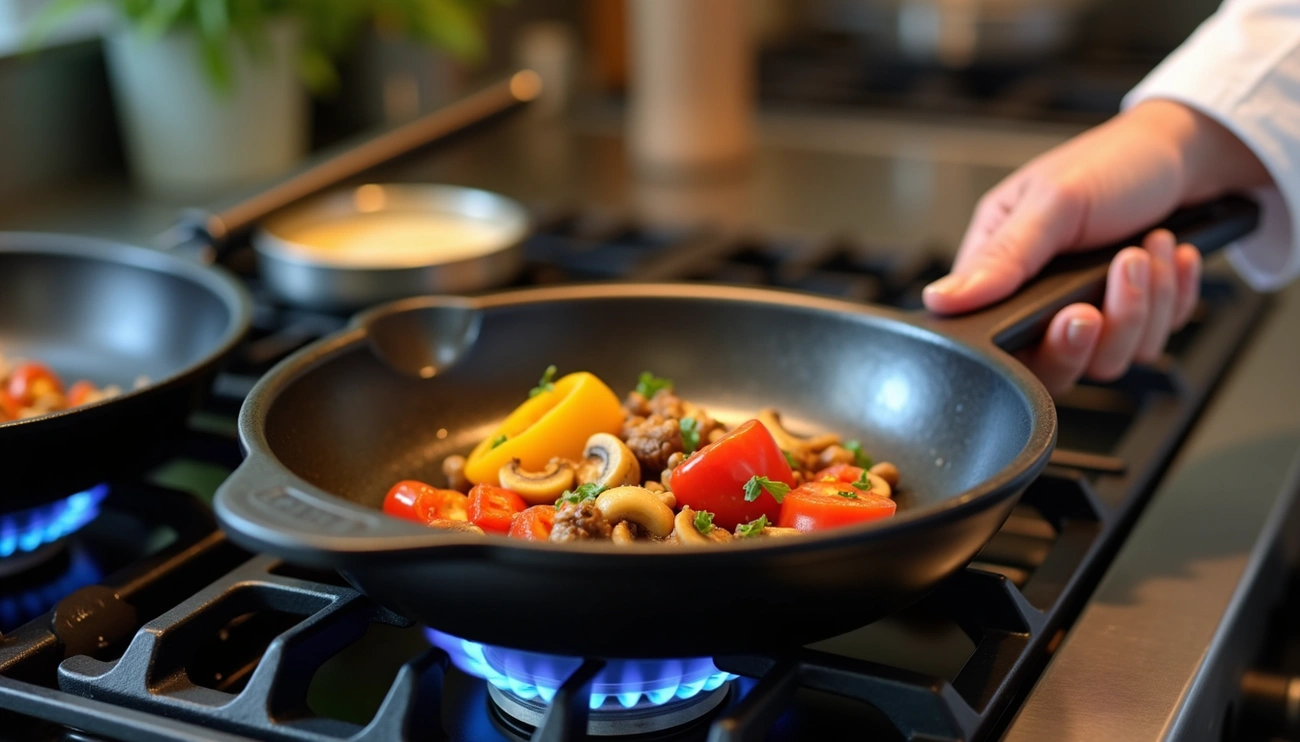
Yes, Carbon steel cookware is safe because it contains only iron and carbon, making it a non-toxic alternative to conventional non-stick pans. Carbon steel does not leach synthetic chemicals and forms a natural, polymerized non-stick seasoning layer. It withstands high heat above 600°F but requires proper seasoning to prevent rust and should avoid prolonged cooking of acidic foods.
What is carbon steel cookware made of?
Carbon steel cookware represents a fascinating combination of simplicity and functionality in kitchen equipment. Let’s examine what makes this cooking tool special, starting with its basic composition.
Iron and carbon composition
Carbon steel cookware consists primarily of two elements: 99% iron and 1% carbon. This straightforward composition results in cookware that offers exceptional strength and versatility. The minimal carbon content creates a more uniform grain structure in the metal, making it stronger and more pliable than other similar materials.
Furthermore, this specific ratio of elements allows manufacturers to create cookware that’s thinner and lighter than some alternatives while maintaining excellent durability. The material’s composition essentially gives it the perfect balance of strength and workability needed for high-performance cooking.
How it compares to cast iron and stainless steel
Despite their similar names, carbon steel and cast iron have notable differences. Cast iron contains 2-3.5% carbon, making it more brittle and requiring thicker, heavier construction. Consequently, a 12-inch cast iron pan typically weighs over 7 pounds, whereas a similar carbon steel pan weighs about 5 pounds – approximately 25-40% lighter.
When comparing heat properties, carbon steel heats up and cools down faster than cast iron. This responsiveness gives you better temperature control, allowing you to quickly shift from searing a steak to gently browning butter without burning anything.
Unlike stainless steel, both carbon steel and cast iron are extremely porous materials that can develop a natural non-stick surface through seasoning. Nevertheless, stainless steel offers its own advantages, primarily that it doesn’t rust and requires minimal maintenance.
Why it’s used in professional kitchens
Professional chefs favor carbon steel for several practical reasons. First, its lightweight nature makes it more maneuverable during long cooking sessions. This becomes especially important in fast-paced restaurant environments.
The material’s exceptional heat control is another major advantage. Carbon steel responds immediately when chefs need to adjust cooking temperatures, allowing for precise cooking control that’s crucial when preparing hundreds of meals per night.
Additionally, carbon steel excels at creating perfect sears on meats and fish. Its ability to withstand extremely high temperatures (up to 1200°F) makes it ideal for techniques requiring intense heat. Once properly seasoned, it also develops a smooth non-stick surface that rivals synthetic coatings without any potentially harmful chemicals.
Is carbon steel cookware safe for cooking?
Safety concerns often arise when choosing cookware for our homes. For those considering carbon steel, good news awaits—this kitchen essential proves to be a remarkably safe option.
Is carbon steel non toxic?
Carbon steel consists solely of iron and carbon—both materials that are non-toxic and food safe. Moreover, carbon steel cookware doesn’t contain potentially harmful substances like PFOA or other PFAS chemicals. Since there is no synthetic coating on carbon steel, you needn’t worry about toxins leaching into your food as the pan heats up. Indeed, properly seasoned carbon steel develops non-stick properties naturally through the application of oil or lard rather than chemical coatings.
How it compares to non-stick and aluminum pans
Traditional non-stick cookware has been the center of health debates due to coating concerns. Although many modern non-stick pans no longer contain PFOA (linked to cancer and thyroid issues), carbon steel offers a completely chemical-free alternative. Unlike aluminum, which requires protective oxide layers to minimize metal migration, carbon steel naturally releases small amounts of dietary iron, which can be beneficial. Plus, carbon steel can safely withstand temperatures up to 1200°F without damage—significantly higher than what’s recommended for coated non-stick pans.
What happens if it rusts or scratches?
One of carbon steel’s greatest attributes is its resilience. If scratched, you needn’t panic—scratches are normal and will fill in as the pan’s seasoning develops. Should rust appear, the pan isn’t ruined—rust can be easily removed, restoring the pan to excellent condition. After cleaning, simply re-season it.
Is it safe for acidic foods?
Although carbon steel is generally safe for most cooking, it does have limitations with acidic ingredients. Tomatoes, citrus, wine, and vinegar can strip the pan’s protective seasoning layer. Beyond affecting the seasoning, acidic foods might impart a metallic taste to your dishes. Fortunately, cooking with acidic ingredients won’t permanently damage your pan—it simply means you’ll need to reapply seasoning afterward.
Carbon steel cookware pros and cons
Considering a carbon steel pan for your kitchen? Let’s examine what makes these pans both appealing and potentially challenging for home cooks.
Pros: Lightweight, durable, affordable
First and foremost, carbon steel pans deliver professional-grade performance without breaking the bank. Most quality pans cost under $45, making them an economical investment.
These pans are notably lighter than cast iron—a 12-inch carbon steel pan weighs approximately 5.5 pounds compared to 8 pounds for an equivalent cast iron skillet. This weight difference makes flipping, tossing, and general handling much easier on your wrists.
Durability is another standout feature. Made from 99% iron and 1% carbon, these pans can withstand almost anything—drops, bangs, high heat, or rough handling without cracking or breaking. Many carbon steel pans last a lifetime with proper care.
Cons: Requires seasoning, can rust, reactive to acids
On the downside, carbon steel requires initial seasoning before use and occasional re-seasoning throughout its life. This process creates the non-stick surface and protects against rust.
Speaking of rust—carbon steel will develop it if exposed to moisture for extended periods. Proper drying and storage are essential maintenance steps.
Furthermore, carbon steel reacts poorly with highly acidic foods. Tomato sauces, wine reductions, and citrus-heavy dishes can strip the seasoning and impart metallic flavors to your food. For these cooking tasks, you’ll need alternative cookware.
How to decide if it fits your cooking style
Primarily, consider what you cook most often. If you regularly prepare acidic dishes or deglaze with wine, carbon steel might not be your everyday pan.
Alternatively, if you value excellent heat control, enjoy creating perfect sears on proteins, or want a versatile pan that works on all cooktops (including induction), carbon steel deserves serious consideration.
Ultimately, your willingness to maintain the pan matters too—those seeking minimal-effort cookware might find carbon steel’s care requirements frustrating.
How to use carbon steel cookware safely
Using carbon steel cookware safely requires proper techniques and regular maintenance. Let’s explore how to keep your pans performing their best while maintaining their non-toxic properties.
Seasoning your pan properly
Seasoning creates a natural non-stick surface through polymerization—when oil bonds chemically with the metal. Initially, wash your new pan with hot water, dry thoroughly, then apply a thin layer of high smoke-point oil like grapeseed, canola, or avocado oil. Heat until smoking, then wipe away excess. Repeat 3-5 times for optimal results. Avoid flaxseed oil as it can cause flaking.
Avoiding acidic ingredients
Acidic foods such as tomatoes, citrus, wine, and vinegar can strip your pan’s protective seasoning. For dishes containing these ingredients, opt for stainless steel or enameled cookware instead.
Cleaning and storing to prevent rust
After cooking, clean with warm water and a soft brush. Harsh detergents and soaking should be avoided as they damage seasoning. Thoroughly dry your pan on low heat, then apply a microscopically thin layer of oil before storing. This prevents moisture-related rust formation.
Using the right utensils
While properly seasoned carbon steel is durable, wooden or silicone utensils are gentlest on your pan’s surface. That said, most metal utensils won’t damage a well-seasoned carbon steel pan unless you’re aggressively gouging the surface. A flat-edged fish turner works particularly well for scraping and flipping.
Conclusion
Carbon steel cookware stands as one of the safest options for health-conscious home cooks. Unlike traditional non-stick pans with questionable coatings, this simple alloy of iron and carbon provides excellent cooking performance without toxic chemicals. Many chefs choose carbon steel because it offers the perfect balance between professional-grade durability and practical everyday use.
Therefore, anyone considering an upgrade to their kitchen arsenal should place carbon steel high on their list. The material shines particularly well for high-heat cooking techniques like searing and stir-frying. Additionally, its natural non-stick properties develop over time through proper seasoning rather than synthetic coatings.
Maintenance might seem daunting at first, but the process becomes second nature with regular use. Most carbon steel pans require just basic care—proper drying, occasional re-seasoning, and avoiding prolonged exposure to acidic foods. These simple practices ensure your pan remains safe and effective for decades.