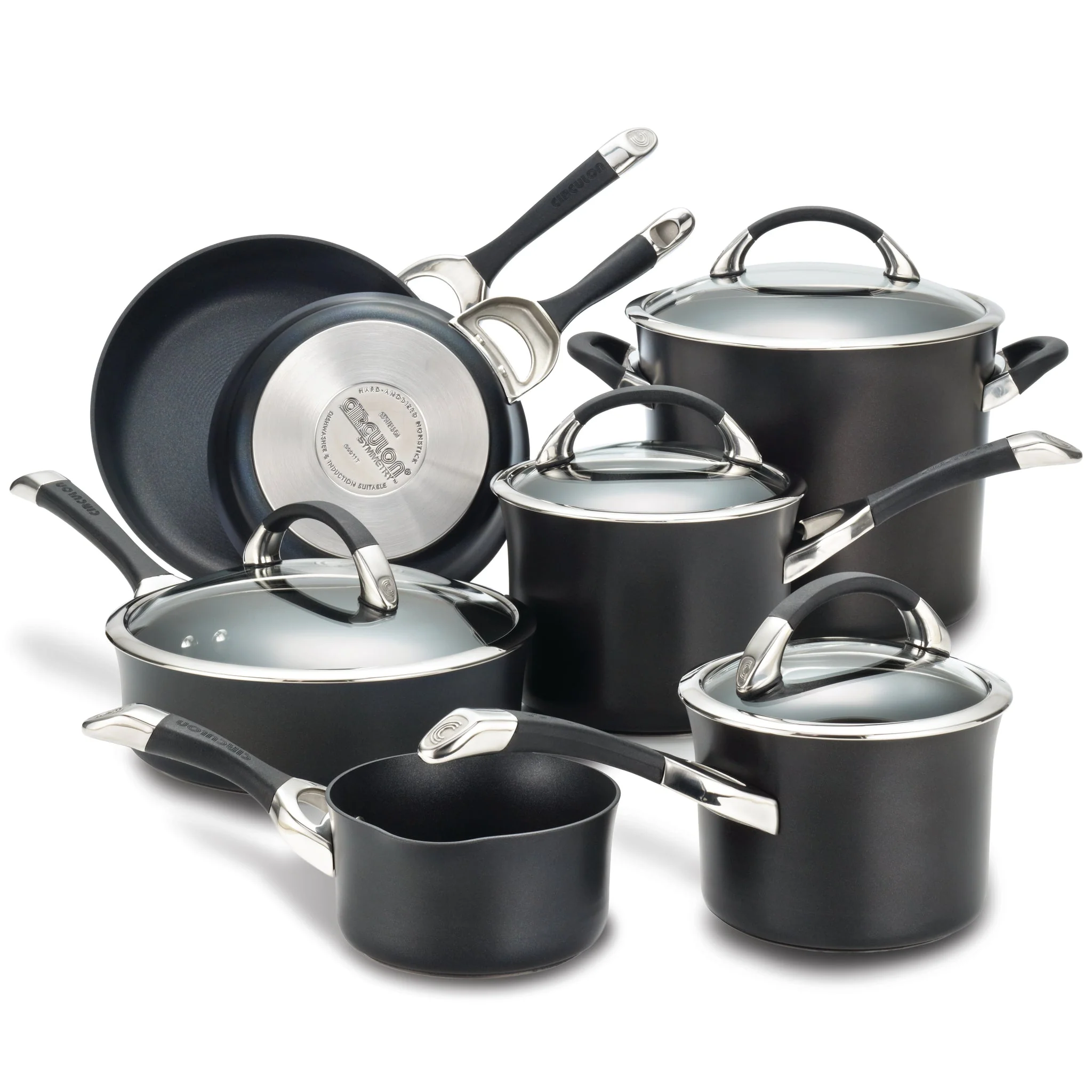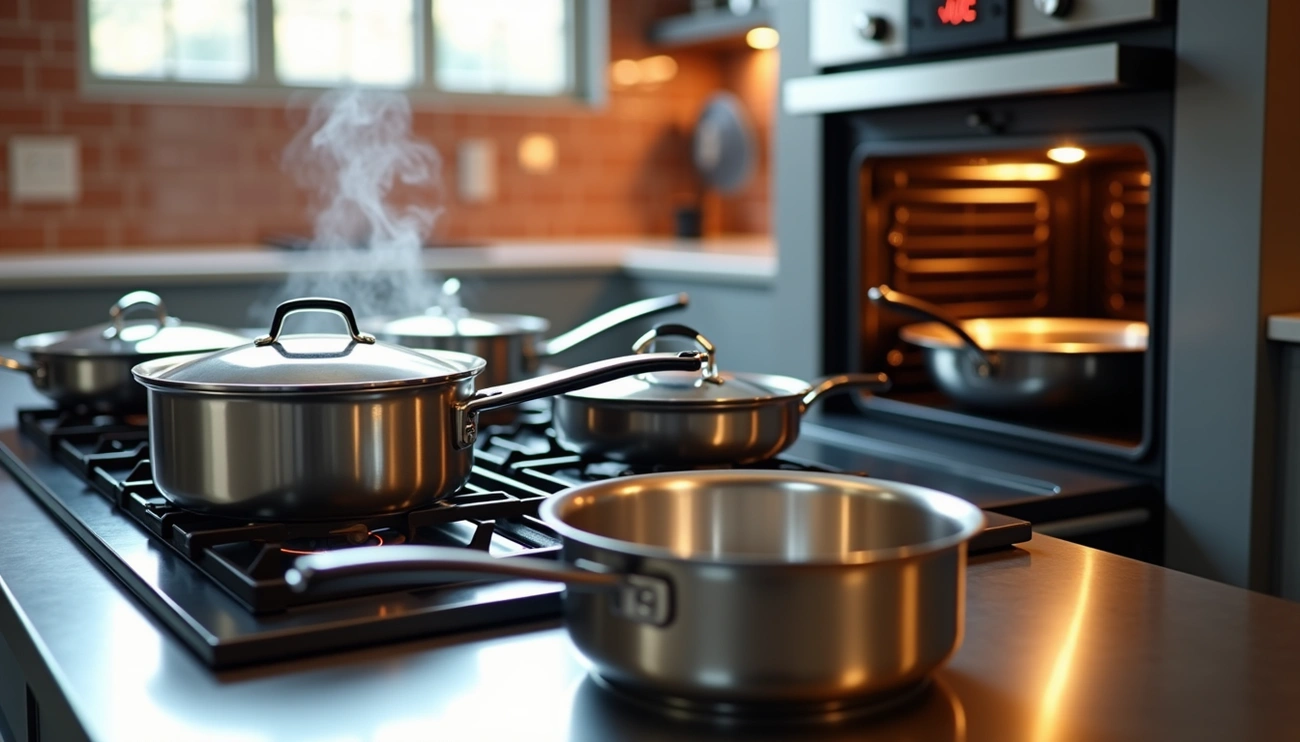
MasterClass Premium Cookware is oven safe up to 500°F (260°C). These cast-aluminum pans feature durable non-stick coatings, induction compatibility, and ergonomic handles designed for high-temperature cooking. Always confirm lid and handle materials before oven use, but the cookware body withstands temperatures up to 500°F.
What is Masterclass Premium Cookware?
Masterclass Premium Cookware represents the perfect union of functionality and elegance in the kitchen. First and foremost, this brand has established itself by crafting high-quality cookware that delivers professional-grade results for both casual cooks and culinary enthusiasts.
Overview of the Masterclass Premium Collection
The Masterclass Premium Collection is built on the philosophy that cookware should be more than just a tool—it should be a trusted kitchen companion. Masterclass blends traditional craftsmanship with modern design innovations to create durable, stylish pieces that enhance the cooking experience. Their commitment to quality is evident in their robust warranty offerings—with many items backed by a 20-year guarantee and select cast aluminum products featuring a 25-year guarantee. Furthermore, the brand emphasizes environmentally conscious production, incorporating recycled materials in several product lines to reduce environmental impact.
Types of cookware in the range
Masterclass offers an extensive range of kitchen essentials to meet diverse cooking needs:
- Cast aluminum cookware – Lightweight yet durable, conducts heat quickly and evenly, and is induction-friendly and oven-safe
- Stainless steel collections – High-grade, long-lasting pieces with elegant satin finishes
- Ceramic non-stick options – Eco-friendly alternatives with chemical-free coatings
Beyond these core materials, the collection encompasses frying pans, woks, saucepans, stockpots, casserole dishes, bakeware, and specialized cooking tools. Notably, their bakeware includes carbon steel options that provide superior heat distribution for perfect results.
What makes it different from regular cookware
Masterclass distinguishes itself through several key features. Their premium construction materials resist warping and scratching while providing consistent heating performance. Moreover, many products feature non-toxic coatings free from PFOA, PTFE, and BPA—using safe silicone for non-stick properties instead.
In contrast to standard cookware, Masterclass designs their products with versatility in mind—most pieces work across all cooktop types, including induction. The brand’s Quantum II coating is engineered to outlast conventional non-stick surfaces.
In essence, what truly separates Masterclass from regular cookware is their attention to detail—from the soft-touch bakelite handles on their skillets to their clearview glass lids that allow for easy monitoring during cooking. These thoughtful elements combine to create cookware that’s not just functional but enhances the entire cooking experience.
Is Masterclass Cookware Oven Safe?
The question of oven safety lies at the heart of versatile cooking with Masterclass cookware. Transitioning your pots and pans from stovetop to oven opens up countless culinary possibilities—provided your cookware can handle the heat.
Understanding oven-safe symbols and labels
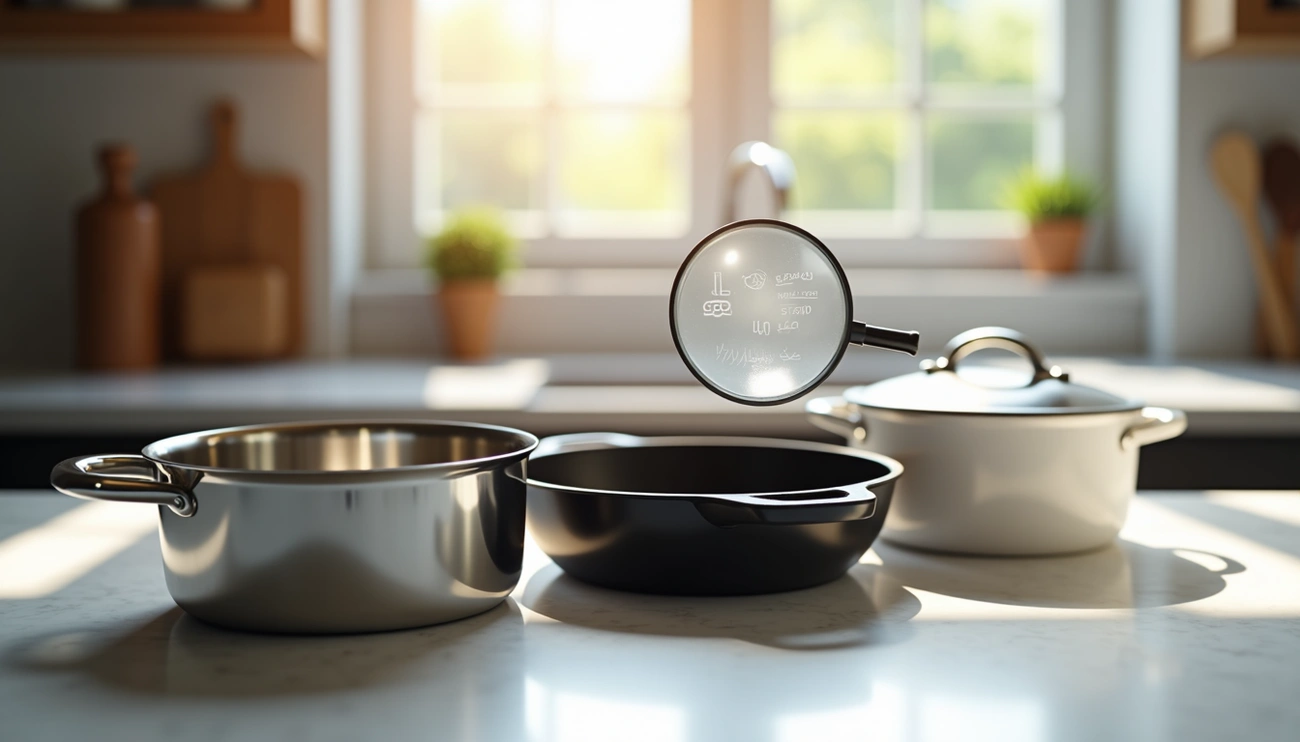
Identifying oven-safe cookware is straightforward once you know what to look for. Masterclass uses the industry-standard symbol—a square or rectangle with wavy lines inside—to indicate oven safety. This symbol is typically accompanied by text reading “OVEN-SAFE” or “HEAT-RESISTANT” and specifies maximum temperature limits.
Can Masterclass cookware go in the oven?
The short answer is yes—most Masterclass cookware can safely go in the oven. However, not every piece in their lineup shares this capability. For example, the Masterclass Ceramic Non-Stick Eco Fry Pan specifically should not be used in the oven. Consequently, always verify individual product specifications before subjecting any piece to oven heat.
Temperature limits for different pieces
Temperature tolerances vary significantly across the Masterclass range:
- Masterclass non-stick pots and pans: 350°F-400°F
- Cast aluminum cookware: Up to 200°C/392°F
- Enameled cast iron Dutch oven: Up to 400°F
- Ceramic bakeware: Up to 450°F
- Stainless steel pots and pans: Up to 500°F
Of course, handles deserve special attention, as they’re generally heat resistant for only 30 minutes at maximum 220°C/430°F.
Is the Masterclass Premium Collection oven safe?
Yes, many pieces in the Premium Collection, including the Induction Aluminum Cookware, Cast Aluminum Induction-Safe Non-Stick Frying Pan, Shallow Casserole Dish with Lid, and Dutch Oven, are all certified oven-safe. Nevertheless, certain premium items may have limitations or might not be oven-safe at all.
What the manufacturer says about oven use
According to official Masterclass statements, many of their pans and pots are indeed oven-safe up to specific temperatures. Yet they explicitly caution against placing cookware under direct high heat of grills or broilers, as this may damage non-stick coatings[104]. Furthermore, they warn that damage resulting from overheating or improper techniques will void their guarantee.
How to Use Masterclass Cookware in the Oven
Properly using your Masterclass cookware in the oven requires attention to detail and following specific guidelines. Once you’ve confirmed your cookware is oven-safe, these practical steps will help maintain its condition while achieving excellent cooking results.
Preheating tips and precautions
First, always preheat your oven to the desired temperature before placing your Masterclass cookware inside. Never rush the preheating process by using high heat settings, as this can damage non-stick coatings. For optimal results, ensure your cookware contains food, water, or oil when heating—never heat empty Masterclass cookware in the oven. Remember that Masterclass cookware is typically oven-safe only up to specific temperatures, such as 200°C for Induction Aluminum pieces.
Using lids and handles safely
Throughout the cooking process, handles and helper handles will become extremely hot, so always use quality pot holders or oven mitts when handling cookware. Although many Masterclass handles are heat-resistant, this protection typically lasts only 30 minutes at maximum temperatures of 220°C/430°F. Additionally, avoid putting Masterclass cookware under direct high heat from grills or broilers to prevent damage to ceramic non-stick coatings.
Transitioning from stovetop to oven
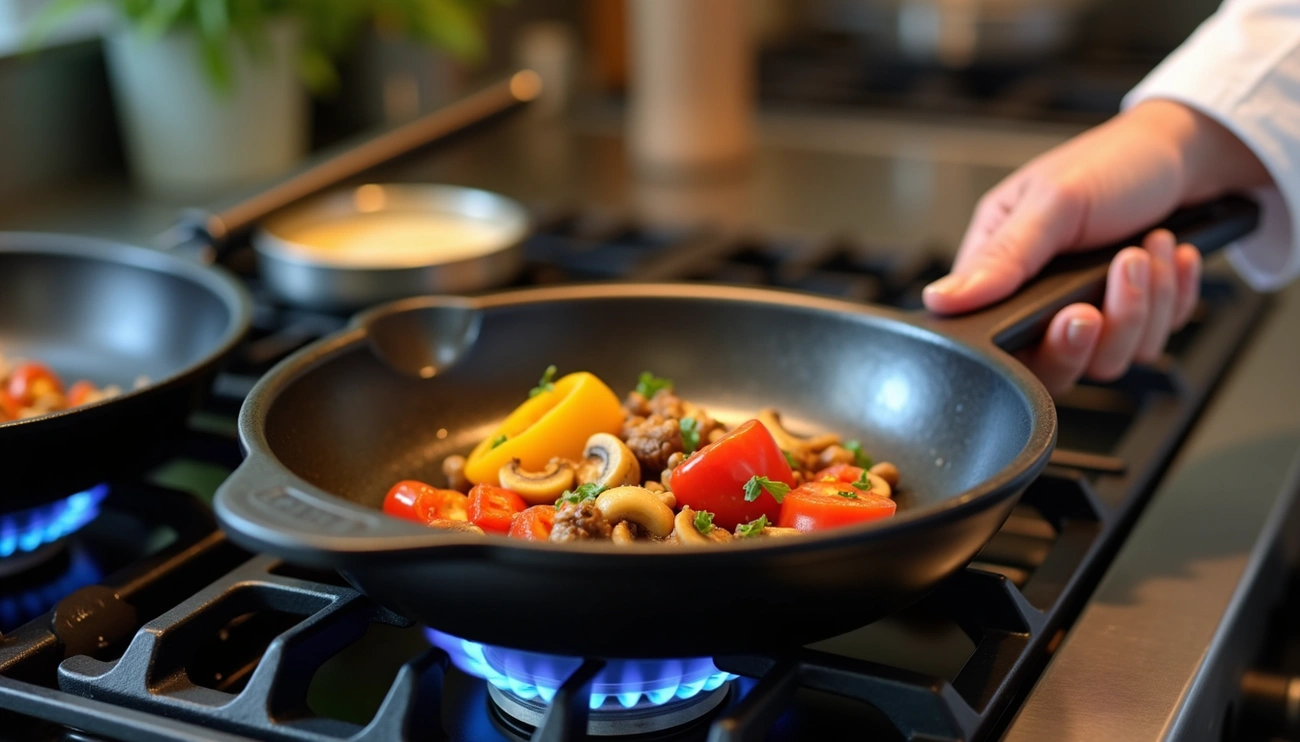
Prior to moving cookware from stovetop to oven, adjust heat appropriately based on what you’re cooking. For protein-rich foods, use lower heat settings, while medium to medium-high heat works best for grilling and searing. Allow your cookware to heat evenly for 60-90 seconds on the stovetop before transitioning to ensure proper heat distribution. Be careful to avoid thermal shock—don’t put hot pans on cold surfaces.
Cleaning after oven use
After cooking, allow your Masterclass cookware to cool completely before cleaning. This cooling period is crucial as it allows the base to resume its original shape, preventing warping over time. Clean with mild dish soap and warm water, avoiding harsh scrubbers that might damage the surface. Although dishwasher-safe, hand washing is recommended to extend the life of non-stick coatings.
Common Mistakes to Avoid
Even the most experienced cooks can make errors when using Masterclass cookware in the oven. Knowing these common pitfalls will help protect both your cookware and your culinary creations.
Exceeding temperature limits
Pushing Masterclass cookware beyond recommended temperature thresholds can permanently damage your pots and pans. Non-stick pans have the lowest tolerance at 350°F-400°F, while enameled cast iron Dutch ovens can withstand up to 400°F. Ceramic bakeware has a higher limit at 450°F, and stainless steel pieces top the range at 500°F. Exceeding these limits causes warping, discoloration, and uneven surfaces that diminish cooking performance.
Using non-oven-safe lids
Not all Masterclass lids are created equal for oven use. Glass lids with bakelite handles (“soft touch”) should never go in the oven. These plastic components emit harmful odors and fumes when heated. Always check lid materials before oven use—metal lids typically handle heat better than those with non-metal parts.
Ignoring manufacturer instructions
Disregarding official guidelines voids your warranty and risks damaging your cookware. Masterclass explicitly warns against exposing handles to direct heat or flames. Likewise, never heat empty cookware in the oven, as this leads to base skewing and coating damage.
Using cookware with damaged coatings
Continuing to use Masterclass cookware with scratched or peeling non-stick coatings creates both performance and potential safety issues. While slightly scratched ceramic coatings may be technically usable, they’ll perform poorly. Furthermore, attempting DIY repairs on damaged cookware is unsafe and invalidates your warranty. Replace any piece showing significant coating deterioration immediately.
Conclusion
Understanding whether your Masterclass Premium Cookware can safely go in the oven no longer needs to be a confusing process. After thorough examination, we can confidently say that most Masterclass pieces are indeed oven-safe, though certainly not all of them. Additionally, each type comes with specific temperature limits that must be respected – from 350°F for non-stick pans to 500°F for stainless steel pieces.
Temperature guidelines exist for good reasons. Exceeding these limits will potentially damage your cookware permanently, void your warranty, and might even release harmful substances. Therefore, checking individual product specifications before any oven use remains essential for maintaining your investment.
Proper handling techniques make all the difference in extending your cookware’s lifespan. Remember that handles become extremely hot during oven use, so quality pot holders are a must. Likewise, allowing your cookware to cool completely before cleaning helps prevent warping that occurs with sudden temperature changes.