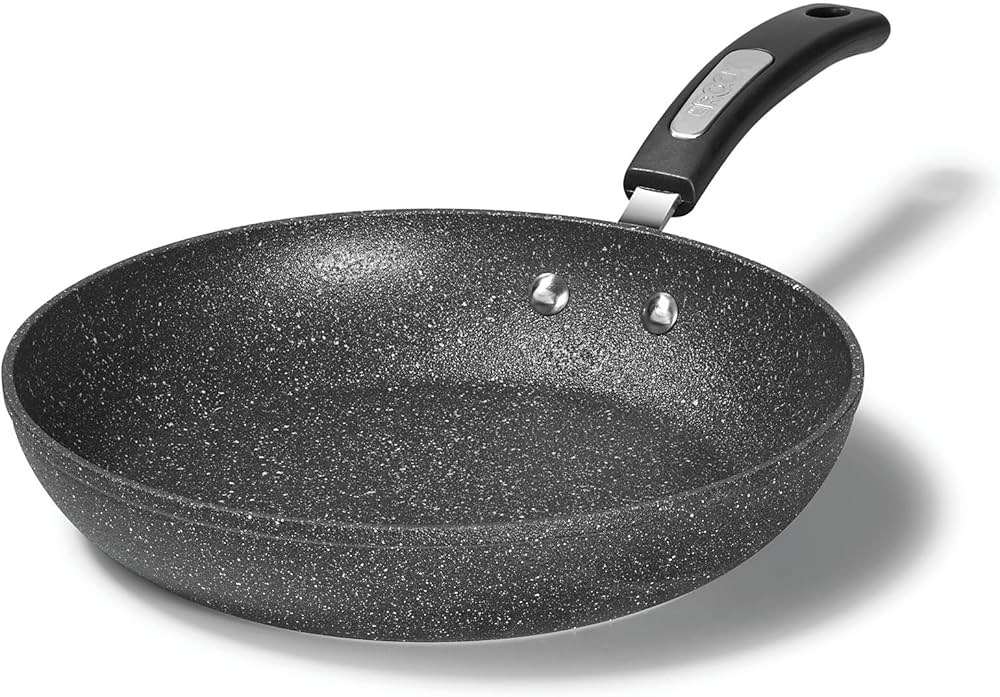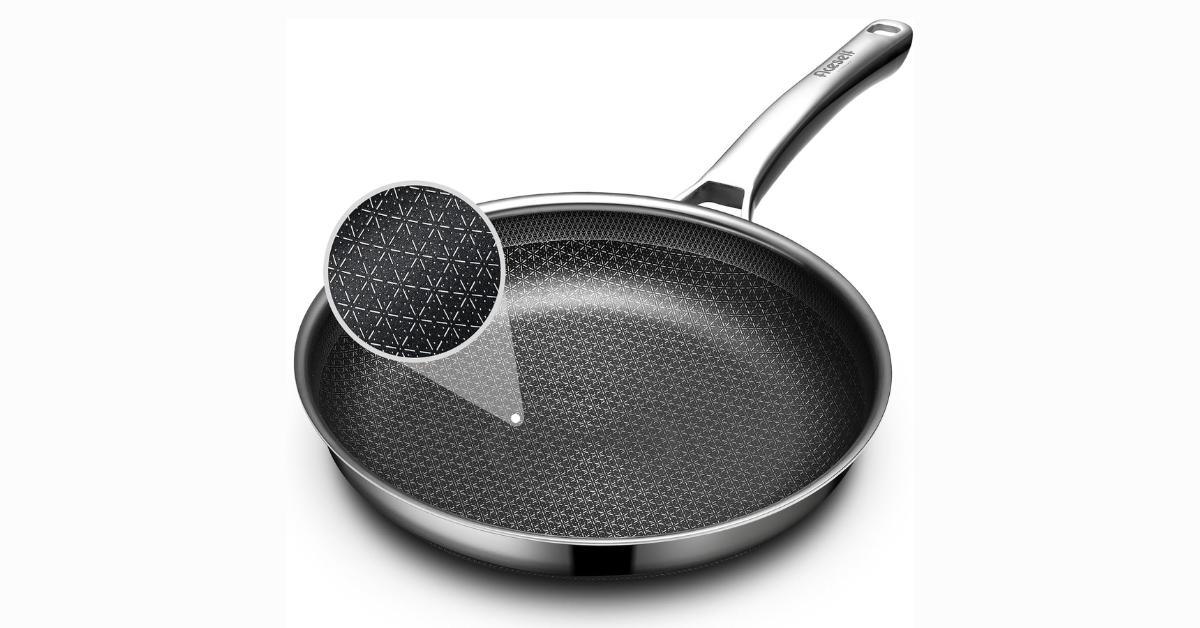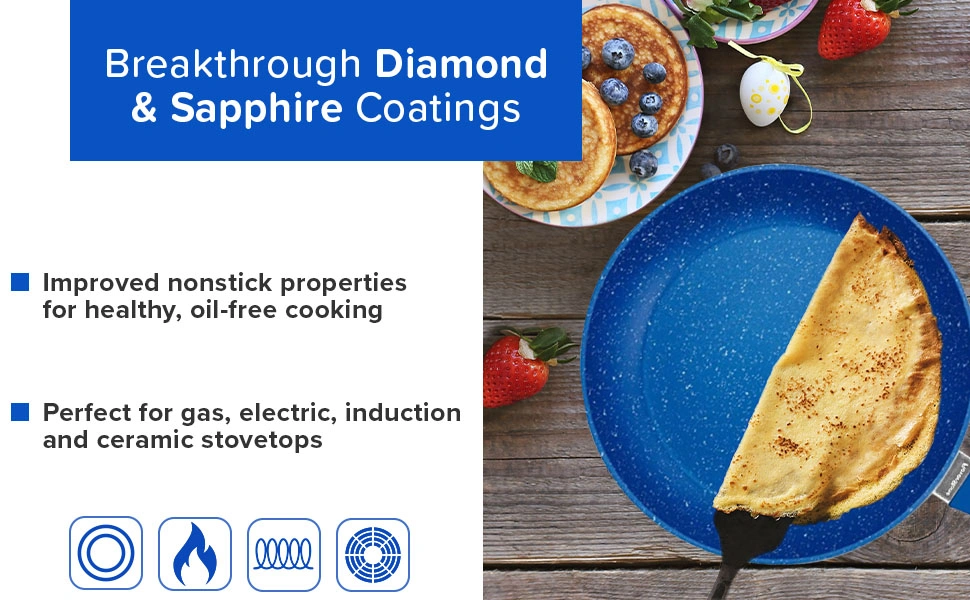
FlavorStone cookware is generally considered safe because it uses a PFOA-free, triple-layer sapphire or diamond-infused non-stick coating on a heavy-gauge aluminum base. It supports low-to-medium heat cooking up to 230°C (446°F). FlavorStone cookware is safe for induction, gas, and electric stovetops when used within its temperature limit.
Understanding Flavorstone Cookware Materials and Coating
What is the Sapphire Non-Stick Coating?
Flavorstone markets its cookware with what they call a “Sapphire” non-stick coating. The non-stick coating claims to use a sapphire-infused surface, though there’s no mention of actual crushed sapphire stones in the formulation. In truth, the technology involves diamond particle infusion rather than literal sapphire gemstones.
The Flavorstone Diamond Edition features a Dima-Tough non-stick surface with diamond particles embedded into the coating. This diamond-reinforced ceramic coating creates a triple-layer system designed to increase scratch resistance while maintaining non-stick properties. Similar sapphire-infused cookware from brands like T-fal uses three layers of sapphire-infused non-stick coating to create a scratch-resistant surface.
PFOA-Free Certification Explained
PFOA stands for perfluorooctanoic acid, a synthetic chemical that was used to manufacture traditional non-stick cookware. Some studies indicate that PFOA can cause developmental and other adverse effects in laboratory animals, and it appears to remain in the human body for a long time.
The Flavorstone cookware set is certified to be 100% PFOA free. Starting around 2009, U.S. manufacturers began voluntarily halting sales of PFOA, and by the end of 2016, it was no longer used in any food packaging, cookware, or other food-related products sold in the U.S.. Essentially, all cookware sold in the U.S. since 2015 is PFOA-free by law.
Base Material Construction
The cookware itself is made out of lightweight alloy, and the base is made out of stainless steel. The base is typically heavy-gage aluminum with a magnetic layer for induction compatibility. This construction allows the Flavorstone pan to be used on a range of cooking surfaces such as gas, electric, induction and ceramic stove tops.
The superconductive multi-ply base ensures even heat distribution with no hot spots. The thick stainless steel induction base provides efficient heat conduction for consistent cooking results.
Comparison with Traditional Non-Stick Coatings
Traditional non-stick cookware uses PTFE (polytetrafluoroethylene), commonly known as Teflon. PTFE coatings are notoriously soft and vulnerable to scratching. When temperatures exceed 350 degrees Celsius, PTFE releases harmful substances.
Ceramic coatings, on the other hand, are made from a gel solution of silicon and titanium-based nanoparticles. Ceramic tends to be more brittle than PTFE coatings, making it prone to chipping as well as scratches. The diamond/sapphire coating technology adds reinforcing materials to enhance hardness and durability, though the core non-stick component may still involve similar base materials.
Is Flavorstone Toxic? Safety Features and Certifications
The toxicity question centers on what chemicals are present in the cooking surface. Flavorstone cookware contains no PFOA in its coating formulation. In other words, the manufacturing process eliminates perfluorooctanoic acid, a synthetic chemical linked to developmental effects in laboratory animals and known to remain in the human body for extended periods.
Chemical-Free Cooking Surface
Flavorstone’s Dima-Tough non-stick surface is designed to cook without releasing harmful substances. The cookware is stain resistant and built for durability when used according to care instructions. What’s more, the coating saves energy because you only need medium or lower heat settings.
PFAS chemicals, known as “forever chemicals,” don’t break down in the environment and accumulate in human blood and organs. Scientific research has uncovered numerous harmful effects of PFAS on our bodies, including suppression of the immune system and an increased risk of cancer. The FDA acknowledges that these concerns matter, though the agency regulates finishes that go on cookware rather than defining “nontoxic” as a specific term.
Heat Resistance and Temperature Limits
Flavorstone cookware should never be used at temperatures exceeding 230°C/446°F on stovetop or in the oven. The pans without handles or with riveted stainless-steel handles are oven safe up to 230°C/446°F, while glass lids are safe up to 180°C/356°F. The removable handle is not oven safe and will get damaged if exposed to oven heat.
FDA and Safety Standards Compliance
The FDA regulates materials that touch food, including coatings and metals used in cookware. Under those circumstances, manufacturers must ensure their materials are non-toxic and compliant with federal standards. Flavorstone meets these basic safety requirements for food contact surfaces.
Potential Safety Concerns and How to Avoid Them
Safe usage of Flavorstone cookware depends on following specific temperature guidelines and care practices. Misuse can damage the non-stick surface or create safety hazards.
Proper Temperature Usage (Not Exceeding 445°F)
Flavorstone cookware must never be used at temperatures exceeding 446°F/230°C. The pans are superconductive, which means medium to low heat settings are sufficient for cooking. Never leave an empty pan on a hot burner; there should always be food or liquid in the pan when it’s on a burner, ideally filled 2/3 full. Empty pans can reach dangerously high temperatures within minutes.
Overheating causes non-stick coatings to break down, releasing toxic fumes. At temperatures above 500°F (260°C), coatings start decomposing. Consequently, supervision during cooking prevents accidental overheating.
Metal Utensils vs Plastic Utensils
Use only silicone, wooden, or plastic utensils with Flavorstone cookware. Metal utensils scratch and damage the non-stick coating, shortening pan life and creating safety problems. Silicone utensils are preferable and recommended by the manufacturer, as certain plastic and wooden utensils may have sharp or hard edges that damage the coating.
Never cut food directly inside the pan. Scratched surfaces trap food, require more oil, and may release coating particles.
Oven Safety Limitations
Pans without removable handles or with riveted stainless steel handles are oven safe up to 446°F/230°C. Glass lids have a lower maximum temperature of 356°F/180°C. The removable handle is not oven safe and will get damaged or melt if placed in the oven.
Proper Seasoning and Maintenance
Season the cookware before first use and every few months with frequent use. Spread a teaspoon of oil over the entire surface with a kitchen towel. Washing with water and a sponge deteriorates the seasoning you’ve applied. Hand washing is preferable; frequent dishwasher use causes color fading.
Is Stone Non-Stick Cookware Safe? Real-World Testing Results
Real-world testing reveals how Flavorstone cookware performs beyond manufacturer claims. Independent reviews and user experiences provide insight into whether is stone non stick cookware safe for daily cooking.
Cooking Without Oil: Health Benefits
Oil-free cooking offers substantial health advantages. Cooking with oil adds significant fat, salt, and calories to meals, which can spike blood sugar levels and complicate digestion. Vegetable oils contain omega-6 fatty acids, which can potentially cause accelerated cancer cell growth, increased inflammation, and blood clotting. By contrast, cutting back on oil-rich foods may lead to weight loss over time.
Flavorstone pans cooked eggs without butter or oil. The lack of oil helps keep flavor sealed in. Fish developed a golden sear on the skin side while the other filet side cooked evenly.
Scratch Resistance Tests
The sapphire coating performs adequately initially but shows limitations. After 8 weeks of daily usage, the coating remained intact. In controlled testing, new Flavorstone pans showed marginally better non-stick performance during the first 10 uses. By month six, however, both Flavorstone and comparable brands began showing signs of coating degradation when exposed to high heat or abrasive cleaning tools.
Long-Term Durability and Coating Integrity
Coating longevity depends on usage habits. Some nonstick coatings wear off after a year or two of use. Under similar conditions, Flavorstone generally lasts 6-12 months longer than budget alternatives. The coating developed minor flaking near the edges after five months of regular stovetop use, including accidental overheating and occasional metal spatula slips.
User Safety Experiences
User testimonials vary widely. Positive reviews include: “I bought these 6 months ago and it still works as well as it normally does”. One user reported toxic fumes during cooking that smelt like rubber burning. Another stated the pans make cooking more pleasurable as food doesn’t stick and is healthier with no added oils.
Conclusion
Flavorstone cookware is safe for your family when you follow proper usage guidelines. Evidently, the PFOA-free certification addresses primary toxicity concerns, and the diamond-infused coating allows healthier oil-free cooking. For the most part, safety depends on respecting temperature limits (never exceeding 446°F), using appropriate utensils, and maintaining the coating properly. In truth, while the non-stick surface shows eventual wear with daily use, you can expect 12-18 months of safe performance with careful handling.