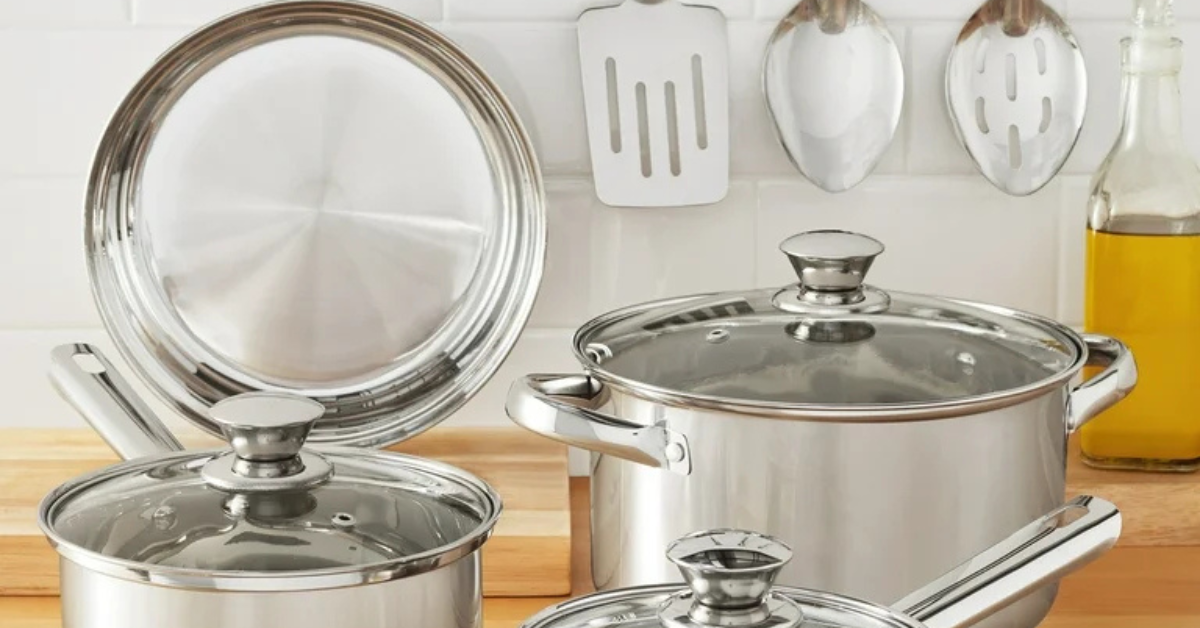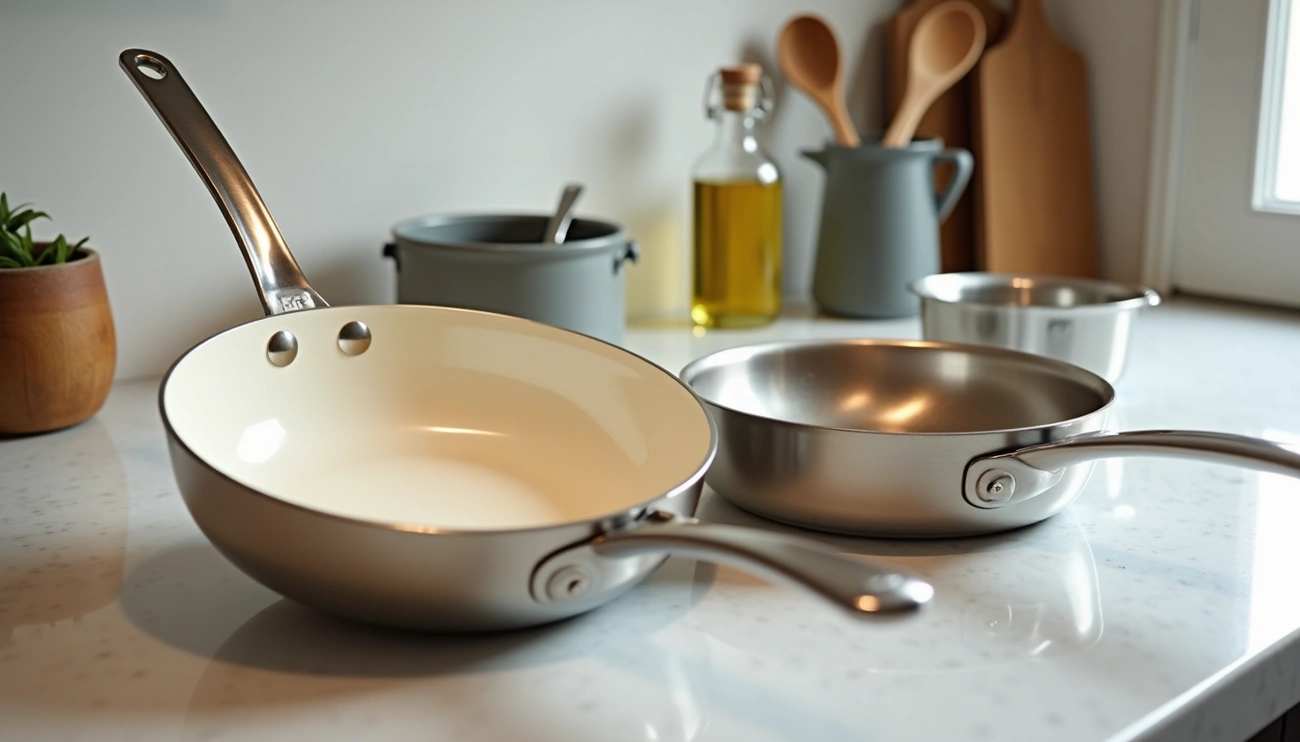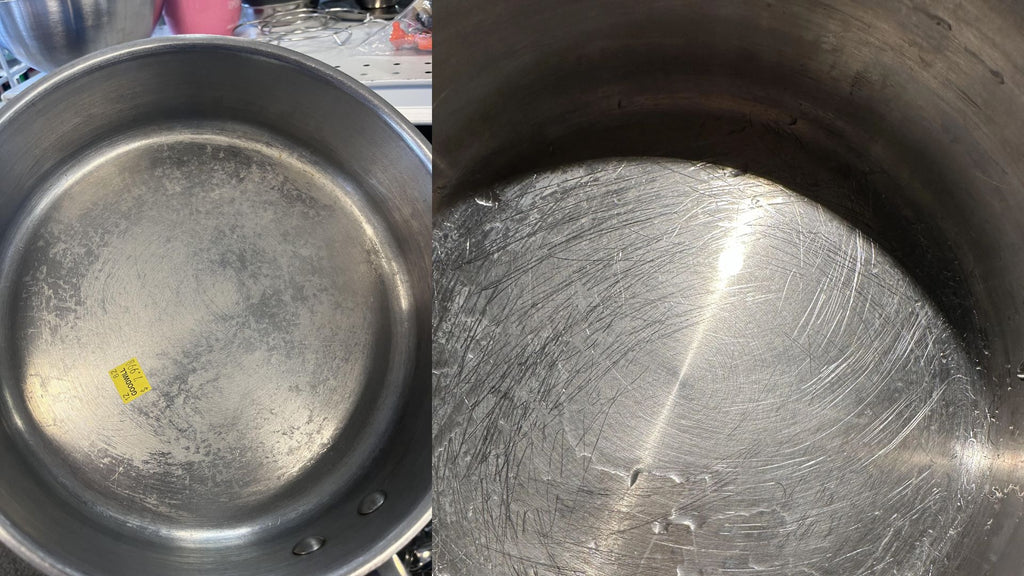
Scratched stainless steel cookware is safe because stainless steel is non-toxic and non-reactive. The surface reforms a protective chromium-oxide layer that prevents rust and contamination. Scratches are cosmetic and do not reduce safety or structural performance. Scratched areas can increase food sticking but do not release harmful chemicals.
Why Do Scratches Happen on Stainless Steel Cookware?
Stainless steel develops scratches through daily use, not because of manufacturing defects. Contact with metal utensils, abrasive cleaners, scouring pads, and grit from sponges will abrade the surface. Stainless steel is soft as far as steels go, which makes superficial scratches unavoidable.
Using Metal Utensils While Cooking
Metal utensils can scratch the surface of stainless steel cookware. While stainless steel offers remarkable durability, metal spoons and spatulas are slightly harder than the pans themselves. Repeated contact with these utensils will dull the pan’s appearance over time. Metal utensils will result in scratches no matter how carefully you use them. Similarly, cutting food directly in the pan with knives creates deeper marks, though knives typically dull faster than they damage the cookware.
Abrasive Cleaning Tools and Harsh Scrubbers
Improper cleaning causes the majority of scratches on stainless steel cookware. Scouring pads or harsh cleaners can scratch and damage the surface. Steel wool and aggressive metal scouring pads leave permanent scratches across your pan’s finish. These abrasive materials not only mar the appearance but can also affect performance over time. Hard water, salt crystals, and trapped grit can create micro-abrasion during washing. Harsh chemicals like bleach and chlorine can discolor stainless steel and cause long-term corrosion.
Stacking Pans Without Protection
Storing pans directly on top of each other creates friction points where metal surfaces rub together. Without protective layers between them, the weight and movement during storage cause surface abrasions. Fellow metallic pots and pans may scuff the finish when tumble-stacked into a cabinet. This issue extends beyond esthetics, making future cleaning more difficult as the roughened surface provides more areas for food particles to cling.
High Heat and Cooking Practices
High heat plus stuck food that’s scrubbed aggressively accelerates abrasion. Cooking on high heat unnecessarily invites food to stick and potentially warp your pans. Medium heat works better for stainless steel because it conducts heat efficiently. When food does stick due to excessive heat, the subsequent aggressive scrubbing compounds the problem by creating deeper scratches in the surface.
Are Scratched Stainless Steel Pans Safe to Use?
Scratches on stainless steel pans look concerning but rarely create actual safety problems. Most home cooks worry unnecessarily about surface marks that have zero impact on food quality or health.
Stainless Steel is Non-Reactive and Non-Toxic
Stainless steel cookware offers a non-toxic cooking experience free from chemicals found in traditional nonstick coatings. The material contains no PFAS chemicals. Stainless steel is non-reactive, meaning it does not interact with acidic or alkaline foods. This prevents leaching of metals into food, making it safe for various cooking applications. Unlike nonstick coatings that may flake or release substances when damaged, stainless steel remains safe regardless of surface scratches. The non-porous surface releases nothing into food, not even when cooking acidic ingredients like tomato sauce, citrus, or wine.
Scratches Don’t Harbor Bacteria
Scratches do not provide an environment for bacteria. The smooth surface of stainless steel allows thorough cleaning, even in areas with minor scratches, ensuring your pan remains hygienic. Stainless steel is durable and easy to scrub, not harboring bacteria in scratches. This stands in stark contrast to other materials where surface damage can create unsanitary conditions.
Minor Surface Marks vs. Deep Damage
Most scratches are superficial and only affect appearance. Light scratches are visible scuffs that don’t penetrate the cookware. Moderate scratches go slightly deeper but still don’t penetrate the item. Deep scratches actually impact or penetrate the surface. Minor scratches remain safe and do not release harmful chemicals.
Scratches Are Mostly Cosmetic
In reality, scratches primarily affect esthetics. They do not significantly affect cooking performance. Some minor marks can create a slight texture that reduces sticking for certain foods. Scratches are a normal part of everyday cooking and do not compromise safety, hygiene, or performance.
Does Stainless Steel Pans Scratch Easily?
High-quality stainless steel pans do not scratch easily, provided you get a high-quality grade. However, light scratches are normal if you use and wash the pans regularly. The material can be cleaned with scouring pads if necessary, as scratches do not impact performance and are normal.
When Scratched Cookware Becomes a Problem
While most scratches pose no safety concerns, certain types of damage signal that your stainless steel cookware has reached the end of its useful life. Inspecting your cookware regularly helps identify when superficial marks have progressed into actual problems.
Deep Gouges That Expose Base Metal
Deep scratches that penetrate through the stainless steel surface create genuine safety issues. Many stainless steel pans feature an aluminum or copper core sandwiched between stainless layers for better heat distribution. The aluminum or copper core becomes problematic only if the pot is scratched, grooved, or worn enough to expose it. If your pot shows signs of rusting or the core is wearing through, replacement becomes necessary because the exposed metals may leach into your food.
Severe Pitting or Corrosion
Pitting refers to damage sustained on the surface of stainless steel caused by chlorine and chloride found in salt. This damage usually appears as small, dull-looking dots, and once it begins, it can spread around the surface. Pitting occurs when the chromium oxide coating covering the cookware surface gets damaged. The most common cause involves adding salt to a pot of water before it has boiled, allowing salt particles to settle at the bottom and corrode the surface. Bleach exposure also causes pitting. Once pitting starts, it cannot be reversed or removed. However, pitting does not affect the performance of your cookware[132]. Severe pitting can trap food particles and make cleaning harder.
Flaking or Peeling Surfaces
Peeling surfaces or worn-out layers signal that your pan should be replaced. If your stainless steel cookware has significant scratches or shows signs of wear and tear, investing in new cookware becomes necessary for food safety. Warping also indicates replacement time, as pans that no longer sit flat on the stove won’t heat evenly.
How to Care for and Maintain Scratched Stainless Steel Cookware
Proper maintenance extends the lifespan of your stainless steel cookware and keeps it performing well, scratches and all.
Clean With Gentle Dish Soap and Soft Sponges
Wash by hand or in the dishwasher using warm water with gentle dish soap and a soft sponge for both interior and exterior surfaces. The best dishwashing sponges have medium thickness and are highly textured, with a gentle side for everyday dishes and a rougher, non-abrasive side for pots and pans. Avoid metal scouring pads or abrasive cleaners that may scratch the surface.
Buff Out Minor Scratches With Baking Soda
Create a paste using baking soda and water, apply it to burnt areas or scratches, and wait 5-10 minutes. Scrub the paste into the surface with a soft sponge or cloth, working in the grain direction. Rinse well to remove the cleaner completely.
Use Wooden or Silicone Utensils
Opt for utensils made of silicone, wood, or plastic to keep your cookware in pristine condition. Bamboo offers antibacterial and heat-resistant properties, while silicone heads resist heat up to 500°F.
Store Pans With Protective Layers Between Them
Place pot protectors, dish towels, or trivets between stacked pans. Avoid stacking bare stainless steel pans directly on top of each other.
Avoid Harsh Chemicals Like Bleach
Bleach exposure causes pitting and corrosion on stainless steel surfaces.
Dry Immediately After Washing
Dry your cookware thoroughly with a clean cloth right after washing to prevent water spots. Air-drying can lead to water spots from mineral deposits.
Conclusion
Scratches on stainless steel cookware might look unsightly, but they’re mostly cosmetic and pose no health risks. Your scratched pans remain perfectly safe to use as long as you don’t see deep gouges exposing the core metal or severe pitting that traps food particles. With proper care and gentle cleaning methods, your stainless steel cookware can serve you well for years, scratches and all.