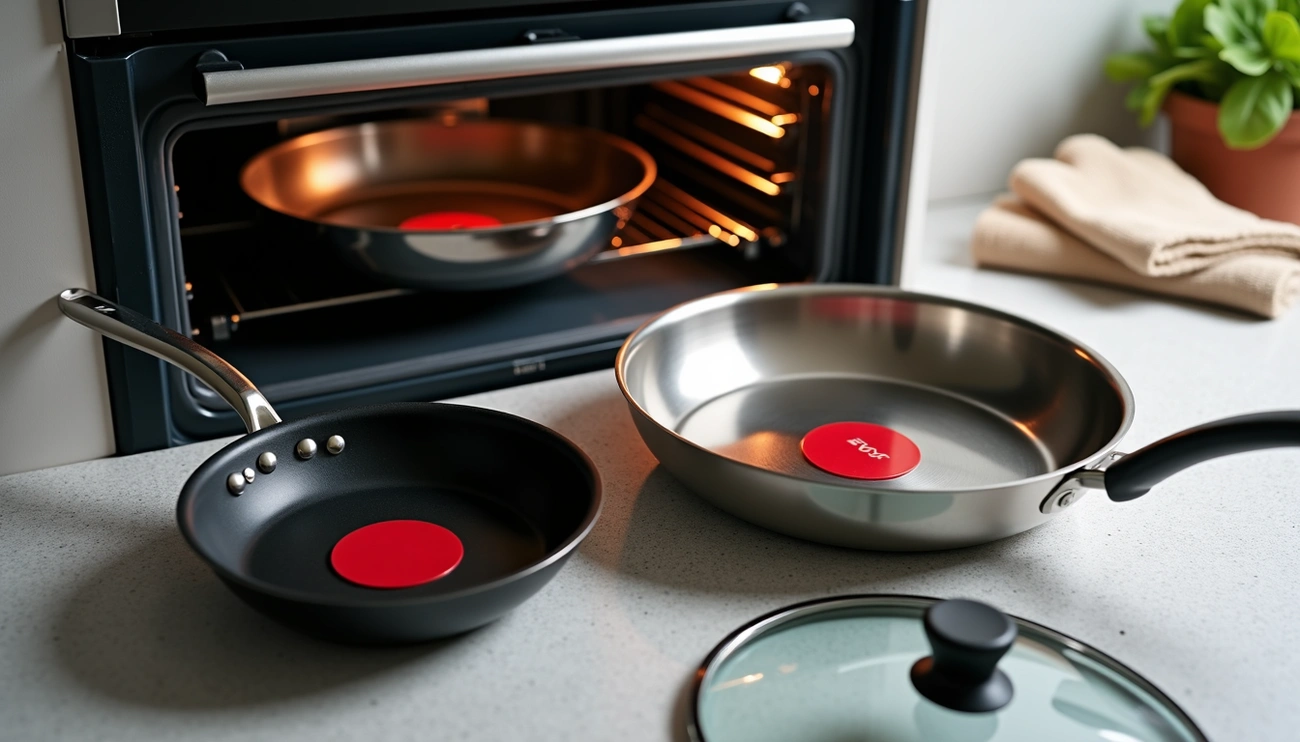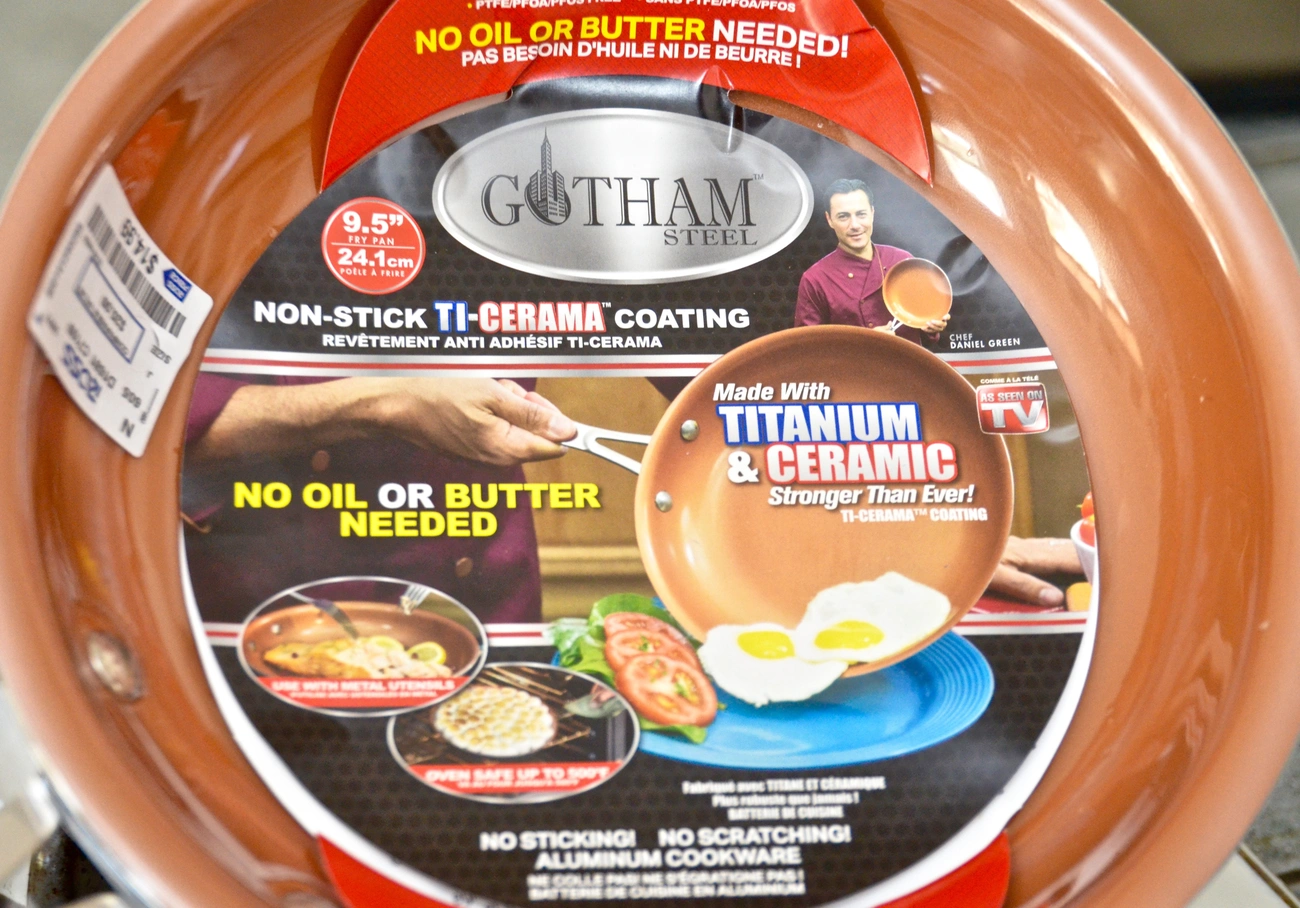
Gotham Steel pans are generally considered non-toxic because they use a ceramic coating reinforced with titanium and minerals instead of PTFE or PFOA-based Teflon. They are free from PFOA, PFOS, lead, and cadmium. Gotham Steel pans are dishwasher-safe and oven-safe, but proper care prevents surface damage and extends lifespan.
Understanding Non-Stick Cookware Safety Concerns
What PTFE, PFOA, and PFOS Mean
PTFE (polytetrafluoroethylene) is the chemical compound that makes non-stick cookware slippery. You probably know it by its brand name: Teflon. Developed in the 1930s, PTFE belongs to a massive family of synthetic chemicals called PFAS (per- and polyfluoroalkyl substances), which includes over 10,000 different compounds. These chemicals earned the nickname “forever chemicals” because they don’t break down in the environment and can persist for thousands of years.
PFOA (perfluorooctanoic acid) and PFOS (perfluorooctane sulfonate) are specific types of PFAS that were once integral to manufacturing non-stick coatings. PFOA was particularly common in creating the smooth surface on pans throughout the mid-20th century. Due to mounting health concerns, PFOA was officially phased out of U.S. cookware production by 2015. Similarly, most countries agreed to ban or phase out PFOA under the international Stockholm Convention on Persistent Organic Pollutants.
Health Risks of Traditional Non-Stick Coatings
The primary worry with PFAS exposure centers on long-term health impacts. Studies have found PFAS in the blood of most people in the United States. More alarmingly, PFAS were detected in the breast milk, umbilical cord blood, or bloodstreams of 99 percent of participants in a National Health and Nutrition Examination Survey by the Centers for Disease Control and Prevention.
Research links PFAS exposure to several serious health conditions:
- Cancer risks: The International Agency for Research on Cancer classified PFOA as “carcinogenic to humans” based on sufficient evidence in lab animals and strong evidence of carcinogenic properties in humans. Studies suggest increased risk of testicular cancer, kidney cancer, and possibly thyroid, prostate, bladder, breast, and ovarian cancers
- Thyroid disruption: PFAS affect how thyroid hormone molecules bind together, causing rigidity in the binding region
- Reproductive issues: Exposure has been linked to a nearly two-fold increase in preterm birth risk, low birth weight, and gestational diabetes
- Developmental problems: Greater PFAS exposure in pregnancy affected motor skills in male infants, pointing to effects on early neurodevelopment
- Cardiovascular effects: A 2024 study in northern Italy found higher mortality rates from cardiovascular diseases in populations exposed to PFAS-contaminated water between 1980 and 2018
Point often overlooked: PTFE itself poses risks when overheated. At temperatures above 500-680°F, PTFE breaks down and releases toxic fumes that cause flu-like symptoms in humans, a condition known as “polymer fume fever”[13]. The fumes are deadly to small birds and may harm humans with prolonged exposure.
Why Ceramic Coatings Became Popular
In view of these health concerns, ceramic-coated cookware exploded in popularity around 2019 as an alternative to PFAS-based pans. The timing coincided with wellness culture’s rise and the pandemic’s onset. Monthly e-commerce sales for ceramic brands like Caraway jumped 390% between January and May 2020.
Ceramic coatings appealed to consumers because they’re primarily made from silicon dioxide and metal oxides, not PTFE or PFAS. States like California, Minnesota, Maine, Colorado, and Washington now restrict or require labeling of PFAS in cookware. California’s legislation will prohibit PFAS in cookware beginning in 2030.
However, a point often overlooked is that ceramic coatings aren’t without controversy. These pans use “ceramic precursors” rather than true ceramic, and independent testing has detected high levels of titanium in popular brands, pointing to the use of titanium dioxide nanoparticles. The European Union banned titanium dioxide in food due to potential carcinogenic properties, though not in cookware.
What Gotham Steel Pans Are Made Of
Titanium Base Material
Gotham Steel’s name creates confusion about what these pans are actually made of. The foundation isn’t titanium at all. At its core, Gotham Steel cookware uses an aluminum base. Aluminum serves as the primary structural material because it conducts heat efficiently, allowing the pan to heat quickly and distribute temperature evenly across the cooking surface.
Some product lines feature hard anodized aluminum construction instead of standard aluminum. Hard anodizing is an electrochemical process that creates a harder, more durable surface on the aluminum. The brand’s Pro Series and Modern Collection both use this harder variant.
Where does titanium fit in? It’s infused into the ceramic coating, not the base structure. The brand markets this as “Ti-Cerama” coating, which combines ceramic with titanium for added strength. In essence, you’re getting an aluminum pan with a titanium-reinforced ceramic surface layer.
Ceramic Non-Stick Coating
The Ti-Cerama coating represents Gotham Steel’s primary selling feature. This proprietary formula blends titanium with ceramic to create what the brand calls a balance between non-stick properties and durability.
The coating gets applied in three layers, then reinforced with synthetic diamonds. Diamond infusion serves a specific purpose: diamonds rank as the strongest material on earth, so incorporating them theoretically makes the surface resistant to scratches from metal utensils.
What’s more, Gotham Steel released an enhanced version called Ultra Ceramic 2X coating in their Modern and Hammered collections. This upgraded formula supposedly lasts twice as long as the original Ti-Cerama coating.
The brand emphasizes that these coatings contain no PFOA, PFOS, lead, or cadmium. For those wondering is Gotham Steel safe or are Gotham Steel pans non toxic, the company’s certifications claim freedom from these specific chemicals. However, product lines vary. Some earlier models may have used titanium-reinforced PTFE blends rather than pure ceramic coatings.
The ceramic formulation itself uses silica-based materials, similar to other ceramic cookware brands. These differ from traditional PTFE coatings but aren’t the same as pure ceramic cookware made entirely from kiln-fired clay.
Steel Handle Construction
Gotham Steel uses stainless steel handles across most product lines. The handles feature an ergonomic design that accommodates both right-handed and left-handed users.
The distinctive Y-shaped handle design serves a functional purpose beyond esthetics. This shape allows heat to escape, keeping handles cool during cooking. The brand describes these as “stay-cool” handles, though some models use die-cast hollow handles to achieve the same temperature management.
Certain product lines, particularly the tri-ply stainless steel collections, combine a stainless steel base with the titanium copper ceramic coating on top. These pans offer heavier construction compared to standard aluminum-based models.
The pans handle oven temperatures up to 500°F, making them suitable for stovetop-to-oven cooking methods. Likewise, they work on gas, electric, ceramic, halogen, and induction cooktops, though induction compatibility depends on the specific product line.
Are Gotham Steel Pans Safe to Use?
Chemical Testing and Certifications
Gotham Steel markets their cookware as free from PFOA, PFOS, PTFE, lead, and cadmium. The brand emphasizes rigorous testing to meet high safety standards. However, Gotham Steel fails to publish the specific chemicals used to create their non-stick coating or provide toxicity data on the coating itself. This lack of transparency makes it difficult to verify whether their products genuinely offer a safer alternative to traditional non-stick.
Independent reviewers note that no ceramic cookware brands they’ve examined publish lead leaching test data. Without third-party lab reports or certification from recognized testing organizations, consumers must rely solely on manufacturer claims. In effect, we have marketing promises but limited scientific validation.
Lead Contamination Risks in Ceramic Cookware
Ceramic cookware carries inherent lead contamination risks. Lead often appears in glazes to give products an attractive shine. The FDA randomly tests ceramic food containers for lead based on positive findings of extractable lead and cadmium from glazes over multiple years. If ceramics aren’t baked long enough at sufficiently hot temperatures, lead can leach into food.
A 2016 study identified significant lead toxicity risks from glazed ceramic cookware, especially ceramics sourced from Mexico, China, and some European countries. Gotham Steel doesn’t disclose their ceramic sourcing location. Acidic foods accelerate lead leaching. The longer food cooks or sits in the dishware, the more lead migrates into it.
Children and pregnant women face the highest risk from lead exposure. Lead poisoning in children has been linked to learning disabilities, developmental delays, and lower IQ scores.
Heat Stability and Off-Gassing Concerns
Ceramic coatings degrade when used above 450°F, with the delicate coating breaking down quickly. Studies show overheated ceramic pans may release toxic polymers. These differ from PTFE fumes but aren’t benign.
Titanium dioxide nanoparticles, which create smooth finishes in ceramic coatings, can migrate into food in trace amounts. The World Health Organization lists titanium dioxide as a possible carcinogen. Ceramic-coated cookware uses a sol-gel process creating “quasi-ceramic” rather than true ceramic. When these coatings decompose, organic polymers with varying toxicity levels could leach into food or release into the air.
Does Gotham Steel Cause Cancer?
The cancer risk centers on titanium dioxide nanoparticles. Nano titanium dioxide causes immune system disruption and pre-cancerous lesions in the gut. Independent reviews consider Gotham Steel’s materials average for a non-stick brand but don’t recommend the brand due to concerns about glazed ceramic coating and non-stick chemicals.
Scientists acknowledge we lack sufficient research on nanoparticles in cookware, but existing studies raise red flags. Overall, while Gotham Steel avoids PFAS chemicals, questions remain about the safety profile of their ceramic coating technology.
How Gotham Steel Compares to Other Cookware Brands
Gotham Steel vs Traditional Non-Stick Pans
Traditional PTFE-coated pans generally outlast ceramic cookware in non-stick performance. When Consumer Reports surveyed 2,158 U.S. adults in April 2025, 65 percent expressed concern about chemicals like PFOA, PTFE, or PFAS in non-stick cookware. This drove many consumers toward ceramic alternatives like Gotham Steel.
Unlike PTFE pans that degrade above 480°F and emit toxic fumes, ceramic coatings handle higher heat without off-gassing PFAS chemicals. Gotham Steel eliminates PFAS entirely, making it safer from an environmental standpoint. However, ceramic coatings prove more brittle than PTFE. Testing revealed ceramic pans get scraped and chipped more easily. Reddit users report Gotham Steel’s non-stick coating fails within months, whereas quality PTFE pans can last several years before requiring replacement.
Gotham Steel vs Cast Iron and Stainless Steel
Cast iron and stainless steel represent lifetime investments. The Tramontina Enameled Cast-Iron frying pan weighs 7.4 pounds and performs excellently at searing steak. In contrast, Gotham Steel’s aluminum construction makes it lightweight but less durable. One Reddit user with 30 years of stainless steel cookware reported it still looks brand new.
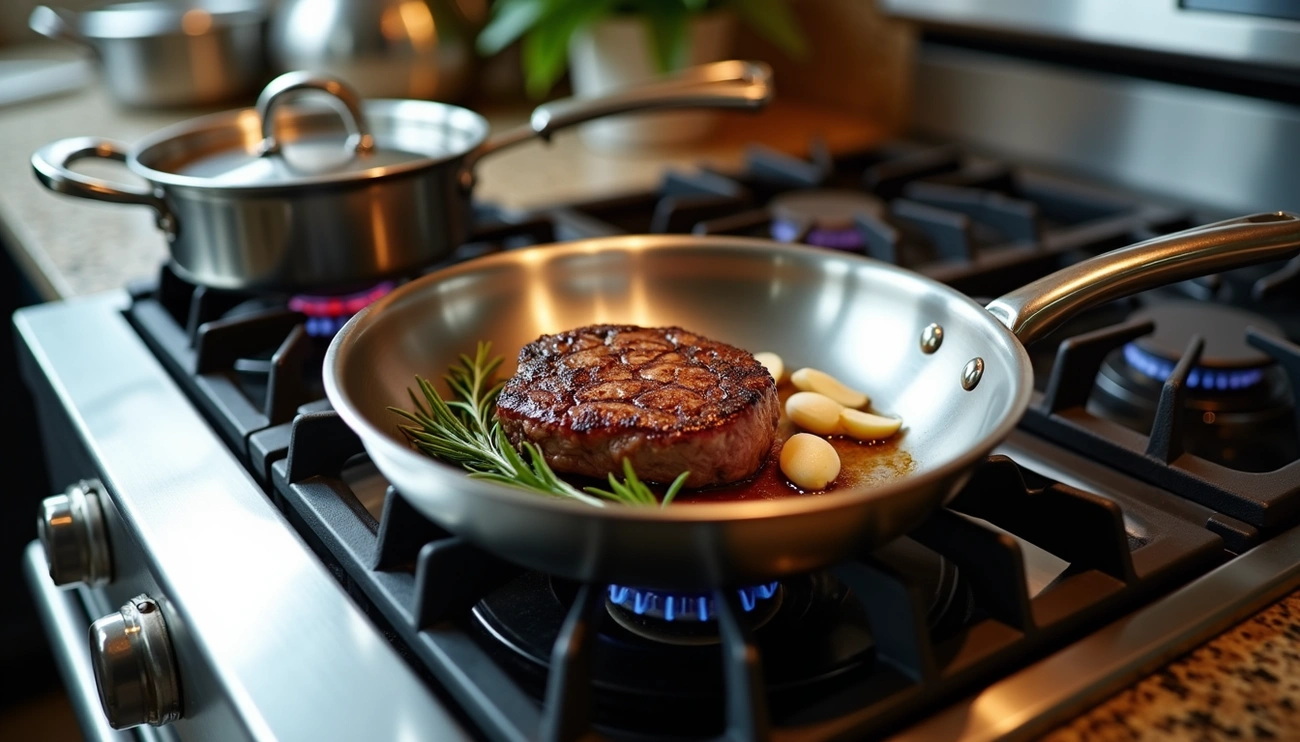
Stainless steel requires butter or oil to prevent sticking, but cleaning remains straightforward. Cast iron needs regular seasoning, though pre-seasoned options like Calphalon eliminate that barrier. For safety-conscious cooks, stainless and cast iron avoid the uncertainty surrounding ceramic nanoparticles. On balance, these traditional materials cost more upfront but never need replacement.
Gotham Steel vs Other Ceramic Brands
Caraway emerged as the top-rated ceramic pan in Serious Eats testing. Its scratch-resistant surface proved superior to Gotham Steel, which showed flat handles that dug into testers’ palms. The same testing found GreenPan performed significantly better than Gotham Steel right out of the box.
Amazon reviews reveal mixed experiences. Some users found GreenPan worked “so much better” after six months compared to brand-new Gotham Steel. Others reported the opposite. Equally important, price differences exist. Caraway costs roughly double the OXO ceramic pan, while Gotham Steel positions itself at the budget end starting around $19.99. Quality ceramic brands like Caraway and Le Creuset survived durability testing unscathed, suggesting a connection between price and longevity.
Performance and Durability Issues to Consider
Non-Stick Coating Longevity
Gotham Steel claims their Ti-Cerama coating delivers years of non-stick performance, yet independent testing reveals a different story. Rigorous 30-day trials showed ceramic pans required oil for eggs within two weeks. By day 14, non-stick properties degraded enough that minimal oil became necessary. Surface roughness increased by 15-22% within just 30 days, directly impacting food release.
Customer experiences mirror these findings. Based on 317 reviews, Gotham Steel received a 1.7 star rating with 83% unfavorable feedback. Multiple buyers reported coating failure within months. One testing analysis found the non-stick coating lost most of its slickness after six months, making it difficult to fry eggs without breaking the yolk. Food began sticking progressively worse starting around month four. In effect, the 10-year warranty period doesn’t align with actual coating lifespan.
The brand attributes degradation to improper care, yet customers following hand-washing protocols and avoiding metal utensils still experienced rapid decline. Ceramic coatings are self-sacrificing, meaning effectiveness degrades with every use. Most ceramic cookware lasts less than two years before disposal.
Heat Distribution and Retention
Gotham Steel’s aluminum composition and spiralized bottom design supposedly ensure even heat distribution. However, testing exposed significant warping. Pouring oil or cracking eggs in the center caused immediate movement to one side. This warping issue appears widespread across customer complaints.
Heat retention tested poorly. Following a five-minute cooling period, water temperature dropped to 113°F, then 95°F after another five minutes. Gotham Steel ranked second to last in heat retention among tested brands. Thin cookware heats fast but fails to absorb and retain heat adequately.
Warranty and Customer Support
Every Gotham Steel piece carries a 10-year limited warranty against defects[251]. The reality proves frustrating. Customer service provided run-arounds, claiming products had only three-month warranties before escalating to parent companies. Representatives repeatedly referred customers between departments without resolution. Replacement pans arrived with existing scratches, and warranty registration systems failed to function properly.
Conclusion
Gotham Steel pans eliminate PFAS chemicals, which sounds reassuring at first glance. However, their ceramic coating raises different concerns, especially regarding titanium dioxide nanoparticles and potential lead contamination. The coating typically fails within months rather than years, and the brand lacks transparency about chemical testing.
On balance, I’d recommend investing in stainless steel or cast iron cookware instead. These materials last decades without safety questions. If you prefer non-stick convenience, quality ceramic brands like Caraway outperform Gotham Steel significantly. Your cookware touches every meal you prepare, so choose materials backed by research rather than marketing claims.