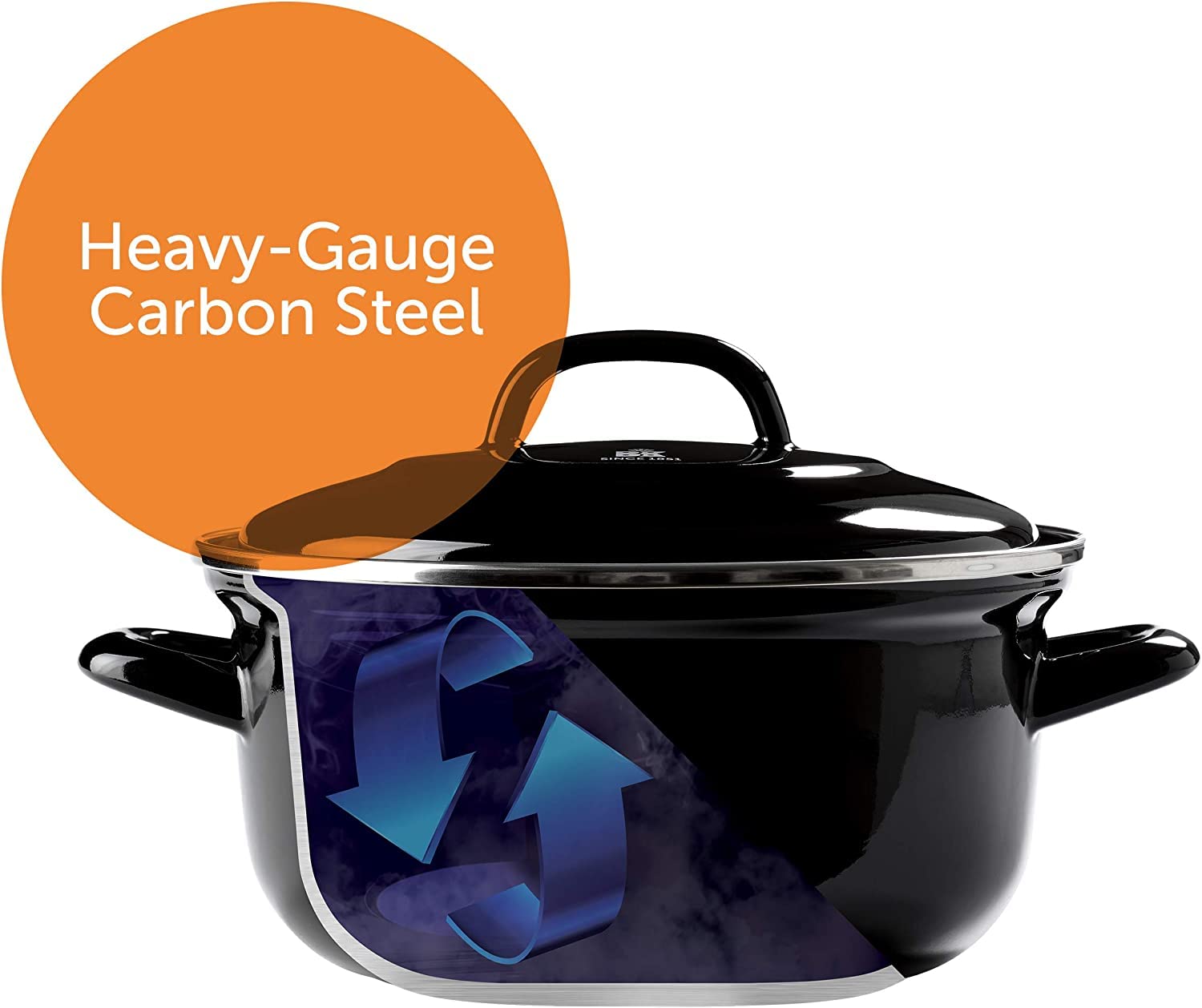
BK Cookware is primarily made in Germany. The brand, founded in the Netherlands in 1851, manufactures its enamel-on-steel cookware and carbon steel pots in Germany. These products include enameled Dutch ovens known for durability and high heat retention. Some BK Cookware product lines are manufactured in China.
BK Cookware Manufacturing Locations
BK maintains manufacturing tied to its Dutch roots while using international factories for specific product lines. You’ll find core product design and some production in the Netherlands, with broader manufacturing and assembly carried out in select overseas facilities.
Current Factory Sites
BK’s headquarters and primary design center remain in Wateringen, Netherlands, where product development, quality control standards, and some small-scale production occur. You’ll see stainless-steel and enameled-steel lines finished or inspected there, especially higher-end Dutch-market items.
For volume production, BK uses partner factories in China and other Asian countries for items such as cast aluminum and mass-produced nonstick pans. These sites handle large runs, coating application, and assembly to meet global demand. BK applies its specifications and quality checks to these partners to align finished goods with EU and Dutch standards.
Historic Production Hubs
BK began production in the Netherlands in the 19th century, initially in regional workshops that evolved into larger plants near major Dutch industrial towns. Early enamelled sheet-steel pans and cast-iron products were manufactured domestically through much of the 20th century.
As global supply chains expanded in the late 20th century, BK started outsourcing some production to international partners while keeping design and brand management in the Netherlands. You can trace the shift from fully Dutch-made cookware toward a mixed model in corporate histories and product labeling from the 1980s onward.
Changes in Manufacturing Over Time
You’ll notice a clear shift from wholly domestic manufacturing to a hybrid model driven by cost, capacity, and material specialization. Advanced coating technologies and high-volume nonstick production pushed BK to partner with specialized factories overseas.
At the same time, BK retained Dutch oversight for product development and final quality control. That means current products may bear “Designed in the Netherlands” with country-of-origin labels showing China or other manufacturing locations depending on the specific line and batch.
Origin and Heritage of BK Cookware
BK traces its roots to the Netherlands and a long history of metalwork and cookware innovation. You’ll find a clear lineage from 19th‑century Dutch foundries to the brand’s modern product lines and design principles.
Founding in the Netherlands
BK started in 1851 in the Netherlands, originally producing enameled and sheet‑steel cookware. You can point to Wateringen and other Dutch manufacturing centers as central to the brand’s early production and business operations.
The company grew by introducing enamelled sheet‑steel pans in the late 19th century and by focusing on practical, durable designs for household kitchens. Early success came from combining accessible materials with mass production techniques common in Dutch industry at the time.
Today the founding date and Dutch origin remain part of BK’s identity. If you look at the brand’s catalogs and heritage materials, they emphasize continuous operation since the 19th century and a reputation built in Dutch homes.
Traditional Dutch Craftsmanship
BK’s early products reflected traditional Dutch craftsmanship: robust construction, simple forms, and enamel finishes that resist corrosion and make cleaning easier. You’ll notice these traits in classic Dutch oven and pan designs that prioritize even heating and longevity.
Artisans and factory workers historically applied enamel by hand or semi‑automated processes, ensuring consistent coatings and color options. That combination of manual skill and industrial technique produced cookware suited to everyday use and heavy family cooking.
As you evaluate BK pieces, look for features tied to that craft heritage: thick steel or cast bases, durable enamel, and design cues meant for practicality rather than ornamentation. These elements show how traditional methods shaped modern BK products.
Materials and Production Techniques
BK uses durable metals and modern coating methods to build cookware that withstands daily use and high heat. You’ll find carbon steel, enamelled sheet steel, and aluminium in different lines, each chosen for thermal performance and longevity.
Quality Control Processes
BK applies systematic inspections during and after production to catch defects and ensure consistency. You can expect dimensional checks, surface inspections for enamel and nonstick finishes, and functional tests such as heat distribution trials and oven-temperature cycling.
Manufacturing partners typically run sample testing on each production batch. They measure coating thickness, adhesion (peel tests), and conduct visual checks under magnification for pinholes or chips. Random pans undergo cooking simulations to confirm even heating and handle stability.
Traceability is maintained with batch numbers and production stamps so you can trace a product’s manufacturing run. Final quality gates include packaging inspections to prevent transit damage and verification that products meet declared PFAS-free or safety claims.
Sourcing of Raw Materials
BK sources sheet steel, carbon steel, and aluminium from established suppliers in Asia and Europe to match each product’s performance needs. You’ll see enamel frits and nonstick coatings chosen for durability and regulatory compliance, with specification sheets that define alloy grades and coating formulations.
Suppliers are selected for consistent metal composition and pre-treated surface quality to reduce defects during enamelling or coating. The company emphasizes materials that tolerate high-temperature enamelling and repeated mechanical forming without cracking.
Contracts often require supplier certificates of analysis and compliance with RoHS and relevant food-contact regulations. This lets you know the metal grade, coating chemistry, and any third-party test results that support safety and longevity claims.
Global Distribution and Assembly
BK coordinates production across multiple locations and routes finished goods through regional hubs to reach retailers and consumers efficiently. You’ll find final assembly and packaging in markets close to demand, while raw manufacturing often occurs in larger, specialized factories.
International Assembly Points
BK uses assembly and finishing centers in Europe and Asia depending on product type. For enamelled steel and classic Dutch ovens, final assembly and quality checks frequently occur in the Netherlands, where the company has long-standing facilities and heritage expertise.
For high-volume, price-sensitive lines—such as some nonstick and stainless-steel sets—assembly and final inspection commonly take place in factories in China and Taiwan that partner with BK for mass production.
Those centers handle trimming, bonding of handles, application of nonstick coatings, and final packaging. You can expect country-of-origin labels to reflect the site of last substantial transformation, so some pieces marked “Made in the Netherlands” or “Made in China” indicate where final assembly and key finishing steps occurred.
Distribution Channels Worldwide
BK distributes through a mix of channels to reach home cooks, professional kitchens, and retailers worldwide. In Europe, BK ships finished products from regional warehouses based in the Netherlands to national distributors, specialty kitchen retailers, and chain stores.
Outside Europe, BK leverages third-party logistics hubs in Asia and North America to consolidate containers and reduce transit times.
You’ll find BK products sold directly via brand webstores, through major e-commerce platforms, and in brick-and-mortar retailers. Institutional sales use separate distribution arrangements, with dedicated account managers and bulk shipping from regional warehouses to restaurants and catering suppliers.
Impact of Manufacturing Origin on BK Cookware Quality
Manufacturing location influences materials sourcing, production controls, and design oversight, which together shape performance and durability. You can expect differences in finish consistency, warranty support, and product testing depending on where a specific BK line is produced.
Reputation and Industry Recognition
BK’s Dutch headquarters and design team set product standards that buyers associate with the brand’s heritage. When items are produced in the Netherlands, you can point to a long history of enamelled steel and cast-iron expertise that supports claims of refined design and strict European manufacturing norms.
BK also uses factories outside the Netherlands for higher-volume lines. You should evaluate certifications and factory audits for those sites—ISO standards, CE conformity, and third‑party test results matter more than country label alone. Industry awards, chef endorsements, and retailer vetting often reflect consistent quality across production locations when those controls exist.
Customer Perceptions
Customers often equate “Made in Netherlands” with premium craft and “Made in China” with lower cost; you should look for objective indicators like warranty terms and independent durability tests. Reviews commonly cite even heat distribution and enamel durability as the traits that confirm quality, regardless of production origin.
You can use product codes, packaging details, and retailer disclosures to verify origin for specific SKUs. If warranty response time and spare-part availability matter to you, prioritize SKUs produced closer to BK’s service centers or those sold through authorized dealers who document origin and after‑sales support.
Conclusion
BK Cookware is a heritage cookware brand with roots in the Netherlands, but today its products are manufactured in multiple countries depending on the collection. While the company maintains European design standards and quality control, many modern BK cookware lines are produced in factories across Europe and Asia to balance craftsmanship with affordability. To know the exact origin, it’s always best to check the product packaging or specifications for the specific BK cookware line you’re buying.