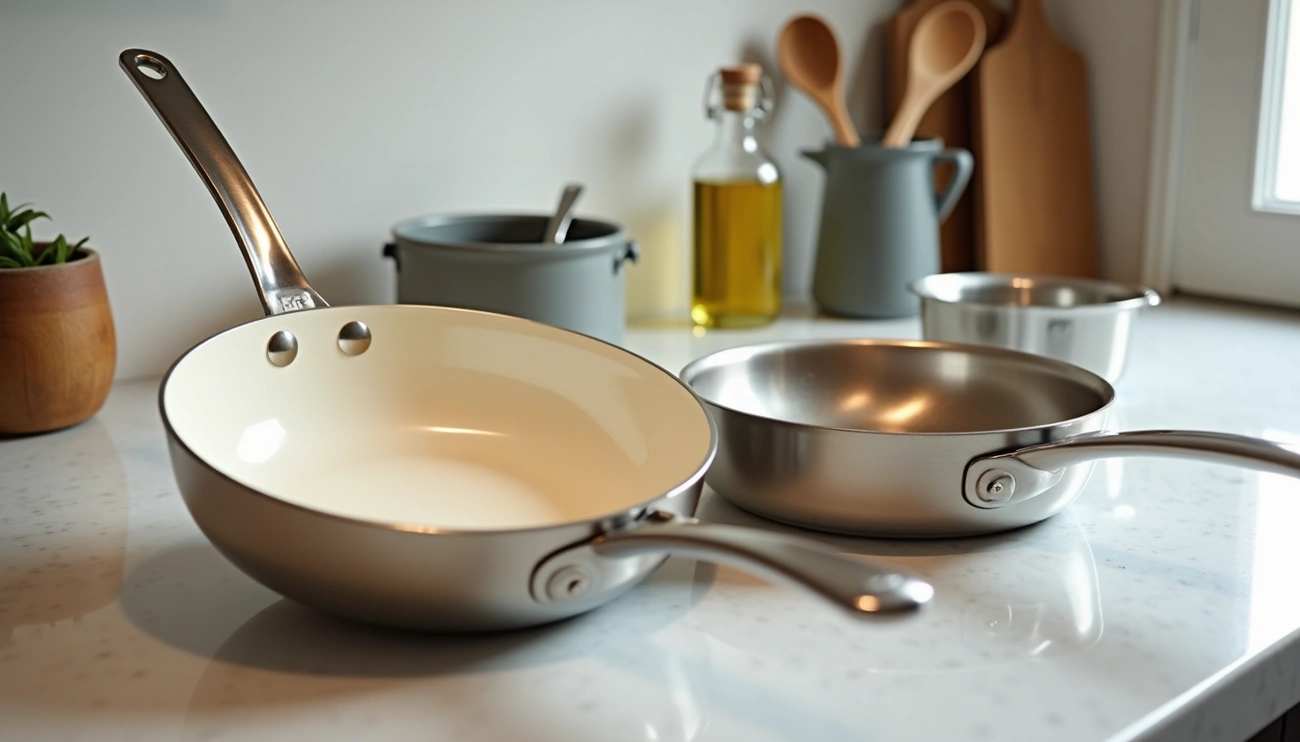
Yes, Ceramic pots and pans are safe because they are free from PTFE, PFOA, and PFAS. Ceramic cookware does not leach harmful chemicals into food and withstands high heat up to 450°F or more. However, ceramic nonstick coatings wear out faster than traditional coatings and can chip over time.
What is Ceramic Cookware Made Of?
The composition of ceramic cookware is more complex than many consumers realize. Unlike traditional clay pots used for millennia, today’s “ceramic” cookware falls into two distinctly different categories with vastly different properties.
Pure ceramic vs ceramic-coated cookware
True ceramic cookware is made entirely from kiln-fired clay, typically a type of fireclay that remains stable at extremely high temperatures. These 100% ceramic pieces are created by mixing clay, water, natural minerals, and inorganic oxides before firing at temperatures reaching 2,500°F. This intense firing process creates a non-porous, heat-resistant material that won’t leach chemicals into food.
In contrast, ceramic-coated cookware dominates store shelves today. These products consist of a metal core with a thin ceramic-based coating applied to the surface. Though marketed as “ceramic,” this coating isn’t traditional pottery material. Most ceramic-coated pans use what’s called a sol-gel coating—a mixture of silica (essentially sand) and other inorganic chemicals that creates a smooth, non-stick surface.
The distinction matters greatly when considering ceramic cookware safety. Pure ceramic contains no metal components and naturally becomes non-stick with proper oiling and heat. Meanwhile, ceramic-coated products rely entirely on their thin coating to maintain their non-stick properties.
How sol-gel coatings are applied
The sol-gel process—the technology behind most ceramic non-stick coatings—involves transforming a liquid precursor (the sol) into a solid material (the gel). Manufacturers begin by creating a solution containing silica and various metal oxides. This mixture is then sprayed onto pre-treated metal cookware.
After application, the coated pans undergo thermal curing at temperatures between 400-800°F—significantly lower than traditional ceramic firing. This process creates a hard, glossy ceramic-like film bonded to the metal base. The resulting surface provides non-stick properties without using PFAS chemicals found in traditional non-stick coatings.
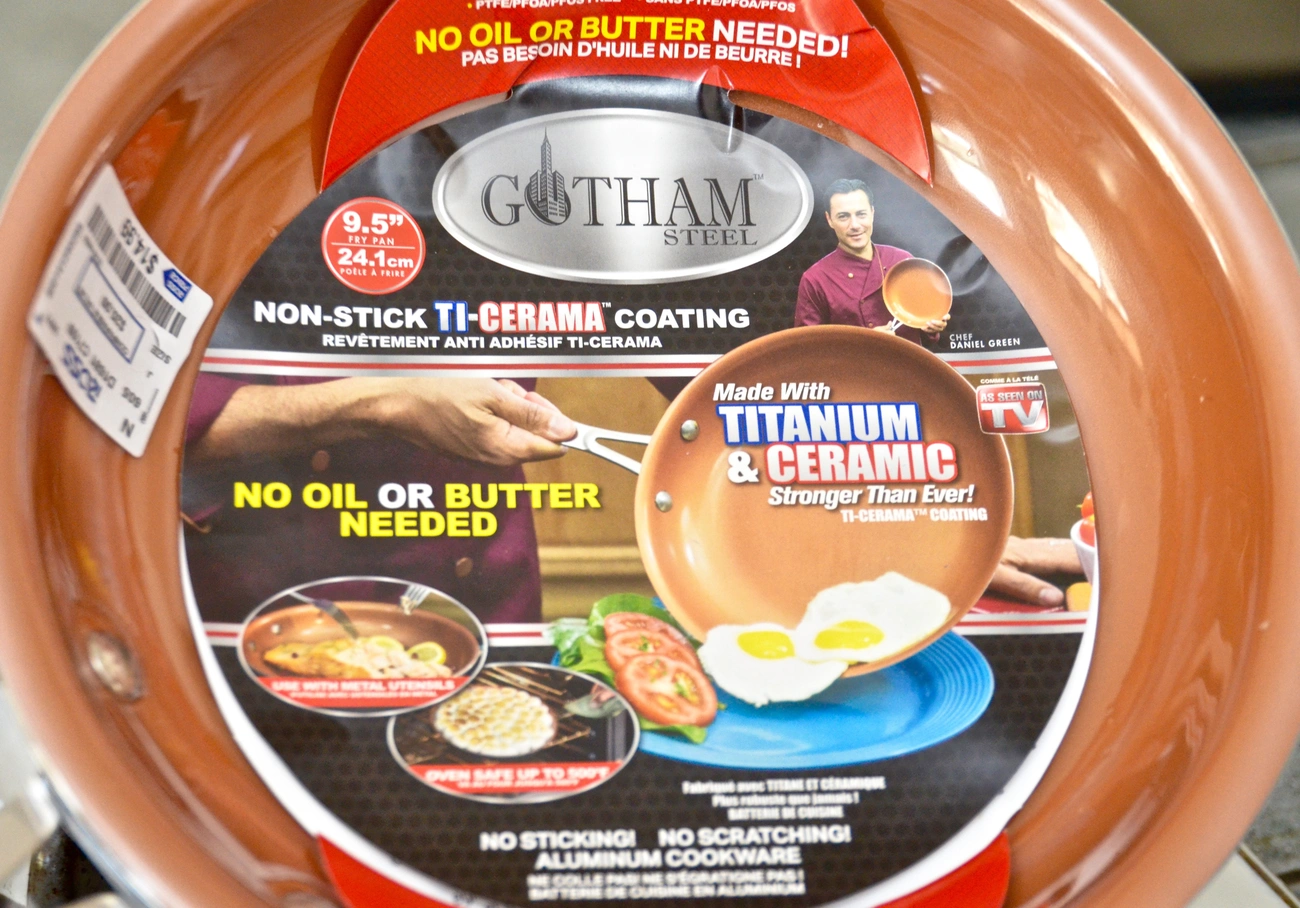
Interestingly, sol-gel ceramic coatings didn’t appear in cookware until the 1990s, making them relatively new compared to traditional ceramic or even PTFE-based non-stick coatings. Some high-end brands apply multiple ceramic layers, sometimes reinforced with titanium, to improve durability.
Common base materials: aluminum and stainless steel
Most ceramic-coated cookware uses aluminum as its core material due to its excellent heat conductivity and affordability. Higher-quality products often use anodized aluminum, which undergoes an electrochemical treatment to increase durability. The thickness of this aluminum base significantly impacts performance—forged aluminum bases at least 5mm thick distribute heat more evenly and resist warping better than thinner options.
Stainless steel serves as another common base material, particularly for premium cookware lines. All-Clad, for example, uses recycled aluminum with stainless steel induction plates in their ceramic non-stick cookware, making them compatible with all stovetops including induction. This construction allows for oven-safe use up to 450°F, though manufacturers generally advise against broiler use.
The base material greatly influences the cookware’s performance. Aluminum heats quickly and evenly but may not last as long as stainless steel. Furthermore, if the ceramic coating chips away on aluminum-based pans, there’s greater potential for exposure to the metal underneath compared to stainless steel bases.
5 Common Myths About Ceramic Cookware Safety
Marketing hype around ceramic cookware has created several persistent myths about its safety. Looking beyond the sleek appearances and celebrity endorsements, let’s address these misconceptions with evidence-based facts.
Ceramic cookware is 100% ceramic
Most modern “ceramic” pans aren’t ceramic at all. What many consumers don’t realize is that these popular products typically consist of aluminum or stainless steel with a thin ceramic-like coating applied to the surface. Manufacturers use a process called “sol-gel” to create a mixture of silica, metals, and chemicals that’s sprayed onto a metal base.
Even high-end brands like Always Pan have acknowledged their products aren’t truly ceramic but rather a “ceramic precursor” with a different formula. True ceramic cookware is made entirely of clay and inorganic materials, whereas ceramic-coated cookware merely mimics the appearance and some properties of ceramic.
All ceramic cookware is non-toxic
Although ceramic-coated cookware is marketed as a non-toxic alternative to traditional non-stick pans, the reality is more complex. Not all ceramic cookware is created equal. Some ceramic cookware contains potentially concerning materials.
Testing by consumer advocates has found lead in certain ceramic-coated products, with levels as high as 70ppm detected in some pans. Additionally, scientific concerns exist about titanium dioxide nanoparticles used in some ceramic coatings, which studies show can migrate into food.
Quality control varies significantly between manufacturers, making “non-toxic” claims worth investigating rather than accepting at face value.
Scratches make ceramic cookware dangerous
Contrary to common fears, scratches in ceramic-coated pans don’t present the same dangers as scratched PTFE (Teflon) coatings. When ceramic-coated cookware gets scratched, it primarily affects the non-stick performance rather than releasing harmful chemicals.
This differs substantially from traditional non-stick pans where scratches can potentially expose consumers to PFAS chemicals. Nonetheless, scratches do compromise the effectiveness of the coating and might expose the underlying metal, which could impact cooking performance.
Ceramic cookware can’t handle high heat
Ceramic coatings can actually withstand higher temperatures than traditional PTFE-based non-stick coatings. Nevertheless, the surfaces can potentially break down at temperatures above 260°C (500°F).
True ceramic cookware (made of 100% ceramic) can handle much higher temperatures without degradation. Most ceramic-coated cookware performs best at low to medium heat settings – excessive high heat weakens the coating over time, leading to deterioration and loss of non-stick properties.
Ceramic cookware lasts forever
Perhaps the most misleading claim is about ceramic cookware’s durability. Even with perfect care, ceramic-coated cookware typically lasts only 1-3 years before losing its non-stick properties. The coating begins to deteriorate with regular use, especially when subjected to high heat, metal utensils, or abrasive cleaning.
Pure ceramic cookware can indeed last decades or even generations when properly maintained. Consequently, many consumers feel disappointed when their expensive ceramic-coated pans require replacement after relatively brief periods, especially since marketing often implies much greater longevity.
Is Ceramic Nonstick Cookware Safe According to Science?
Scientific evidence offers a more nuanced view of ceramic cookware safety than marketing claims suggest. Research has started examining what happens when these popular kitchen items break down during regular use.
What studies say about ceramic coatings
Laboratory testing reveals that particles from ceramic coatings can migrate into food, primarily after wear and tear. In one key study, researchers examined commercially available ceramic cookware under simulated consumer use conditions. The findings showed that titanium and silicon concentrations in acidic food simulant (3% acetic acid) were notably higher in used pans compared to fresh ones. This migration increased progressively across different usage scenarios—from washing to scouring to scratching.
Most concerning, under aggressive use conditions simulated by abrasion with tungsten carbide burrs (mimicking metal utensil damage), ceramic coatings released measurable nanoparticles into food simulant. The coatings also released aluminum from the base material, which increased with use. Even with proper care, these coatings may begin deteriorating within months of purchase, according to independent testing.
Titanium dioxide and nanoparticle concerns
The presence of titanium dioxide nanoparticles in ceramic coatings has become a focal point for safety researchers. These nanoparticles—detected in testing of several major ceramic cookware brands—can migrate into food during cooking, as confirmed by multiple studies. The titanium dioxide particle concentrations found in food simulant reached levels of 10⁸ particles per square decimeter with median diameters of 250 nm.
This raises legitimate health questions because titanium dioxide has been classified as a category 2B carcinogen by the International Agency for Research on Cancer. The European Union has even banned titanium dioxide in food products (though not yet in cookware) based on concerns about cancer risks and potential organ accumulation. Scientists also note potential links to neurotoxicity and intestinal inflammation.
Lead and heavy metal testing results
Beyond nanoparticles, testing has identified additional concerns with certain ceramic cookware. Independent testing has found traces of lead, mercury, and antimony in some ceramic-coated products. Some testing revealed lead levels as high as 70ppm in specific brands.
Regulatory oversight remains inadequate—currently, no federal limits exist for lead in ceramic cookware, creating a concerning gap in consumer protection. Additionally, manufacturers aren’t required to disclose their proprietary coating formulations, leaving consumers in the dark about what they’re cooking with.
Traditional pure ceramic cookware has its own set of considerations. While generally safer when properly manufactured, imported traditional ceramic pieces have been identified as sources of clinically significant lead poisoning. The risk primarily comes from lead-contaminated glazes that have been traditionally used to add color and provide a smooth finish.
Looking forward, more scientific investigation is needed as Washington state has recently ordered manufacturers to submit their nonstick ingredients for transparency as they investigate potential hazards.
How Ceramic Cookware Compares to Other Materials
Understanding how ceramic cookware stacks up against other popular materials helps clarify its true value in the kitchen beyond marketing claims.
Ceramic vs PTFE-based nonstick
Traditional nonstick cookware containing PTFE (commonly known as Teflon) differs fundamentally from ceramic-coated options. PTFE coatings begin degrading at temperatures above 480°F, potentially releasing harmful gasses. Ceramic coatings, in comparison, can withstand slightly higher temperatures but still deteriorate with excessive heat.
Regarding performance, PTFE generally provides more consistent food release throughout its lifespan. Even premium ceramic pans lose their nonstick properties faster than traditional nonstick cookware. Moreover, both coating types inevitably deteriorate over time, with neither lasting more than a few years with regular use.
The primary advantage of ceramic over PTFE lies in its composition – ceramic coatings don’t contain PFAS chemicals that persist indefinitely in the environment. Henceforth, many environmentally conscious cooks opt for ceramic cookware as the safer alternative between the two nonstick options.
Ceramic vs stainless steel
Stainless steel offers superior durability compared to ceramic-coated cookware. Whereas high-quality ceramic pans typically last only 2-3 years, properly maintained stainless steel cookware can serve for decades.
Maintenance requirements differ substantially between these materials. Ceramic cookware requires gentle handling – avoiding metal utensils, abrasive cleaners, and dishwashers. Conversely, stainless steel withstands dishwashers and more rigorous cleaning methods.
One advantage ceramic cookware holds over stainless steel is its non-reactive surface. Accordingly, you can safely cook acidic foods like tomato sauce or lemon-based dishes without worry. Stainless steel, under certain conditions, may leach small amounts of nickel and chromium into food, particularly during extended cooking of acidic ingredients.
Ceramic vs carbon steel and cast iron
Both carbon steel and cast iron develop natural nonstick properties through seasoning, unlike ceramic’s manufactured coating. Carbon steel handles extremely high heat (up to 1200°F) while ceramic cookware typically maxes out between 350-600°F.
Longevity presents the starkest contrast – properly maintained carbon steel pans can last a lifetime, whereas ceramic cookware generally needs replacement every 1-5 years. Cast iron similarly offers generational durability when properly cared for.
Iron leaching represents a key difference between these options. Cast iron can release small amounts of iron into food, which may benefit those with iron deficiencies but could be problematic for others with iron absorption issues. Pure ceramic cookware, when properly manufactured, doesn’t leach metals into food.
For those seeking alternatives to coated cookware entirely, both uncoated stainless steel and properly seasoned cast iron or carbon steel provide options that avoid the potential safety concerns associated with any manufactured nonstick coating.
Tips for Safe Use of Ceramic Pots and Pans
Proper care of ceramic cookware not only extends its lifespan but also ensures it remains safe for cooking. Following these guidelines will help maintain your pans’ performance and safety.
Use low to medium heat
Getting the temperature right is crucial when cooking with ceramic. Given that ceramic cookware holds heat exceptionally well, cooking at low to medium temperatures is sufficient for most recipes. High heat is actually the primary culprit behind coating damage, causing premature deterioration of the nonstick surface. Even quality ceramic pans perform best under gentle, consistent heat. This approach both preserves the coating integrity and promotes even cooking of your meals.
Avoid metal utensils
To protect your ceramic coating from damage, always reach for softer alternatives instead of metal tools. Wood, silicone, and nylon utensils are ideal companions for ceramic cookware. Metal utensils—especially those with sharp edges—can scratch the surface, compromising the nonstick properties. Once scratches appear, the coating begins to deteriorate faster, ultimately shortening your pan’s useful life.
Hand wash to preserve coating
Proper cleaning techniques significantly impact ceramic cookware longevity. Initially, allow your pans to cool completely before washing to prevent thermal shock. Subsequently, clean with warm water, mild soap, and a soft sponge only. Steer clear of abrasive cleaners, steel wool, and stiff brushes that can damage the coating. For stubborn food residue, a baking soda paste offers a gentle yet effective solution.
Replace when coating is chipped or worn
Visible damage signals it’s time for replacement. Chips, flaking, or significant scratching indicate the ceramic coating has degraded. Upon noticing these signs, prioritize getting new cookware, as damaged coatings can mix with food, potentially creating health concerns. Additionally, diminished nonstick performance—food sticking despite proper care—points toward coating failure.
Conclusion
Ceramic cookware certainly offers attractive benefits compared to traditional nonstick options. The absence of PFAS chemicals makes ceramic-coated pans a better environmental choice than PTFE alternatives. Nevertheless, their safety profile requires a more critical eye than what glossy marketing campaigns suggest.
My professional experience aligns with the research findings – ceramic coatings simply don’t last forever. Most households will need replacement after 1-3 years of regular use, regardless of how carefully they treat their pans. This reality contradicts the “buy once” messaging often associated with these products.
The potential migration of nanoparticles and heavy metals from some ceramic coatings also deserves serious consideration. Quality matters tremendously with these products. Therefore, purchasing from reputable manufacturers who test their products thoroughly becomes essential for safety.