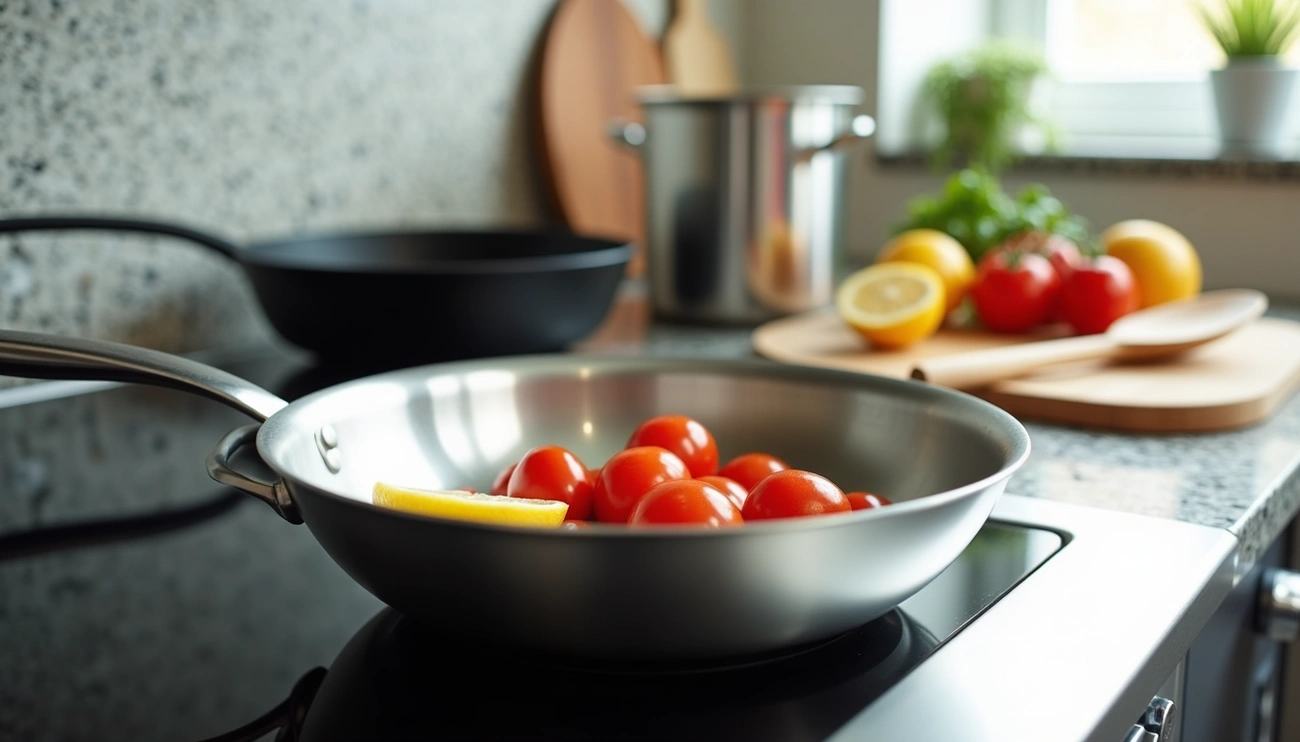
Forged aluminum cookware is safe for daily cooking because it uses anodized or food-grade non-stick coatings that prevent aluminum from leaching into food. Forged construction increases durability and improves heat distribution compared to stamped aluminum. The non-reactive surface supports consistent cooking performance and long-term use.
What is Forged Aluminum Cookware?
Forged aluminum cookware represents a distinctive category in kitchen equipment, characterized by its unique manufacturing process and exceptional physical properties. Unlike other varieties, this cookware undergoes a specific transformation that enhances its performance substantially.
How forged aluminum is made
The forging process fundamentally differs from casting as it doesn’t melt the aluminum. Instead, manufacturers shape solid aluminum through intense pressure and heat until it becomes malleable. This process typically involves hydraulic stamping that applies localized compressive forces. During forging, the metal experiences solid-state plastic deformation, which refines its internal grain structure and increases hardness by over 30% compared to conventional aluminum cookware.
Moreover, this manufacturing technique eliminates porosity by crushing any voids and dispersing alloy concentrations, creating a dense, uniform microstructure. The thermomechanical deformation energy essentially drives recrystallization of the material’s internal structure, consequently enhancing its overall durability and toughness.
Forged vs cast vs anodized aluminum
Each aluminum cookware type offers distinct characteristics based on its production method:
| Type | Production Method | Key Characteristics |
|---|---|---|
| Forged | Solid-state deformation under pressure | <citation index=”29″ link=”https://www.solamexhome.com/unveiling-the-core-advantages-and-selection-guide-for-forged-aluminum-cookware.html” similar_text=”Characteristic |
| Cast | Pouring molten metal into molds | <citation index=”29″ link=”https://www.solamexhome.com/unveiling-the-core-advantages-and-selection-guide-for-forged-aluminum-cookware.html” similar_text=”Characteristic |
| Anodized | Electrolytically oxidized aluminum surface | <citation index=”29″ link=”https://www.solamexhome.com/unveiling-the-core-advantages-and-selection-guide-for-forged-aluminum-cookware.html” similar_text=”Characteristic |
| Die-Cast | Injection of molten aluminum into die | <citation index=”29″ link=”https://www.solamexhome.com/unveiling-the-core-advantages-and-selection-guide-for-forged-aluminum-cookware.html” similar_text=”Characteristic |
Why forged aluminum is used in cookware
Chefs and home cooks alike favor forged aluminum primarily because of its exceptional heat conductivity. The dense structure created through forging allows for rapid, even heat distribution—crucial for precise cooking techniques.
Additionally, forged aluminum cookware maintains remarkable stability even under high-temperature cooking methods such as stir-frying and deep-frying. Its resistance to warping outperforms standard aluminum pans, which tend to deform under prolonged heat exposure.
The forging process also enables design flexibility, allowing manufacturers to create cookware with extra weight strategically placed at the rim and base. This design approach improves balance, handling, and cooking performance. For health-conscious consumers, many premium forged aluminum products incorporate food-grade non-stick coatings and specially oxidized surface layers approximately 20-30 microns thick—three times thicker than standard aluminum surfaces.
Is Forged Aluminum Safe to Cook With?
The safety of cooking with forged aluminum centers primarily on understanding its potential for metal transfer into food. This critical concern requires examining scientific evidence alongside practical considerations.
Understanding aluminum leaching
Aluminum leaching occurs when metal migrates from cookware into food during preparation. This transfer happens particularly with uncoated aluminum, which is a soft, reactive metal. Research indicates that leaching increases with prolonged cooking times and when cookware surfaces become damaged or pitted. Laboratory studies reveal that new non-anodized aluminum cookware releases significantly higher concentrations of metals than older pots, although this pattern reverses with anodized versions as their protective layer deteriorates over time.
Impact of acidic foods and high heat
Acidic ingredients substantially increase aluminum transfer into meals. Foods with high acid content—tomatoes, vinegar, citrus, and sauerkraut—accelerate this reaction. In fact, studies demonstrate that tomato sauce cooked in aluminum can accumulate considerably more metal than non-acidic foods. Furthermore, salt exacerbates this process, as does high-temperature cooking. When subjected to lab testing, acidic conditions extracted more metal from cookware than neutral environments.
What health authorities say
Official health positions on aluminum cookware remain largely reassuring. The FDA and WHO consider aluminum cookware safe for everyday use. According to the CDC, exposure to aluminum naturally present in food, water, and cookware isn’t considered harmful. Nevertheless, the WHO has established a provisional tolerable weekly intake of 20 mg per day for a 70 kg adult, as excessive amounts may potentially affect certain body systems over time.
Is aluminum cookware safe for daily use?
For most individuals, forged aluminum cookware presents minimal risk under normal circumstances. Studies indicate that typical aluminum exposure from cookware falls well below safety thresholds. Nevertheless, several practical considerations merit attention. First, anodized aluminum significantly reduces leaching compared to untreated surfaces. Second, avoiding long-duration cooking of acidic foods in uncoated aluminum prevents both taste alterations and excessive metal transfer. Finally, replacing cookware once it shows significant surface deterioration represents a prudent safety measure.
Forged Aluminum vs Other Cookware Materials
When choosing cookware for your kitchen, understanding how forged aluminum stacks up against other popular materials helps make an informed decision based on your cooking style and priorities.
Forged aluminum vs stainless steel
Stainless steel excels in durability and longevity but falls short in heat distribution compared to aluminum. Forged aluminum heats up faster and distributes heat more evenly, whereas stainless steel takes longer to reach cooking temperature. Regarding reactivity, stainless steel is completely non-reactive with acidic foods, unlike aluminum which may impart metallic flavors. Price-wise, forged aluminum typically costs less than quality stainless steel.
Forged aluminum vs nonstick pans
Most nonstick cookware uses aluminum as its base material but adds synthetic coatings. Forged aluminum provides better heat distribution than standard aluminum used in many nonstick pans. The primary concern with nonstick surfaces involves potential health risks from synthetic coatings. Alternatively, anodized aluminum offers natural non-stick properties without synthetic chemicals, creating a surface approximately 30% harder than stainless steel.
Forged aluminum vs cast iron
Cast iron retains heat superbly but conducts it poorly compared to aluminum. This means cast iron takes longer to preheat yet maintains temperature longer after removing from heat. Cast iron cookware weighs substantially more than aluminum, making aluminum easier to maneuver. For specific cooking methods, cast iron excels at browning, searing and baking, whereas forged aluminum shines with glazing, steaming and simmering.
Aluminum cookware pros and cons
Advantages:
- Excellent heat conductor
- Lightweight and manageable
- More affordable than premium materials
- Heats quickly and evenly
Disadvantages:
- Reactive with acidic foods
- Less durable than stainless steel
- May warp under extreme heat
- Potential for aluminum leaching with damaged surfaces
How to Use Forged Aluminum Cookware Safely
Proper handling of forged aluminum pots and pans extends their lifespan while minimizing potential health concerns. Mastering a few simple practices ensures your cookware remains both safe and efficient.
Avoiding damage to the surface
To protect your cookware’s surface, primarily use wooden, silicone, or plastic utensils instead of metal ones that can scratch the protective layer. Simply avoid chopping food directly in your pans. Generally, medium heat settings work best as forged aluminum heats rapidly and maintains temperature efficiently. Excessive heat can cause warping and damage coatings.
When to avoid cooking acidic foods
Especially avoid preparing acidic ingredients like tomatoes, citrus, vinegar, and wine in uncoated aluminum. These foods (pH 2-4) react with aluminum, potentially altering taste and increasing metal leaching. For these items, opt for stainless steel, ceramic, or glass alternatives.
Proper cleaning and maintenance
Clean cookware with warm, soapy water and soft sponges immediately after use. For stubborn stains, a baking soda paste works effectively. Above all, avoid dishwashers as harsh detergents damage aluminum surfaces. Dry thoroughly before storing to prevent water spots.
When to replace your cookware
Replace your aluminum pans if you notice:
- Chipping or peeling coating
- Deep scratches or pitting that harbor bacteria
- Visible warping affecting cooking performance
- Persistent greasy film that resists cleaning
Quality forged aluminum typically lasts 5-10 years with proper care.
Conclusion
Forged aluminum cookware stands as a reliable, efficient option for home cooks when used appropriately. Throughout my years as a professional chef, I’ve found that most concerns about aluminum safety stem from misconceptions rather than scientific evidence. Major health authorities certainly consider aluminum cookware safe for everyday cooking, though specific situations deserve caution.
First and foremost, forged aluminum offers exceptional cooking performance thanks to its manufacturing process. The pressure-formed structure creates superior heat distribution while maintaining lighter weight than cast iron alternatives. This makes it particularly suitable for quick-cooking methods where precise temperature control matters.
Nonetheless, acidic foods remain the primary consideration when using uncoated aluminum. Tomato sauces, citrus, and vinegar-based recipes significantly increase metal leaching, potentially affecting both food flavor and metal intake. For these dishes, stainless steel or ceramic cookware serves as a better alternative.
Additionally, the condition of your cookware plays a crucial role in its safety profile. Scratched, pitted, or damaged surfaces allow greater metal migration into food. Therefore, regular inspection of your pans becomes essential for maintaining both performance and safety.