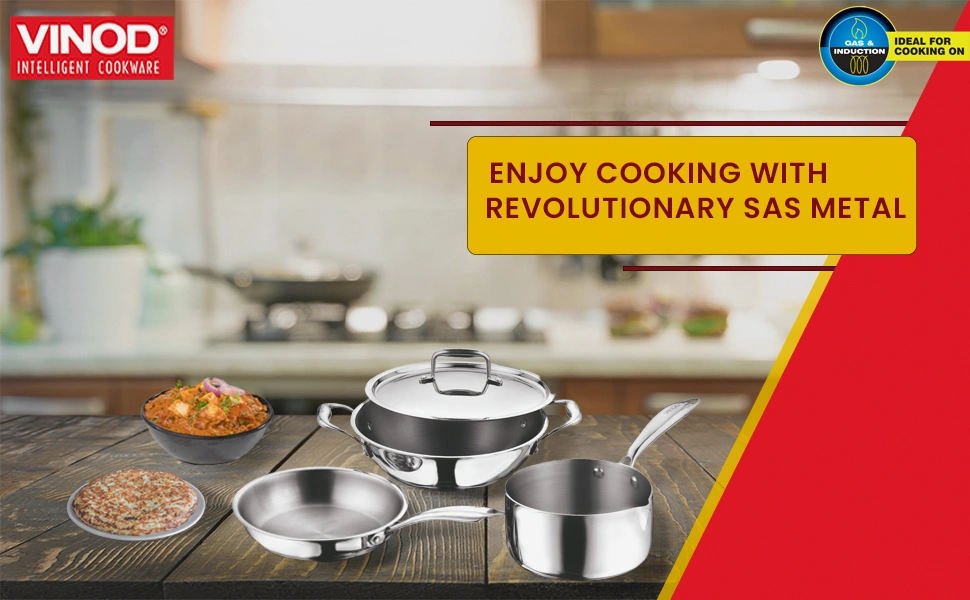
Yes, Platinum cookware is safe because it uses high-grade T304 stainless steel that resists corrosion and does not leach harmful chemicals into food. Many systems feature 24-element construction for even heat distribution and efficient nutrient retention. Use moderate heat to prevent scorching, as this cookware retains heat efficiently.
What is Platinum Cookware Made Of?
Despite numerous cookware options on the market, understanding the materials used in Platinum Cookware helps explain why many consider it a premium option. The composition directly impacts both performance and safety, making material choices crucial for informed buying decisions.
304 stainless steel and aluminum core
Platinum Cookware is primarily constructed from high-quality T304 stainless steel, which serves as the main cooking surface. This isn’t your standard kitchen material—it’s specifically chosen for its excellent corrosion resistance and durability. The company describes it as “the finest grade T304 stainless steel” in their marketing materials.
The manufacturing process combines multiple materials to create an effective cooking surface. Beneath the stainless steel exterior lies a strategically designed aluminum core that functions as a heat conductor. This multi-layer construction creates what manufacturers call “special heat transmitting properties for fast, even heat distribution”.
Comparison with 316Ti and other materials
In contrast to Platinum Cookware’s 304 stainless steel construction, some premium alternatives use 316Ti stainless steel with titanium reinforcement. The key difference? 316Ti offers enhanced protection against corrosion, especially from salt and acidic foods.
According to comparative analyzes, Platinum Cookware’s 304 stainless steel remains “resistant to most corrosion and reactive foods” but “lacks the titanium reinforcement found in premium alternatives”. Consequently, while 304 stainless steel provides good general corrosion resistance, it doesn’t match the specific acid resistance of titanium-reinforced options.
The comparison becomes important because 316Ti stainless steel (the same material used in surgical implants) demonstrates “higher resistance to pitting, especially from tomato or citrus acids”. For cooks who frequently prepare acidic foods, this distinction could affect long-term performance.
Is platinum shield cookware safe?
Despite some confusing marketing terminology, Platinum Cookware doesn’t actually contain the precious metal platinum. Instead, the name refers to the brand rather than composition. The cookware is primarily made of T304 stainless steel with aluminum cores.
In fact, according to reliable sources, the material is “engineered to never leech metals into your food, ensuring pure flavor, safe cooking, and optimal health with every use”. However, independent research on stainless steel cookware generally suggests that some metal leaching can occur in specific circumstances.
For instance, cooking highly acidic foods or cooking for extended periods (over 20 hours) may increase the risk of nickel and chromium leaching. Nevertheless, a recent study referenced by Heritage Steel (another stainless steel cookware manufacturer) found that cooking with stainless steel releases “amounts below known allergy-triggering thresholds”.
The aluminum core, while excellent for heat conduction, is fully encased in stainless steel, preventing direct food contact. This design addresses concerns about aluminum, which has been “linked to several health outcomes, such as neurological and reproductive disorders” when directly contacting food.
Is Platinum Cookware Non-Toxic?
When it comes to kitchen safety, stainless steel has earned a reputation as one of the safest cooking materials available. Yet many consumers still wonder about potential health risks from metal leaching. Let’s examine what science tells us about Platinum Cookware’s non-toxic claims.
Understanding food-grade stainless steel
Food-grade stainless steel is graded based on its chromium and nickel content, which enhances durability and resistance to rust. Platinum Cookware utilizes 304 stainless steel, typically labeled as 18/10 or 18/8, indicating the steel contains 18% chromium and 10% or 8% nickel. This composition differs from 316 stainless steel, which includes molybdenum for superior corrosion resistance, or 18/0 (430) stainless steel, which is nickel-free for those with allergies.
Stainless steel stands as one of the most eco-friendly cooking materials available today. It offers exceptional durability, longevity, and easy maintenance while being inherently non-toxic and typically free from coatings. Moreover, at the end of its useful life, stainless steel is easily recyclable, making it an environmentally responsible choice.
Does it leach metals into food?
Scientific research confirms that stainless steel cookware can leach small amounts of nickel and chromium into food, primarily under certain conditions. A comprehensive study found that after six hours of cooking acidic foods like tomato sauce, nickel and chromium concentrations increased up to 26-fold and 7-fold respectively.
Cooking duration significantly impacts metal migration. Longer cooking times resulted in additional metal leaching, with nickel concentrations increasing 34-fold and chromium approximately 35-fold compared to sauces cooked without stainless steel.
The age of your cookware notably affects leaching potential:
- New stainless steel cookware resulted in the largest increases in metal content
- Metal leaching decreased with sequential cooking cycles
- Leaching stabilized after the sixth cooking cycle
Even after the tenth cooking cycle, researchers measured an average of 88 μg of nickel and 86 μg of chromium leached per 126g serving of tomato sauce. This suggests that while leaching decreases over time, it doesn’t completely stop.
Nickel and chromium safety levels
Understanding the safety implications requires context about daily intake limits. The Tolerable Upper Intake Level for nickel was set at 1,000 μg per day. Adults typically ingest between 69-162 μg daily through regular diet. Foods naturally high in nickel include peanuts (956 μg/kg), peas (699 μg/kg), oatmeal (495 μg/kg), and milk chocolate (871 μg/kg).
For perspective, a half cup of peanuts contains approximately 68 μg of nickel, which is similar to the amount that might leach from well-used stainless steel cookware.
Regarding health concerns, nickel sensitivity affects approximately 10-20% of the population, with women at higher risk. For those with nickel sensitivity, even a single dose as low as 67 μg can trigger dermatitis.
Chromium presents fewer health concerns as it’s an essential trace mineral, though poorly absorbed. The recommended daily intake for adults is 50-200 μg, with most adults consuming 60-80 μg from their diet. About 7% of the population may have chromium sensitivity that can cause dermatitis.
It’s worth noting that stainless steel cookware is considered significantly safer than non-anodized and anodized aluminum cookware when comparing heavy metal contamination. The European Food Safety Authority confirms that well-constructed stainless steel food contact materials transfer small amounts of nickel and other metals into food—amounts that fall within established release limits and are comparable to naturally occurring levels.
For those without metal sensitivities, Platinum Cookware’s 304 stainless steel construction generally presents minimal health concerns under normal cooking conditions.
How Platinum Cookware Performs in Real Kitchens
Beyond safety considerations, the true test of any cookware comes from its performance in everyday cooking situations. Platinum Cookware offers several distinctive features that impact how it functions in real kitchen environments.
Heat distribution and retention
The hallmark of Platinum Cookware is its specialized 24-element nutrithermic compact base. This foundation picks up even the lowest heat temperatures and distributes them evenly across the cooking surface.
The base is attached to the 1.2mm thick pot body with tremendous force (1.2 tons), creating an inseparable bond between multiple light-metal layers. This construction effectively eliminates hot spots—those frustrating areas where food burns in one spot while remaining undercooked in others.
Heat retention is primarily accomplished through the multi-layered metal construction that conserves energy exceptionally well. Once heated, the cookware maintains consistent temperatures, allowing for reduced energy consumption during cooking. This heat management system reportedly works so efficiently that it eliminates the need for cooking oils when frying various foods.
Stack cooking and moisture sealing
Uniquely, Platinum Cookware is designed for stack cooking, where multiple pots can be used simultaneously on a single burner. This technique:
- Creates a more energy-efficient cooking environment
- Maximizes limited stovetop space
- Allows preparation of entire meals using just one heat source
The moisture-sealing technology represents another standout feature. Each lid contains a precisely engineered 1.22mm condensation groove that captures hot humid air and creates a water barrier between the lid and pot. This vapor seal forms an almost air-tight cooking environment that locks in nutrients, flavors, and moisture. Importantly, this design eliminates the need for excess water in cooking vegetables and other foods, subsequently preserving more nutrients.
The temperature knob (TempAlert Knob) provides visual feedback about the cooking process, eliminating guesswork about proper heat settings. The manufacturer advises against lifting the lid during cooking as it disrupts the carefully maintained temperature and moisture environment.
Is platinum cookware oven safe?
For those wondering “is platinum cookware oven safe,” the answer is affirmative. According to product specifications, at least some Platinum cookware products can safely withstand oven temperatures up to 500°F. This heat tolerance makes the cookware versatile for recipes requiring stovetop-to-oven transitions.
However, it’s worth noting that oven-safety specifications may vary between different Platinum cookware products and collections. Some non-stainless components like knobs or handles might have different temperature limitations, so consulting the specific product documentation remains essential for safety.
Overall, Platinum Cookware combines effective heat management, moisture retention, and versatile cooking capabilities that extend beyond basic food preparation tasks.
Chemical Safety: PTFE, PFOA, and PFAS Explained
Understanding the chemicals used in cookware helps evaluate health risks that might not be obvious from marketing materials alone. With growing research on “forever chemicals,” knowing what’s in your pots and pans becomes increasingly important.
Is Teflon bad for you?
Teflon is a brand name for polytetrafluoroethylene (PTFE), a synthetic polymer that provides non-stick properties. Initially, many worried about Teflon primarily because of PFOA (perfluorooctanoic acid) used in its manufacturing. PFOA has been linked to serious health concerns including liver damage, thyroid disorders, and testicular cancer.
Fortunately, most manufacturers have phased out PFOA since 2013. Yet concerns remain about PTFE itself. When heated above 500°F (260°C), PTFE coatings can break down and release fumes that may cause “polymer fume fever” – temporary flu-like symptoms. At extreme temperatures of 730°F (390°C) or higher, these fumes could potentially cause more serious respiratory effects.
Does Platinum Cookware use PTFE?
Unlike many non-stick options, Platinum Cookware doesn’t appear to use PTFE coatings. As covered in previous sections, it relies on high-quality stainless steel construction with an aluminum core. This composition essentially eliminates risks associated with PTFE degradation and potentially harmful fumes.
What to know about non-toxic cookware claims
When evaluating “non-toxic” cookware claims, understanding marketing terminology becomes crucial:
- “PFOA-free” doesn’t mean PFAS-free. Many products labeled PFOA-free may still contain other PFAS chemicals. In fact, testing found one “PFOA-free” pan contained measurable PFOA levels plus other concerning PFAS compounds.
- “PTFE-free” typically indicates a product without Teflon-like coatings. This claim tends to be more reliable than PFOA-free claims.
- “PFAS-free” suggests absence of the entire chemical family, but experts caution this term can be misleading since there are thousands of PFAS compounds, and most tests look for less than a hundred.
Even more concerning, replacement chemicals for PFOA, such as GenX, may present their own hazards. One study found GenX might be more toxic at lower exposure levels than PFOA. Furthermore, PFAS chemicals have become so widespread they’ve been detected in raindrops, highlighting their environmental persistence.
Platinum Cookware’s stainless steel composition helps consumers avoid these chemical concerns altogether.
Durability, Warranty, and Long-Term Use
Investing in quality cookware means considering not just immediate performance, but long-term value and reliability. As a result, understanding durability and warranty becomes crucial when evaluating if platinum cookware is safe for long-term kitchen use.
Expected lifespan of Platinum Cookware
First and foremost, Platinum Cookware has an expected lifespan of 12-18 years with proper care and maintenance. This relatively long life expectancy stems from its T-304 stainless steel construction, which does not oxidize or rust—helping ensure the cookware maintains its beauty and shine throughout its lifetime. Indeed, this durability factor is significant when compared to the industry average for commercial cookware, which typically needs replacement every 2-3 years.
Warranty terms and customer support
Platinum Cookware comes with a comprehensive lifetime guarantee, reflecting the manufacturer’s confidence in product quality. Key warranty details include:
- Customers must pay an $11.95 return shipment fee for warranty claims
- Products purchased from auction sites like eBay or Facebook Marketplace carry no warranty
- The warranty doesn’t cover damage from misuse, accidents, or product alterations
For customer support, Platinum offers assistance through their toll-free number (1-800-261-4501) or email (orders@lakeindustries.com). Undoubtedly, registering your product promptly is essential, as it enables faster customer support and special offers.
How it compares to other premium brands
In comparison with elite brands like All-Clad and Tramontina, Platinum Cookware offers good value despite its shorter lifespan. Premium alternatives like Saladmaster feature titanium reinforcement, making them slightly more durable over decades of use. Certainly, high-end cookware sets from manufacturers like All-Clad or Tramontina typically come with similar lifetime warranties covering manufacturer defects, yet may command significantly higher prices.
For shoppers prioritizing non-toxic cookware options, Platinum’s 304 stainless steel construction provides a solid middle-ground between budget options and ultra-premium titanium-reinforced alternatives.
Conclusion
Platinum Cookware stands as a solid middle-ground option for health-conscious consumers seeking safer kitchen tools. Throughout our examination, we’ve discovered that while it doesn’t contain actual platinum metal, its T304 stainless steel construction offers excellent durability and relatively minimal health concerns under normal cooking conditions.
The evidence regarding metal leaching shows small amounts of nickel and chromium may transfer to food, particularly when cooking acidic items. Nevertheless, these levels typically fall below problematic thresholds for most people without specific metal sensitivities. Additionally, the aluminum core remains fully encased in stainless steel, eliminating direct food contact with this potentially problematic material.
Perhaps most importantly, Platinum Cookware avoids the chemical concerns associated with non-stick coatings. Without PTFE, PFOA, or other PFAS chemicals, users can cook at high temperatures without worrying about toxic fume release. This benefit alone makes stainless steel options worth considering for many households.