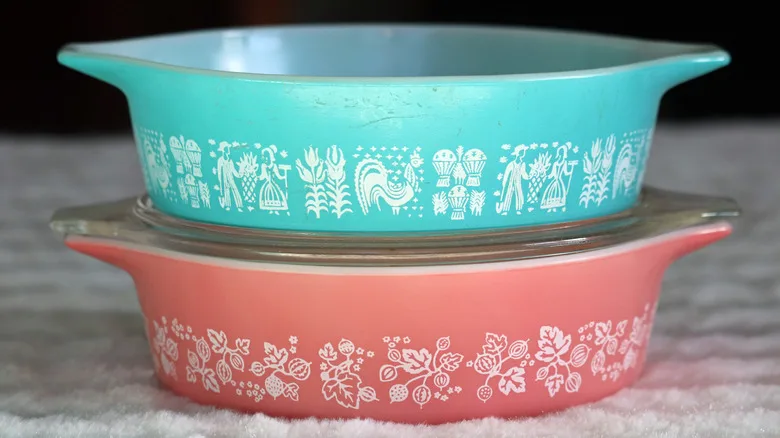
Pyrex is microwave safe because modern Pyrex products use tempered glass designed to withstand high temperatures. Manufacturers engineer this glass for reheating and cooking in microwave ovens. Avoid sudden temperature changes, such as moving Pyrex from freezer to microwave, because thermal shock can cause shattering.
What Makes Pyrex Microwave Safe?
The science behind Pyrex’s microwave safety lies in its unique composition and manufacturing process. Understanding what makes Pyrex microwave safe requires looking at its material properties and heat resistance capabilities.
Borosilicate vs. tempered glass
Pyrex products are manufactured using two primary materials: borosilicate glass and tempered soda-lime glass. The original Pyrex used borosilicate glass, which contains at least 5% boric oxide. This addition creates a glass with exceptional resistance to thermal shock.
Borosilicate glass can withstand temperature changes of up to approximately 330 degrees Fahrenheit without breaking. In contrast, tempered soda-lime glass tolerates temperature changes of about 100 degrees.
Notably, the manufacturing of Pyrex has evolved over time. Prior to the 1950s, all Pyrex was borosilicate, but subsequently, many products shifted to tempered soda-lime glass. Today, both materials are used, with different benefits:
- Soda-lime glass offers better resistance to impact breakage
- Borosilicate glass provides superior resistance to extreme thermal changes
To identify which type you own, check the logo: “PYREX” (all capitals) typically indicates borosilicate glass, whereas “pyrex” (lowercase) suggests tempered soda-lime glass.
How Pyrex handles heat
The remarkable thermal properties of Pyrex explain its microwave safety. Borosilicate Pyrex can withstand extreme temperatures from -40°C to +300°C and thermal shocks up to 220°C.
Borosilicate’s molecular structure distributes thermal stress evenly throughout the glass. The presence of boron in the glass matrix helps prevent cracks from forming during temperature transitions. This structural stability makes it ideal for microwave use where heating can be rapid and uneven.
French PYREX borosilicate glass demonstrates thermal resistance up to 572°F (300°C), whereas American Pyrex made of tempered soda-lime glass has lower heat resistance. Additionally, borosilicate PYREX can safely transition from freezer temperatures (-4°F/-20°C) directly to oven temperatures (464°F/240°C).
Is all Pyrex microwave safe?
Although most Pyrex is microwave safe, there are important exceptions. First, check for the “microwave-safe” label on your container. Many older or decorative pieces may lack this designation and should not be microwaved.
Modern Pyrex products labeled as microwave-safe are specifically designed to handle microwave heat without cracking. Furthermore, Pyrex lids made of the same glass material as the containers are also microwave-safe, but plastic lids have different heat resistance properties.
According to the manufacturer, both soda-lime and borosilicate Pyrex are suitable for microwave use. Nevertheless, all Pyrex products require proper handling. Even microwave-safe Pyrex should not be subjected to sudden temperature changes that could cause thermal shock.
How to Use Pyrex Safely in the Microwave
Using Pyrex safely in the microwave requires following specific guidelines to prevent breakage and ensure longevity of your glassware. Even though Pyrex is designed for heat resistance, proper handling makes all the difference between safe cooking and potential kitchen disasters.
Check for microwave-safe labeling
Firstly, always verify that your Pyrex container is explicitly labeled as microwave-safe. Most modern Pyrex products are suitable for microwave use, yet older or decorative pieces might not be. Look for the “microwave-safe” marking typically imprinted on the bottom of the container. If you can’t find any labeling, examine the original packaging or the manufacturer’s website for confirmation. For unlabeled items, you can conduct a simple test: fill the container with water, microwave it for one minute, and check if the glass remains cool while the water heats – this suggests microwave compatibility.
Avoid sudden temperature changes
Thermal shock is the primary cause of Pyrex breakage. Consequently, never move a cold Pyrex dish directly from the refrigerator into a hot microwave. Allow it to reach room temperature first, which typically takes 5-10 minutes. Similarly, don’t place hot Pyrex on cold or wet surfaces after heating. Gradual temperature adjustments prevent stress fractures in the glass.
Use microwave-safe lids only
Pyrex glass lids are generally microwave-safe, unlike some plastic covers. When using a compatible plastic lid, it must remain unsealed and positioned off-center to allow steam to escape. Failure to do so could result in pressure buildup and potential accidents.
Don’t overheat or overfill
Leave adequate space in your container to allow for even heating and expansion of foods. Avoid microwaving empty or nearly empty Pyrex dishes. Moreover, never overheat oils or butter – follow recommended microwave times instead. Start with lower power settings to prevent unnecessary stress on the glass.
Keep away from direct heat sources
Despite being heat-resistant, Pyrex should never be used on stovetops, under broilers, in toaster ovens, or on barbecue grills. These direct heat sources can damage the glass structure regardless of its microwave safety rating.
Common Mistakes to Avoid
Even the most durable Pyrex products can break when mishandled. Knowing what not to do with your glassware is just as crucial as understanding proper usage techniques.
Microwaving cold Pyrex straight from the fridge
One of the most dangerous practices is placing cold Pyrex directly into the microwave. The sudden temperature change creates thermal shock that can cause the glass to crack or shatter. Above all, allow refrigerated Pyrex to reach room temperature (typically 5-10 minutes) before microwaving. For frozen Pyrex, the manufacturer explicitly advises allowing the dish to thaw completely before placing it in a preheated microwave. This simple step significantly reduces breakage risks.
Using Pyrex with metal rims
In particular, never microwave Pyrex with metal components. Metal rims, bands, or decorative elements can spark in the microwave, potentially causing fires or damaging your appliance. Essentially, these sparks create electrical arcing that can damage both your microwave and the Pyrex dish itself. Metal utensils should likewise be kept away from Pyrex while microwaving.
Placing hot Pyrex on cold surfaces
Once your food is heated, be mindful about where you place the hot container. Setting hot Pyrex directly on cold, wet, or metal surfaces can compromise the product’s strength and result in breakage. As a result, the manufacturer recommends placing hot Pyrex only on dry cloths, potholders, wooden trivets, or cooling racks. The temperature differential between a hot dish and a cold granite countertop or sink is especially hazardous, creating enormous stress that can cause the glass to “explode”.
To sum up, most Pyrex breakage results from improper handling rather than manufacturing defects, primarily from extreme temperature changes that create internal stress in the glass.
Alternatives and When to Avoid Pyrex
While Pyrex is generally microwave safe, certain situations call for alternative containers. Let’s explore when and why you might need other options.
When to choose other microwave-safe containers
Pyrex, though durable, can be heavy and prone to breakage if mishandled. For meal prep or transport, lighter alternatives might be preferable. Glass containers, primarily borosilicate ones, excel at not staining or absorbing food odors yet lack portability for daily commuting.
Are plastic or silicone containers better?
Glass containers like Pyrex offer several advantages over plastic alternatives:
- Glass is BPA-free and doesn’t leach chemicals
- Glass doesn’t stain or absorb food odors
- Glass handles high heat safely when labeled microwave-safe
Yet plastic containers are typically lighter and less likely to break. Silicone represents a middle ground, often considered safer than plastic but not completely inert. “Silicones contain additives and are non-inert materials that leach additives and other chemicals into foods,” making them not entirely risk-free.
Eco-friendly options for microwave use
For environmentally conscious consumers, newer alternatives include:
- Bamboo fiber containers – microwave-safe, freezer-safe and fully compostable
- Plant-based containers – made with 97% annually renewable resources
- Compostable containers – from sugarcane, wheat straw, or corn resin
These eco-friendly options offer microwave safety without sacrificing convenience or sustainability, making them worth considering alongside traditional Pyrex.
Conclusion
Pyrex offers reliable microwave-safe options for most kitchen needs, though understanding which products can safely go from fridge to microwave makes all the difference. The distinction between borosilicate and tempered glass Pyrex significantly affects how your containers handle temperature changes, with borosilicate offering superior thermal shock resistance.
Proper handling remains the key factor determining whether your Pyrex stays intact or shatters unexpectedly. Following basic safety precautions such as checking for microwave-safe labeling, allowing cold containers to reach room temperature, and using appropriate lids will extend the life of your glassware considerably.
Many Pyrex breakage incidents stem directly from common mistakes rather than product defects. Thermal shock from sudden temperature changes poses the greatest risk, especially when moving containers directly between cold and hot environments. Additionally, placing hot Pyrex on wet countertops or cold surfaces almost guarantees disaster.