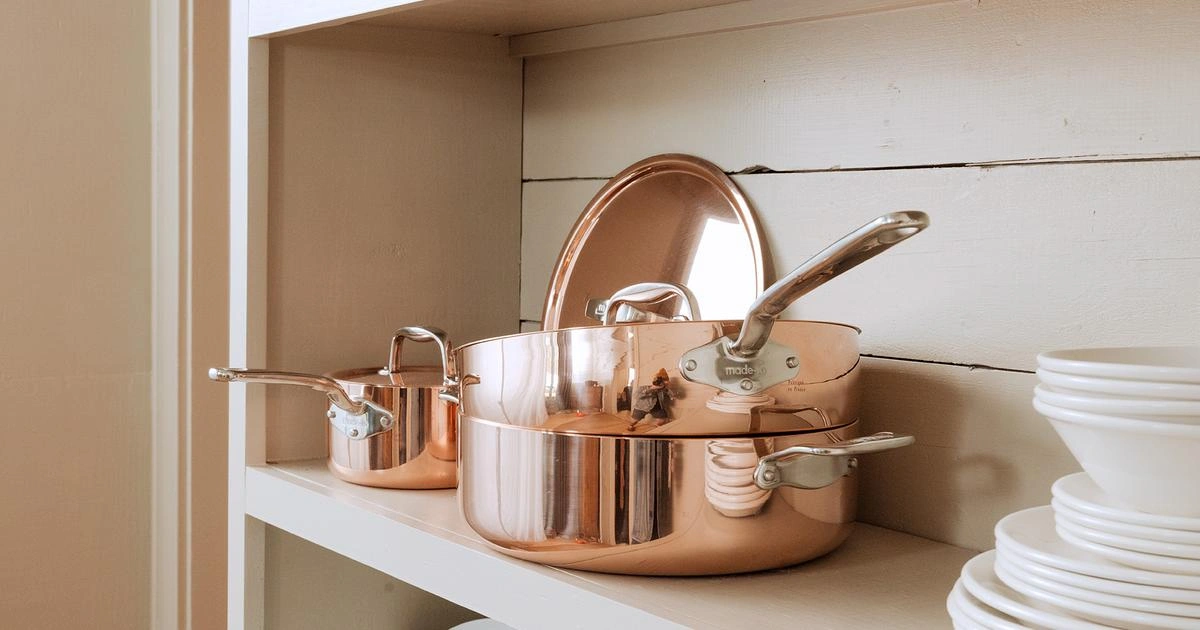
Tin coating is safe for cooking because it is non-toxic, non-reactive, and prevents copper from leaching into food. Tin lining makes copper cookware safe for acidic foods and provides a natural non-stick surface. Retin copper pots every 5–10 years, or when the lining wears down, to maintain safety and performance.
Why Copper Cookware Needs Tin Coating
Copper’s Reactivity with Acidic Foods
Copper’s status as a reactive metal creates specific challenges when food makes direct contact with its surface. Acidic ingredients trigger a chemical reaction that draws copper ions into whatever you’re preparing. Tomatoes, vinegar, citrus juice, and wine are common culprits in this process.
When acidic foods simmer on bare copper, the metal oxidizes and leaches into the dish. This leaching goes beyond affecting flavor. The copper compounds formed during this reaction can upset your stomach, and visible blue-green verdigris on the pan surface signals that copper and acids have spent too much time together. Frequent use of unlined copper cookware for acidic dishes can lead to a gradual buildup of copper in the body, affecting the liver, stomach, and kidneys.
The Role of Tin as a Protective Barrier
Tin has been used to line copper pans since the 1600s, primarily because tin sticks readily to copper. When these two metals come together, they don’t simply sit next to each other. The copper and tin atoms form bonds that create a rigid lattice structure, producing what metallurgists call an intermetallic layer.
This intermetallic material behaves differently from either pure metal. While pure tin melts at 450°F (232°C), the copper-tin intermetallic has a much higher melting point: Cu6Sn5 melts at 779°F (415°C) and Cu3Sn at 1,248°F (676°C). The intermetallic layer stays solid and stabilizes the lining at temperatures well above tin’s melting point. This explains why overheated tin doesn’t just slide down the pan’s sidewalls.
The intermetallic layer also adds durability. Tin has a Vickers hardness of less than HV 80, but copper-tin intermetallic has a hardness around HV 300, almost as hard as copper itself. This robust ceramic-like layer can deflect kitchen utensils or scrub sponges before they reach the copper underneath.
Non-Stick Properties of Tin Lining
Tin creates a smooth, consistent cooking surface that resists food adhesion. Unlike engineered coatings, tin is pure metal that naturally prevents sticking without requiring seasoning. The tin lining performs better as it breaks in with use, becoming more non-stick over time.
This non-reactive surface handles acidic ingredients without triggering chemical changes in your food, preventing metallic flavors or discoloration that would occur with bare copper.
Is Tin Coating Safe for Cooking?
What Scientific Research Says About Tin Safety
Scientific studies consistently demonstrate that tin coated cookware poses no health risks under normal cooking conditions. The CDC confirms that inorganic tin compounds enter and leave your body rapidly after consumption, preventing harmful accumulation. Research shows no evidence linking inorganic tin to cancer, birth defects, or reproductive problems.
Clinical studies reveal the safety margins are substantial. Adverse gastrointestinal effects appeared only at tin concentrations of 700 ppm or above in controlled studies. Food from unlacquered tin-lined cans contains up to 100 ppm of tin, well below problematic levels. Given that canned foods represent higher tin exposure than cookware, the trace amounts from tin lined copper cookware remain far within safe parameters.
How International Health Authorities View Tin Cookware
The World Health Organization, FDA, and CDC have extensively studied tin safety and affirm that tin cookware linings present no health hazard. These authorities established a Provisional Tolerable Weekly Intake of 14 mg/kg body weight for tin. Recommended maximum permissible levels stand at 250 mg/kg for solid foods and 150 mg/kg for beverages.
The FDA specifically endorses copper cookware lined with tin as meeting safety standards. This regulatory approval reflects decades of data showing tin’s safety record in food contact applications.
The Difference Between Toxic Organotins and Food-Safe Tin
The tin in cookware is pure elemental tin with only thin surface layers of inorganic compounds. This differs entirely from organotins, which combine tin with carbon to create industrial compounds used in plastics, pesticides, and wood preservatives. In general, organic tin compounds are human-made and do not occur naturally.
Organotins can cause neurological harm and affect the immune system. However, these toxic compounds are not present in tin cookware. Cases of poisoning from tin metal, its oxides, and salts are almost unknown, as tin is not easily absorbed by humans.
How Your Body Handles Tin Exposure
What Happens When You Ingest Small Amounts of Tin
Your digestive system acts as an effective barrier against tin absorption. When you consume tin from cookware or canned foods, only about 3-5% enters your bloodstream from the gastrointestinal tract. This poor absorption rate means the vast majority of ingested tin never becomes part of your body’s internal environment.
The small portion that does get absorbed distributes throughout your body but doesn’t target specific organs for storage. Whereas some metals concentrate in particular tissues, tin spreads widely without preferentially accumulating anywhere except minor deposits in bones and lungs.
How Quickly Tin Leaves Your System
Feces serve as the primary exit route for tin. Between 95-99% of consumed tin passes straight through your intestinal tract and leaves in feces. The absorption process is so inefficient that rats given tin in orange juice excreted 99% within 48 hours.
The small amount absorbed into your bloodstream exits through urine. Your body eliminates most inorganic tin within weeks, though the exact timeline varies. Inorganic tin compounds leave even faster, with most gone within a day. Some tin deposited in bones persists for 2-3 months before complete clearance.
Why Tin Doesn’t Accumulate to Harmful Levels
The combination of poor absorption and rapid excretion prevents tin buildup. Given that the average adult in the United States consumes approximately 4 mg of tin daily, and your body efficiently eliminates this through feces and urine, tin coated cookware contributes negligible amounts to your overall exposure. Canned foods represent the primary dietary tin source, yet even people who regularly consume canned products don’t develop harmful tin accumulation due to these protective mechanisms.
Understanding Tin Coating Limitations and Care
Temperature Limits of Tin Lined Copper Cookware
Tin melts at 450°F (232°C), making temperature control critical for tin cookware longevity. Keep cooking temperatures below 400°F to prevent lining damage. An empty pan can reach dangerous temperatures in 30 seconds over high heat, so never preheat without fat or food inside.
Butter serves as your temperature gage. If butter starts smoking, lower the heat immediately. Water-based dishes pose no risk since boiling water stays at 212°F, well below tin’s melting point.
Normal Wear and Tear of Tin Lining
Tin naturally darkens from silvery to matte gray or black during use. This color change is normal and doesn’t affect performance. Small beads of tin or lighter streaks indicate overheating but remain non-toxic.
When Re-Tinning Becomes Necessary
Re-tinning becomes necessary when exposed copper reaches the size of a U.S. quarter (24.26mm). For heavy home use, expect re-tinning every 10-15 years. Professional kitchens require it every 3-7 years.
Safe Usage Practices for Long-Lasting Performance
Avoid metal utensils that scratch the delicate tin surface. Use wooden or silicone tools instead. Clean with mild soap and warm water using soft cloths. Never use abrasive scrubbers that accelerate wear. Store in dry environments and avoid stacking without protective layers.
Conclusion
Tin coated copper cookware is indeed safe for everyday cooking when you follow basic temperature guidelines. Your body processes the minimal tin exposure efficiently, eliminating it within days. While tin has its limitations at 450°F, proper care extends your cookware’s lifespan significantly. I recommend investing in quality tin lined copper pans and maintaining them correctly. Re-tinning every decade or so is a small price for cookware that performs beautifully and poses zero health risks.