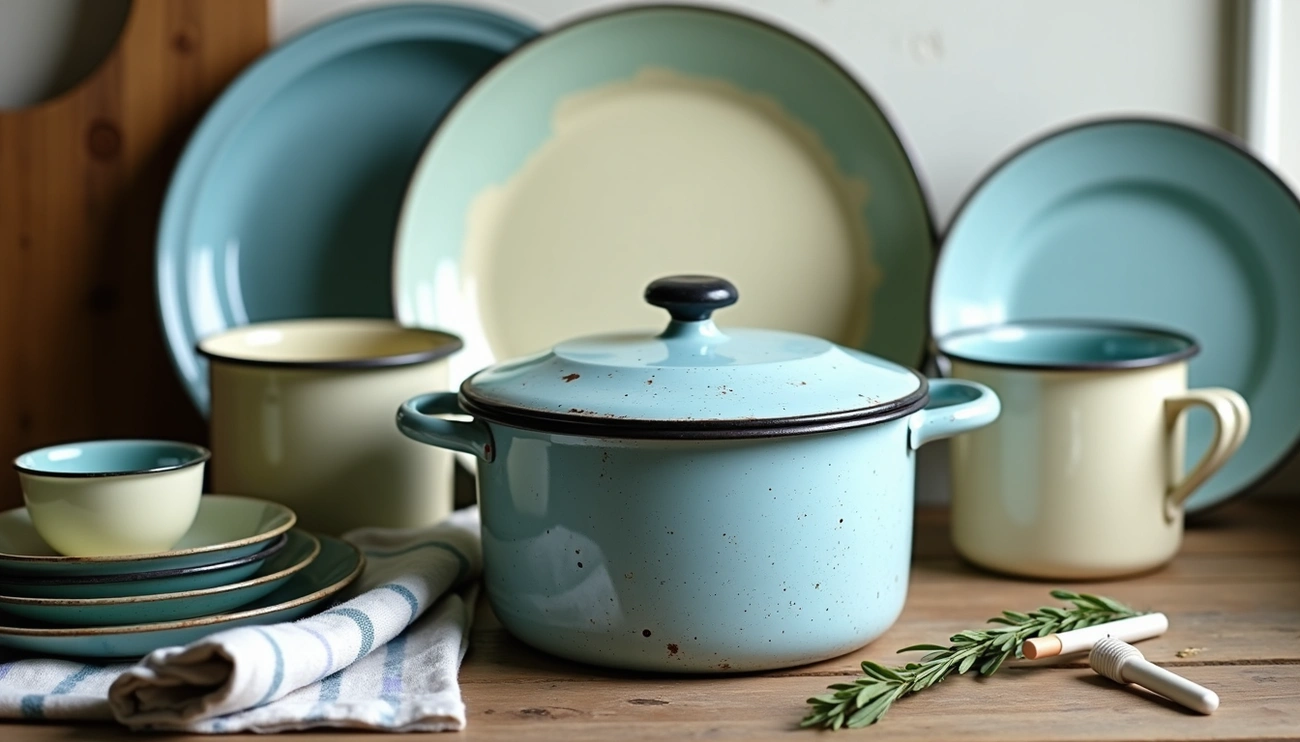
Vintage enamelware is safe to use if the enamel coating is fully intact and free of cracks, chips, or deep scratches. Enamel surfaces are non-reactive. However, pieces made before 1980, especially bright orange, yellow, or red items, may contain lead or cadmium and require lead testing before use.
What makes vintage enamelware potentially unsafe
Vintage enamelware holds nostalgic charm, yet beneath that beautiful speckled surface lurk potential dangers. The materials used in manufacturing these pieces decades ago pose several health risks worth understanding.
Lead and cadmium in glazes
The vibrant colors that make vintage enamelware so appealing often contained dangerous levels of heavy metals. Tests reveal shocking concentrations in some pieces—one vintage enamelware coffee pot toy contained 620,400 ppm lead (62% lead!), dramatically exceeding the 90 ppm considered unsafe for children. Additionally, cadmium frequently appears in bright red, yellow, and orange glazes, with some pieces testing at 21,600 ppm cadmium.
These toxins don’t remain safely trapped in the glaze. Health Canada notes that lead and cadmium can migrate into food, especially with hot or acidic foods like fruit juices and alcoholic beverages. Consequently, ingestion may cause serious health problems including kidney damage, weak bones, neurological issues, and reproductive harm. Furthermore, pregnant women face particular risks as lead can cross the placenta and affect fetal development.
Uranium in older enamel colors
Surprisingly, uranium oxide was commonly used to create those striking red, orange, and yellow hues in vintage ceramics. This practice began centuries ago and continued until World War II, when uranium production shifted to atomic bomb manufacturing. In fact, manufacturers resumed using depleted uranium in the 1950s and only discontinued the practice around 1972.
Research shows that these uranium-glazed pieces can release radiation through food contact. In one study, uranium leached into acetic acid solution at concentrations up to 31,800 μg/liter after 24 hours.
Lack of safety regulations in early manufacturing
Before 1971, there were no federal limits on lead in dinnerware and ceramics. The FDA only began regulating lead levels after recognizing the serious health implications. As a result, vintage pieces made prior to regulatory oversight almost certainly contain unsafe levels of toxic metals.
Modern manufacturers now comply with stringent safety standards. For instance, companies like Le Creuset have adjusted their production methods to prevent toxin release during cooking. In contrast, older pieces remain potentially dangerous, particularly if chipped, cracked, or regularly used with acidic foods.
How to inspect vintage enamelware before use
Knowing how to properly examine vintage enamelware can help you decide whether a piece is safe for cooking or better suited for display. Let’s explore what to look for when inspecting these charming kitchen collectibles.
Check for chips, cracks, and rust
First, examine the entire surface carefully. Since enamel has a tendency to chip, it’s rare to find antique pieces in perfect condition. Nevertheless, any compromised surfaces are potential health hazards. Chips and cracks can harbor bacteria and expose the underlying metal, which may contain harmful substances. Moreover, if the enamelware shows signs of rust, consider it strictly for decorative purposes—rusty kitchenware should never be used for food.
Beyond visible damage, check for glaze corrosion, which appears as chalky or gray residue, especially after washing. Also look for “crazing”—fine spiderweb patterns indicating weak glaze that could potentially fail.
Look for signs of wear on the interior
Upon closer examination of the interior surfaces, reject pieces with any chipping where food might come in contact. The smoothness of the finish is another critical factor—older pieces typically have a smoother finish than newer reproductions.
Tapping the bottom produces useful clues about age and quality. Genuine vintage pieces make a less ‘tinny’ or hollow sound compared to newer reproductions. Additionally, if tapping creates a distinctly tinny sound, the piece was likely manufactured in the 1970s or later.
Identify maker’s marks and production dates
Authentic antiques often have the maker’s name or date fired into the glaze on the bottom, although many early 20th century pieces weren’t marked. The weight provides further indication of age—enamelware crafted before World War II is noticeably heavier than postwar pieces.
Other indicators of older enamelware include:
- Riveted handles and spouts
- Wooden handles instead of plastic
- Overall patina that suggests age
Remember that even pristine-looking pieces may have underlying issues. Vintage enamelware that passes visual inspection might still contain lead or other dangerous chemicals beneath the surface.
Testing vintage enamelware for safety
Visual inspection isn’t enough to determine if vintage enamelware is safe—proper testing is essential.
Using lead test kits at home
Home lead test kits offer a first line of defense against toxic enamelware. These kits typically feature swabs that change color (often to red) when they detect lead. Many hardware stores sell affordable options like ProLab test kits, which can detect lead to as little as 5 parts per million. However, standard swab tests have limitations—they may not detect low levels of lead that could still pose health risks.
When to consider professional testing
Professional testing becomes necessary when home tests show concerning results or you’re evaluating particularly valuable pieces. X-ray fluorescence (XRF) testing identifies the exact elements in enamelware, detecting lead content with remarkable precision—even finding 463 ppm in seemingly safe items. Yet, the most accurate method remains leach testing through FDA-approved laboratories, which reveals whether toxins actually migrate into food.
How to interpret test results
Interpret any positive lead result seriously, regardless of concentration. Testing has revealed shocking levels in vintage pieces—from 48 ppm lead in blue enamelware cups to a staggering 601,600 ppm (60%!) in a purple ashtray. Even modern enamelware can contain significant lead—a 2014 mug tested at 15,000 ppm. Therefore, items showing any lead presence should be removed from food contact immediately.
Safe ways to use vintage enamelware today
Even though vintage enamelware may contain harmful substances, there are still ways to enjoy these beautiful pieces without compromising your health.
Use for serving or decoration
Rather than cooking in vintage enamelware, use these pieces primarily for serving cold foods like salads, fruits, and slaw. The risk of toxin leaching decreases significantly with non-acidic, room-temperature items. Yet, many collectors recommend using vintage pieces exclusively for decoration. Pristine pieces make charming containers for snapping beans, shelling peas, or as ice buckets during family gatherings.
Avoid cooking acidic foods
If you decide to cook with tested, chip-free vintage enamelware, avoid preparing acidic foods. Tomato sauces, wine-braised meats, and marinades can break down the enamel’s seasoning or cause metallic tastes to develop. As much as possible, limit cooking time for any potentially acidic ingredients.
Repurpose damaged pieces creatively
Dinged or scratched enamelware deserves a second life beyond cooking. Transform these treasures into:
- Planters for herbs, ferns or flowers (drilling drainage holes in the bottom)
- Magnetic memo boards on walls using Command Strips
- Vases for fresh or faux flowers
- Storage for bathroom essentials like hair clips or Q-tips
- Unique light fixtures or clocks (with professional assistance)
First thing to remember with repurposing: damaged enamelware shouldn’t come in contact with food, hence these alternative uses protect both your décor and health.
Conclusion
Vintage enamelware certainly carries nostalgic charm and undeniable esthetic appeal, though we must balance our appreciation with awareness of potential health risks. After all, these beautiful pieces often contain dangerous levels of lead, cadmium, and even uranium from manufacturing eras before safety regulations existed. Therefore, thorough inspection for chips, cracks, and wear becomes essential before bringing these items into food service.
Testing remains the most reliable way to determine safety. Home lead test kits offer a good starting point, but professional testing provides the definitive answers about toxin content. Consequently, any piece showing positive results for lead or other toxins should never touch food again.
Despite these concerns, we can still enjoy vintage enamelware safely. Undamaged, tested pieces work well for serving cold, non-acidic foods or as decorative elements in our homes. Alternatively, damaged pieces find new life as planters, storage containers, or unique décor items.