Anolon cookware is primarily made in China and Thailand. Meyer Corporation owns Anolon and manufactures its products in affiliated factories in Asia and Italy. Although the company operates from California, Anolon cookware production occurs outside the United States.
Where Are Anolon Pans Made?
Current Manufacturing Locations
Meyer Corporation operates Anolon cookware production across four countries: China, Thailand, Italy, and the United States. This multi-country manufacturing setup allows the company to produce different product lines based on their specific requirements and target markets.
The cookware and bakeware come from Meyer-affiliated factories throughout Southeast Asia, mainly in Thailand and China. All overseas manufacturing facilities follow U.S. manufacturing control measures to maintain consistent quality standards and ensure products meet safety requirements for everyday use.
Thailand houses Meyer’s largest production facility. Furthermore, this manufacturing arm spans close to 200,000 square meters and employs over 3,000 people. The Thailand plant produces an average of 100,000 pans per day for 300 days a year, serving Meyer affiliates across North America, Europe, Asia, and Australia. The facility includes a 300,000-square-foot rolling mill that manufactures more than 90 percent of the materials used in their products.
Changes in Production Over the Years
Meyer was founded in Hong Kong in 1951. In the early days, we produced various metal consumer products like flashlights, lanterns, and tennis rackets for export. The company didn’t venture into non-stick aluminum cookware until the early 1970s.
Over the decades, Meyer grew from a small Asian factory into a multinational manufacturing and marketing corporation with facilities in Thailand, China, Italy, and the U.S.. The company now operates distribution and marketing companies in the U.S., Canada, the UK, Australia, Japan, Hong Kong, China, Taiwan, Singapore, India, and Thailand.
Meyer developed Anolon to satisfy marketplace demand for thicker gage non-stick pans that were also dishwasher safe. This positioned Anolon as a premium offering in their cookware portfolio.
Which Anolon Product Lines Are Made Where
Different Anolon collections come from different manufacturing locations based on their design and construction requirements.
Anolon X is manufactured through collaboration with Meyer Corporation US affiliated companies in Italy and Thailand. Anolon Advanced comes from Thailand, as does Anolon Nouvelle Copper.
For example, the Anolon Gourmet and Anolon Endurance lines are made in China. Anolon Tri-Ply Stainless Steel cookware also comes from Chinese facilities.
Some collections like Anolon SureGrip, Endurance Plus, Nouvelle Copper Classic, and Advanced Home are produced in the USA. This gives American-made options for consumers who prioritize domestic manufacturing.
The specific manufacturing location varies depending on each product line’s construction methods, materials, and intended market positioning. Meyer Corporation strategically assigns production to facilities best equipped to handle each collection’s unique requirements.
Understanding Anolon’s Manufacturing History
Early Years: American Manufacturing
Anolon’s manufacturing roots stretch back further than most people realize. Our metalsmithing experience dates back to the 1940s, making pans, telegraph wire, and helmets to support US soldiers during WWII. This American manufacturing heritage laid the foundation for what would eventually become the Anolon brand.
The Anolon commitment to quality gourmet kitchenware began in 1984. A national culinary renaissance was underway, and our sister brand, Circulon, had been developing and producing quality nonstick cookware for several years. Recognizing that home cooks exploring the possibilities of creative cooking desired versatility and convenience, Anolon met those needs with the first hard-anodized, smooth-interior nonstick cookware.
In 1986, Anolon pioneered the hard-anodized nonstick pan. We formally launched in 1989, offering two hard-anodized nonstick cookware collections: one for the home chef, one for the more experienced cook. Through our first years, as home cooks discovered our cookware, we solidified our commitment to our mission, our consumers, and our products.
The Shift to Overseas Production
Meyer was founded in Hong Kong in 1951 with a focus on aluminum goods manufacturing and changed to cookware beginning in 1971 with the ascension of Stanley K. Cheng as CEO and chief inventor. In 1972, the first line of cookware produced by Meyer was sold in London.
Meyer established its U.S. base of operations in Milwaukee, Wisconsin, in the early 1980s, the starting point of its assault on the U.S. market. In 1992, the company relocated its U.S. subsidiary, Meyer Corporation U.S., to Vallejo, California. Cheng directed Meyer’s worldwide operations from his offices in Vallejo and began to express his entrepreneurial bent in endeavors aside from cookware.
At the heart of the sprawling empire was the company’s manufacturing facility in Thailand, which dwarfed its other production plants in Italy and China. Over the years, capital improvement programs at the Thailand facility increased its manufacturing space to more than one million square feet, a figure that did not include a 300,000-square-feet rolling mill. The Thailand facility produced an average of 100,000 pans per day, 300 days a year, providing sufficient volume to serve Meyer affiliates in North America, Europe, Asia, and Australia.
Why the Manufacturing Location Changed
The shift to overseas manufacturing wasn’t unique to Anolon or Meyer Corporation. Once the 1990s and 2000s hit, things changed across the cookware industry. Brands owned by big corporate entities couldn’t compete on quality alone, but by offshoring manufacturing they realized that consumers would trade off perceived quality for price. Companies sent their designs, manufacturing knowledge, and intellectual property to overseas facilities.
Meyer developed Anolon to satisfy marketplace demand for thicker gage non-stick pans that were also dishwasher safe. The strategic decision to manufacture in Thailand, China, and Italy allowed the company to maintain competitive pricing while serving a global market. The massive Thailand facility, with its integrated rolling mill manufacturing more than 90 percent of materials used in products, enabled economies of scale impossible to achieve with smaller domestic operations.
Despite overseas manufacturing, Anolon cookware and bakeware produced in Meyer-affiliated factories throughout Southeast Asia must follow U.S. manufacturing control measures to maintain the highest quality possible and ensure all cookware and bakeware is safe for everyday use.
Does Manufacturing Location Affect Anolon Quality?
Manufacturing location raises legitimate concerns about quality standards, material integrity, and long-term performance. According to Anolon, cookware is rigorously compliant with FDA regulations throughout the manufacturing process, with all nonstick coating layers being food contact safe. This compliance applies regardless of whether production occurs in Thailand, China, Italy, or the United States.
Quality Control Standards Across Factories
Meyer-affiliated factories throughout Southeast Asia follow U.S. manufacturing control measures to maintain the highest quality possible and ensure all cookware and bakeware is safe for everyday use. This standardized approach means overseas facilities operate under the same quality protocols as domestic operations.
Anolon maintains a strict quality assurance process to ensure every piece of cookware meets high standards. The company works closely with chefs and home cooks to understand their needs and develop cookware that meets those requirements. Given that Meyer runs its own factories in China, Italy, Thailand, and the US, the company maintains direct oversight rather than outsourcing to third-party manufacturers.
Material Sourcing and Construction
Hard-anodized aluminum forms the base of most Anolon cookware, paired with an ultra-durable, PFOA-free non-stick cooking surface. The non-stick coating uses high-quality PTFE manufactured by DuPont, the same company that produces coatings for All-Clad and Calphalon cookware brands.
The hard-anodized body provides durability and resistance to scratches while maintaining good heat conductivity. Material quality remains consistent across production facilities due to centralized sourcing. However, some reviewers note that Anolon uses 18/0 stainless steel throughout their construction, while higher-end brands use 18/0 steel on the base for induction compatibility and 18/10 stainless for the cooking surface because 18/10 offers more corrosion resistance.
Warranty and Customer Service Differences
Anolon backs all products with a limited lifetime warranty covering issues related to material or workmanship for the original purchaser’s residential use. The warranty does not cover wear and tear or damages from incorrect use. Notably, using cooking sprays on nonstick products voids the warranty.
The lifetime warranty covers manufacturing defects only, which remains typical for most cookware manufacturers. Registration isn’t required, and claims can be submitted through a dedicated web page. For additional help, contact Anolon customer service at 1-800-450-0156.
Real-World Performance Comparisons
Anolon has some of the longest-lasting nonstick cookware on the market. Compared to standard nonstick cookware, the pans are built like tanks and will outlast most nonstick pans available. One reviewer noted that after months of heating and cooling, the base stays flat with no warping or wobbling on the stovetop, and the nonstick surface remains smooth without wearing down.
On balance, manufacturing location appears less significant than the quality control standards enforced across all facilities and the materials used in construction.
How to Identify Where Your Anolon Cookware Was Made
Finding the manufacturing origin of your Anolon cookware proves more challenging than expected. Many consumers report difficulty locating this information, and the lack of clear country-of-origin labeling creates frustration for those trying to make informed purchasing decisions.
Reading Product Labels and Packaging
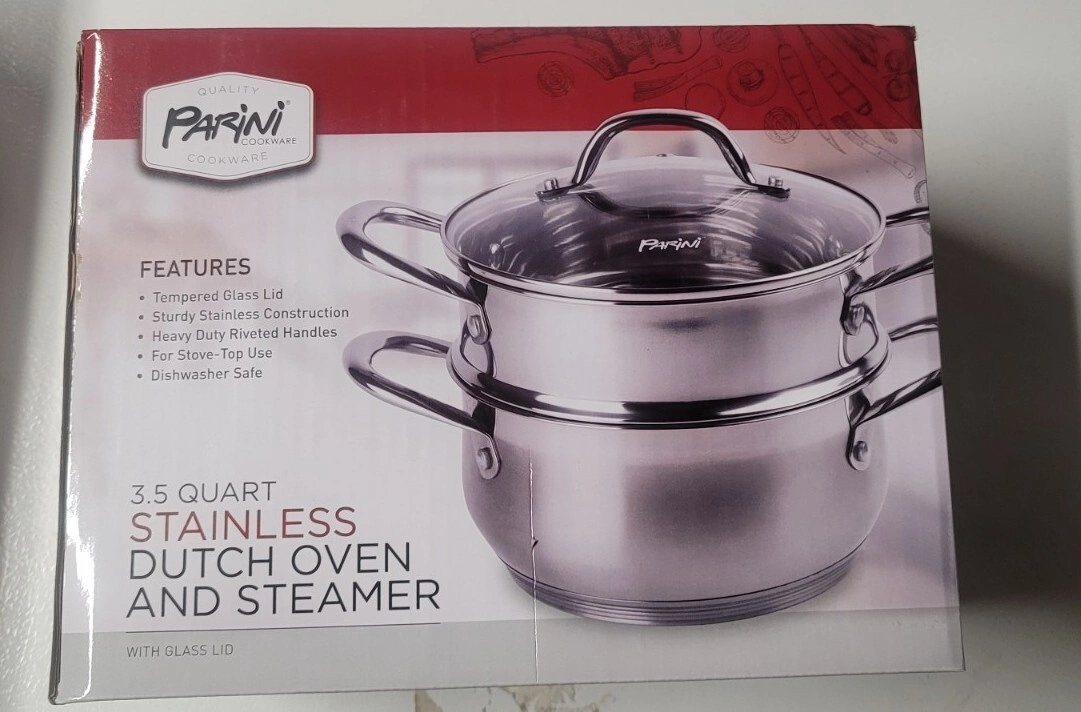
Packaging offers your best chance to determine where your Anolon cookware was manufactured. You can find out manufacturing details by reading the product description when browsing online or by looking at the labels on packaging if shopping in-store. The box typically contains country-of-origin information that doesn’t appear elsewhere on the product.
Save your packaging if manufacturing location matters to you. Once discarded, retrieving this information becomes significantly harder. Online product listings sometimes include manufacturing details in the specifications section, though this varies by retailer.
Checking the Bottom of Your Pans
In reality, most Anolon cookware doesn’t display country-of-origin markings on the pans themselves. One consumer noted that while the pan itself was probably marked on the box it came in, it isn’t stamped on the pan itself. Another confirmed there is no mention of the country of origin on the pot itself or any of the accompanying paperwork.
Multiple owners reported having several Anolon cooking utensils with none having any labeling showing where the particular item was made. This lack of physical marking on the cookware represents a common frustration point. Check the base, handle, and rim carefully, but don’t expect to find stamped manufacturing information.
Using Product Codes and Serial Numbers
Product codes offer another identification avenue, though they reveal model information rather than manufacturing location. If you still have the packaging, the barcode contains the product code. For example, in barcode 5000263570505, 57050 is the model number.
Alternatively, if you can locate your product on the Anolon website, the model number can be found in the features and specification option under ‘SKU’. However, the model number alone won’t tell you where that specific piece was manufactured. You’ll need to contact customer service with this information to determine the production facility.
Contacting Anolon Customer Service
Anolon’s customer service team can provide specific manufacturing details for individual products. This remains your most reliable option for definitively identifying where your cookware was made. Have your model number ready when you contact them to expedite the process.
The customer service approach works particularly well for older pieces where packaging has been discarded and online information proves scarce. Given that manufacturing locations have changed over the years, contacting support directly eliminates guesswork about when and where your specific piece originated.
Comparing Anolon to Other Cookware Brands
Where Is Circulon Cookware Made
Circulon shares the same parent company as Anolon. Meyer Corporation owns both brands, meaning they come from identical manufacturing facilities. Circulon cookware is made in company-owned factories in Thailand. The broader Meyer manufacturing network includes facilities in China, Italy, Thailand, and the US.
Circulon cookware and bakeware is manufactured in Meyer-affiliated factories throughout Southeast Asia, mainly in Thailand and China. The Meyer Corporation developed Circulon in 1984 with the innovation of non-stick cookware bonded to hard-anodized aluminum. Given this shared manufacturing infrastructure, comparing Anolon and Circulon becomes more about design philosophy than production quality.
All-Clad and American-Made Options
All-Clad represents the premium American-made alternative. The company’s fully bonded-metal collections are bonded, engineered, and assembled in Canonsburg, Pennsylvania. All-Clad operates this factory in Western Pennsylvania, which opened in 1971 and still produces cookware after over 50 years.
All-Clad stainless steel cookware, including the D3, D3 Everyday, D5, Copper Core, and G5 Graphite Core collections, is made in the United States. However, All-Clad’s hard-anodized aluminum non-stick collections, HA1 and Essentials, are made entirely in China. Even the American-made lines have lids and handles manufactured in China and attached in the US.
European Cookware Alternatives
European brands offer another manufacturing approach. Scanpan produces cookware in Denmark. Fissler manufactures in Germany, though not all Fissler products carry German production anymore. De Buyer from France makes stainless steel and carbon steel pans. Italian brands include Paderno, Sambonet, and Lagostina.
What to Look for in Manufacturing Transparency
360 Cookware demonstrates exceptional transparency. The company clearly states that over 85 percent of production and components originate primarily in the USA. When they had to source bonded materials from South Korea, they openly disclosed this change. They even removed their “Made in the USA” claim temporarily because they felt they no longer met the FTC’s “all or virtually all” standard.
Look for brands that clearly disclose production locations on packaging and websites. Companies confident in their manufacturing typically provide specific facility locations rather than vague geographic references.
Conclusion
Anolon cookware comes from Meyer Corporation facilities in China, Thailand, Italy, and the United States. By and large, the manufacturing location matters less than the quality control standards enforced across all facilities. Meyer maintains direct oversight of production rather than outsourcing to third-party manufacturers, which ensures consistency.
When choosing Anolon cookware, focus on the specific product line that meets your cooking needs rather than obsessing over where it was made. The company backs all products with a lifetime warranty regardless of origin. Above all, research the specific collection you’re considering and read reviews to understand real-world performance before making your purchase.