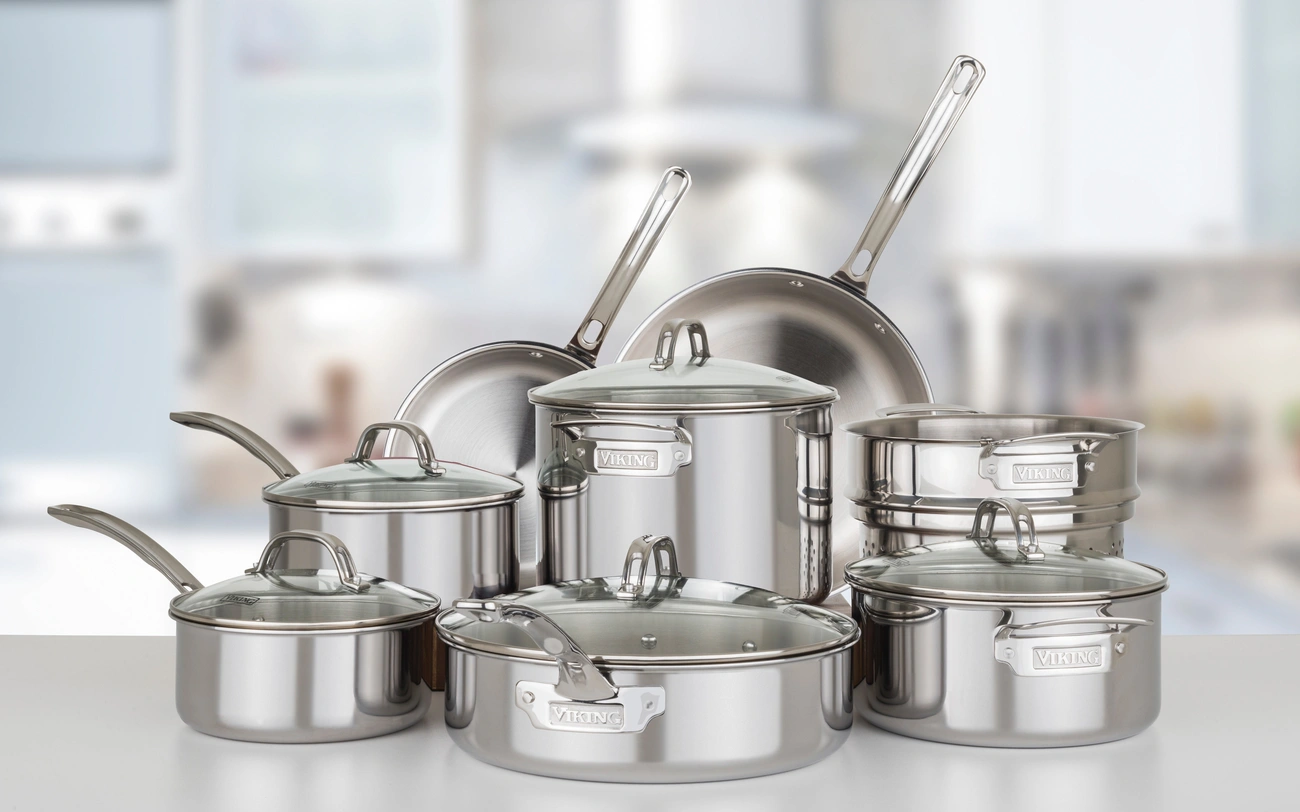
Viking 3-Ply cookware is primarily handcrafted in the United States. The Viking 3-Ply and Professional lines are American-made. In contrast, the Viking Contemporary line is manufactured in China. Always verify the specific product line, as Viking produces cookware in both the USA and China.
Where Is Viking 3-Ply Cookware Made?
The Manufacturing Location Revealed
Viking 3-ply cookware is primarily made in China. This applies to both the standard 3-ply line and the Contemporary collection. The 2-ply sets also come from China. In contrast, Viking’s 5-ply Professional line is manufactured in the USA with globally sourced materials.
The distinction between product lines caught me off guard. Prior to contacting Viking directly, I found conflicting information across retail websites. Some retailers list Viking 3-ply as “handcrafted in the USA”, which creates confusion for buyers trying to determine where is viking 3 ply bonded cookware made.
How We Confirmed This Information
I spoke with Viking’s customer service team to verify the manufacturing origins. They confirmed that the 5-ply range is made in the USA, while the 3-ply and 7-ply ranges are primarily made in China. This direct confirmation cleared up the retailer discrepancies.
Amazon customer service representatives from the manufacturer also verified this information, stating that 2-ply and 3-ply sets are made in China, while 5-ply sets are made in the USA. Multiple users on cooking forums reported finding “Made in China” stamped on their Viking 3-ply Contemporary pots.
The Contemporary line specifically carries Chinese manufacturing. One Amazon response clarified that “The Contemporary cookware has a modern conical shape, offers internal volume measures and glass lids…The Contemporary is made in China”.
What Viking Says on Their Website
Viking isn’t transparent about its manufacturing process or where materials are sourced from. Their website prominently features the 5-ply line with “MADE IN THE USA with globally sourced materials” badges, but you won’t find similar origin statements for the 3-ply or 7-ply products.
Finding out the country of origin for most of their cookware required digging with customer service and checking product pages carefully. The company doesn’t proudly state manufacturing location on pots made in China. If you’re researching viking cookware made in usa versus Chinese-manufactured options, you’ll need to verify each specific product line rather than assuming all Viking cookware shares the same origin.
Viking’s Different Cookware Lines and Their Origins
5-Ply Cookware: Made in the USA
Viking’s Professional 5-Ply line stands out as the only collection handcrafted in the U.S.. Clipper Corp, Viking’s official manufacturer based in Los Angeles, California, produces this entire range. The construction features surgical grade 304 stainless steel on the interior with three layers of aluminum at its core, sandwiched between 18/10 stainless steel on top and magnetic stainless steel on the bottom.
This collection includes stainless steel and nonstick saucepans, pots, frying pans, casserole pans, saute pans, and complete cookware sets. Each piece is oven-safe to 600°F and compatible with all cooktops, including induction. The five-layer system specifically uses pure 3004 aluminum in the middle layer, with aluminum alloy bonding layers on each side.
3-Ply and 7-Ply: Primarily Made in China
The 3-ply construction consists of a heavy-gage aluminum core with 18/8 stainless steel on the interior and magnetic stainless steel on the exterior to support induction cooking. Viking offers both standard 3-Ply and 3-Ply Contemporary collections, both manufactured in China. The Contemporary line reportedly features 3mm thickness, making it suitable for both gas and modern flattop stoves.
Viking’s 7-Ply Titanium cookware also comes from China. This line has a five-layer aluminum core with a titanium interior and magnetic steel exterior. Viking employs multiple constructions and uses different materials to appeal to a wide variety of home cooks.
Other Viking Products and Their Manufacturing Locations
Beyond the main cookware lines, Viking produces specialty cookware including stockpots, roasters, and pressure cookers in China. In addition, their bakeware, tea kettles, utensils, cutlery, and wood boards all originate from Chinese manufacturing facilities. Viking offers a variety of cookware solutions at different price points, from USA-made high-quality pieces to cast iron and nonstick pans for everyday use.
Why Manufacturing Location Matters for Cookware
Quality Control Standards
Manufacturing location directly impacts the standards your cookware must meet before reaching your kitchen. American-made cookware undergoes rigorous testing through organizations like the Cookware Manufacturers Association (CMA) and FDA guidelines. In contrast, Chinese steel production faces no mandatory testing requirements. This explains why 61% of Americans purchase products labeled “Made in the USA” because they view them as higher quality than similar products made elsewhere.
American manufacturers inspect each piece by hand before shipping. Imported cookware typically arrives pre-boxed and ready to ship, meaning the actual company never checks it for quality before you receive it.
Material Sourcing and Safety
Countries including the United States, Germany, France, and Japan maintain strict quality controls and manufacturing guidelines for cookware production. China produces nearly 50% of the world’s steel supply but without testing standards. Chinese steel sometimes includes ingredients that make production more affordable but potentially dangerous for food preparation.
American manufacturers must comply with FDA regulations governing materials that contact food, preventing harmful chemical leaching. Multiple studies show high exposures to lead and toxic metals from aluminum cookware made from scrap metal in countries with lax regulations.
Environmental and Labor Practices
American cookware manufacturers follow state and federal environmental regulations. Manufacturing in developing countries occurs with few or no environmental restrictions, producing hazardous chemicals that pollute air, water, and soil. Imported cookware creates up to 3 times more emissions than domestically made products due to shipping distances.
Labor practices differ substantially. American manufacturers provide livable wages and safe working conditions. Factories in other countries often use underpaid or forced labor in crowded facilities.
Price Point Differences
American-made cookware costs more because of higher material standards and labor expenses. Steeper labor costs account for the majority of expenses when production occurs in the USA. Forty percent of Americans consider manufacturing origin a primary factor in purchasing decisions.
Is Viking 3-Ply Cookware Good Quality?
Performance and Heating Properties
The real question isn’t just where is viking 3-ply cookware made, but whether it performs well in your kitchen. Viking’s 3-ply cookware features a thick aluminum core sandwiched between stainless steel layers, distributing heat uniformly across the bottom and up the pan sides. Consumer Reports rated the Viking Tri-Ply excellent for cooking evenness and speed of heating.
In independent testing, water reached its first bubbles in 1 minute and 42 seconds, achieving a full boil in 2 minutes and 39 seconds. The bubbles distributed evenly across the pan surface, confirming consistent heat transfer. Although the pans heat quickly, they cool faster than thicker 5-ply options. After removing from heat, water temperature dropped to 106.6°F after five minutes and 95.9°F after ten minutes.
Durability and Construction
Viking uses 304 high-grade stainless steel in its 3-ply construction. The pans are oven and broiler safe to 600°F. With proper care, expect a lifespan of 10 to 25 years or more. The solid cast stainless steel handles attach with rivets for lifetime durability.
Customer Reviews and Real-World Testing
Consumer Reports scored Viking 3-ply very good for food release and excellent for handle temperature. Users on Reddit report the 3mm thickness works well on both gas and modern flattop stoves. One reviewer found their Viking pan purchased at discount remained solid after months of use.
How It Compares to Viking’s USA-Made 5-Ply Line
Viking’s 5-ply line offers superior heat retention but costs more. The 3-ply balances strong cooking performance with a lower price point, making it suitable for home cooks who don’t need professional-grade heat retention. Consequently, the 3-ply works well for everyday tasks like boiling and sautéing.
Conclusion
Manufacturing location matters, but it doesn’t automatically determine performance. While Viking’s 3-ply cookware comes from China, it still delivers solid heating properties and durability for everyday cooking tasks. In contrast, the 5-ply line offers superior heat retention with its USA manufacturing. Ultimately, your choice depends on your budget and cooking needs. I recommend checking the specific product line before purchasing, given that Viking doesn’t always advertise manufacturing origins clearly. Make your decision with complete information rather than assumptions.