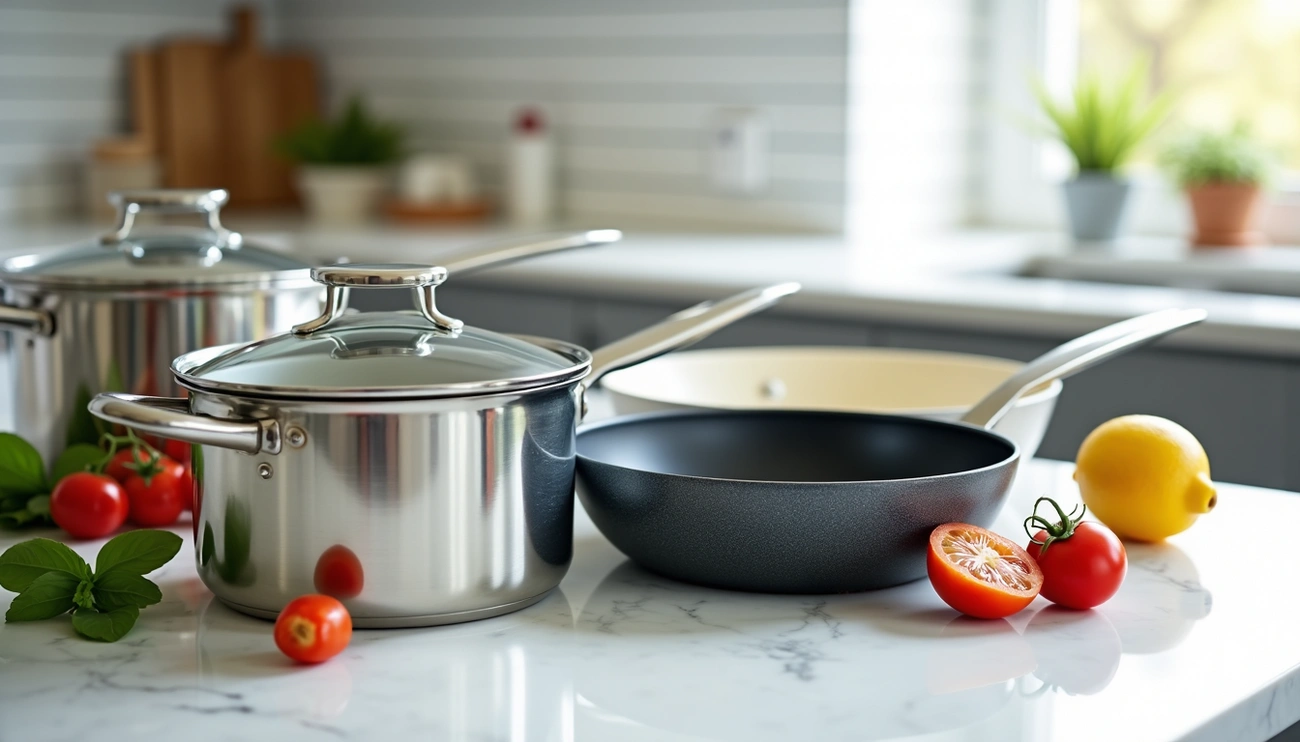
Lagostina cookware is safe because it uses PFOA-free, cadmium-free, and lead-free materials. Lagostina builds cookware with stainless steel, ceramic, or mineral-reinforced non-stick coatings that resist wear. The brand offers Italian-made premium lines and induction-compatible options that maintain safety and durability across different price ranges.
What is Lagostina Cookware and What Materials Are Used
Lagostina started as a family business in 1901 in Omegna, Italy, initially focusing on stainless steel flatware. The company made culinary history when it launched ‘Casa Mia’ in 1934, the first cookware collection made of stainless steel. Understanding the materials used in each product line helps answer whether is lagostina cookware safe for your kitchen.
Stainless Steel Cookware Line
The stainless steel collection uses premium 18/10 stainless steel, which refers to 18 parts chrome and 10 parts nickel. This composition provides corrosion resistance and durability while maintaining a non-reactive cooking surface.
Most pieces feature tri-ply or multi-layer construction, combining an 18/10 stainless interior with an aluminum core for heat spreading, then a magnetic stainless exterior for induction compatibility.
Some lines incorporate clad construction where bonded metal layers extend from base to rim rather than just the bottom. The Resist-Clad collection specifically uses 6-layer Lago-Mesh technology, while certain premium lines feature copper clad construction for precise temperature control.
Blue Carbon Steel Collection
Lagostina’s Blue Carbon Steel functions as a hybrid of cast iron, stainless steel, and stick-resistant cookware. This material has been a staple in European kitchens for centuries and requires initial seasoning to create a stick-resistant coating.
The seasoning builds up through accumulated layers of oil transformed by heat into a solid polymer surface. Blue carbon steel is chemical-free without PFOA and PFAS, heats evenly, and remains oven safe up to 350°F while being notably lightweight compared to traditional cast iron.
Non-Stick Ceramic Cookware
The ceramic collections, including the Eleganza line, feature a 2-coat advanced ceramic non-stick interior that’s both PFOA and PTFE free. The ceramic coating is 20 times harder than standard non-stick surfaces, allowing the cookware to withstand higher temperatures.
These pieces use a thick aluminum body for swift heating and even heat distribution, paired with a stainless steel base for induction compatibility. The ceramic surface resists stains and facilitates food release with minimal oil.
Manufacturing Origins and Quality Changes
While Lagostina maintains its Italian heritage, the company is no longer Italian-owned. Groupe SEB, a French company, acquired the brand in 2005. Manufacturing origin varies by line and batch.
Some premium collections are stamped Made in Italy, while other products are manufactured in China. This inconsistency has raised concerns in lagostina cookware reviews, particularly since the price difference between Italian-made and Chinese-made products remains minimal.
Is Lagostina Cookware Safe: Material Safety Breakdown
Each material in Lagostina’s lineup presents distinct safety considerations based on composition and coating technology.
Is Lagostina Stainless Steel Cookware Safe
Lagostina’s 18/10 stainless steel cookware is generally safe, but nickel and chromium can leach into food during cooking. Research shows that after six hours of cooking acidic foods like tomato sauce, nickel concentrations increased up to 26-fold and chromium increased 7-fold.
Longer cooking durations resulted in nickel concentrations increasing 34-fold and chromium approximately 35-fold from sauces cooked without stainless steel. New cookware leaches the most metal, though leaching decreases with sequential cooking cycles and stabilizes after the sixth cycle.
A single serving of tomato sauce cooked in new stainless steel can contain 483 μg of nickel, nearly half the tolerable upper intake level for a day. For perspective, a dose of only 67 μg of nickel was associated with cutaneous reactions in 40 percent of nickel-sensitive participants.
Is Lagostina Non Stick Cookware Safe
The inner coatings contain multiple layers of PTFE (polytetrafluoroethylene), an inert plastic material that causes the slippery component. Lagostina guarantees the absence of PFOA, cadmium and lead in all non-stick coatings.
PTFE has no chemical reactions with food, water or detergents, and if ingested is totally harmless as particles are not toxic and are expelled like normal fibers. The non-stick coating is used in medicine to coat pace makers and artery replacement prostheses.
However, excessively overheating any cookware produces smoke, though the smoke from non-stick does not pose risk to human health except for birds with fragile respiratory systems. Scratched pans remain non-dangerous, though replacement is recommended as detachment exposes food to underlying metal.
Is Lagostina Ceramic Cookware Safe
Lagostina’s ceramic cookware features a coating that guarantees no PFOA, no cadmium, and no lead. The mineral coating is reinforced with mineral particles for extra scratch resistance. However, ceramic-coated cookware uses a sol-gel process rather than true ceramic, firing at temperatures between 400°F to 800°F, well below traditional ceramics which fire above 2,000°F.
Independent testing detected high levels of titanium in ceramic-coated pans, pointing to use of titanium dioxide nanoparticles. A 2016 study identified titanium dioxide in ceramic pans and showed how it can migrate into food. The exact composition remains proprietary, creating uncertainty about other substances used.
Blue Carbon Steel Safety Considerations
Blue carbon steel contains just 99% iron and 1% carbon, making it one of the safest cooking materials. The material is completely free of PFAS, PFOA, and PTFE. Seasoning creates a natural polymer layer through oil heated beyond its smoke point, where fatty acids chemically bond with iron atoms to form a stable surface.
This polymerized layer stays stable even during high-temperature searing, unlike synthetic coatings that can break down. The seasoning is not a coating that peels off but a chemical bond that becomes part of the pan itself.
Common Safety Concerns from Lagostina Cookware Reviews
Real-world user experiences reveal practical safety issues beyond material composition. Understanding these concerns helps you use lagostina cookware safely.
Handle Heat Issues and Burn Risks
Stainless steel handles conduct heat slowly, but side handles get hot faster than long handles since they sit close to the pan’s body. Users report severe heating problems with certain collections. One reviewer noted the entire pot and handle get extremely hot when heating liquids, causing splattering with boiling content.
The Provence 10-piece set particularly drew complaints about handles getting dangerously hot, with multiple users burning themselves. For oven use, all handles definitely get hot. Using oven gloves when handling hot handles is recommended to avoid burns.
Chemical Leaching Concerns
The FDA issued warnings in August 2025 about imported cookware leaching significant levels of lead. While Lagostina wasn’t specifically named, the warning highlights broader cookware concerns. Lead is toxic to humans at any exposure level, with no known safe threshold. Low levels cause learning troubles and behavioral changes in children, while higher exposure triggers fatigue, headache, stomach pain, and vomiting.
Coating Degradation Problems
Non-stick pans typically last one to two years before coating wears off. About 60-70% of initial damage comes from chemical hydrolysis rather than scratches, as heat plus water breaks down polymer bonds. Users report lids filling with water between glass and metal, with water oozing into food during cooking. Glass lids have also shattered during use.
Is Lagostina Cookware Dishwasher Safe
Most lagostina cookware is dishwasher safe, though hand washing is recommended for pieces with copper finish, ceramic exteriors, or interiors. Dishwasher detergent may dull outer coating over time without affecting non-stick properties. Aluminum components suffer particularly in dishwashers, with modern detergents being highly corrosive to aluminum.
How to Use Lagostina Cookware Safely
Proper usage extends cookware lifespan and minimizes safety risks associated with improper handling.
Proper Seasoning and Preheating Techniques
Blue carbon steel requires initial seasoning before first use. Wash in hot soapy water, dry thoroughly, then grease the surface with cooking oil and wipe with kitchen paper. For stainless steel, seasoning is optional but creates temporary stick resistance.
Heat a clean, dry pan over medium heat for 2-3 minutes, add high smoke point oil like grapeseed or avocado to coat the surface, heat until light smoke appears, then remove from heat and cool completely. Test preheating readiness by dropping water droplets on the pan. If they bead up and roll around, the temperature is correct.
Safe Temperature Guidelines
Use medium to moderate heat for most cooking to avoid damaging pans and food. Never overheat empty pots or let flames extend up the sides. Heat fat or oil only until shimmering, never until smoking or turning black. Milk requires low to medium heat until bubbles form along edges.
Cleaning and Maintenance for Safety
Wash in hot water with liquid detergent and a sponge after every use. Never use abrasive sponges, steel wool, or harsh powders. For burnt food, soak in warm water with detergent for about an hour before washing. Never put cold water in very hot pots as sudden temperature changes cause warping. Hand washing is recommended over dishwashers as tablet detergents are corrosive to aluminum parts.
When to Replace Your Cookware
Replace cookware when pans warp and rock on flat surfaces, creating hot spots. If non-stick coating chips off or scratches extensively, bits mix into food. When stainless steel cores peek through and react with acidic foods, causing discoloration, replacement is necessary. Enamel flaking along cooking surfaces requires retiring the pan.
Conclusion
Lagostina cookware safety depends largely on which material you choose and how you use it. Blue carbon steel and stainless steel offer the safest options when handled properly, while non-stick and ceramic lines carry more concerns about coating degradation and chemical composition.
All things considered, I recommend following the temperature guidelines and maintenance practices I’ve outlined. Most importantly, replace your cookware when you notice warping, coating damage, or exposed metal cores. Your cooking safety is worth the investment.