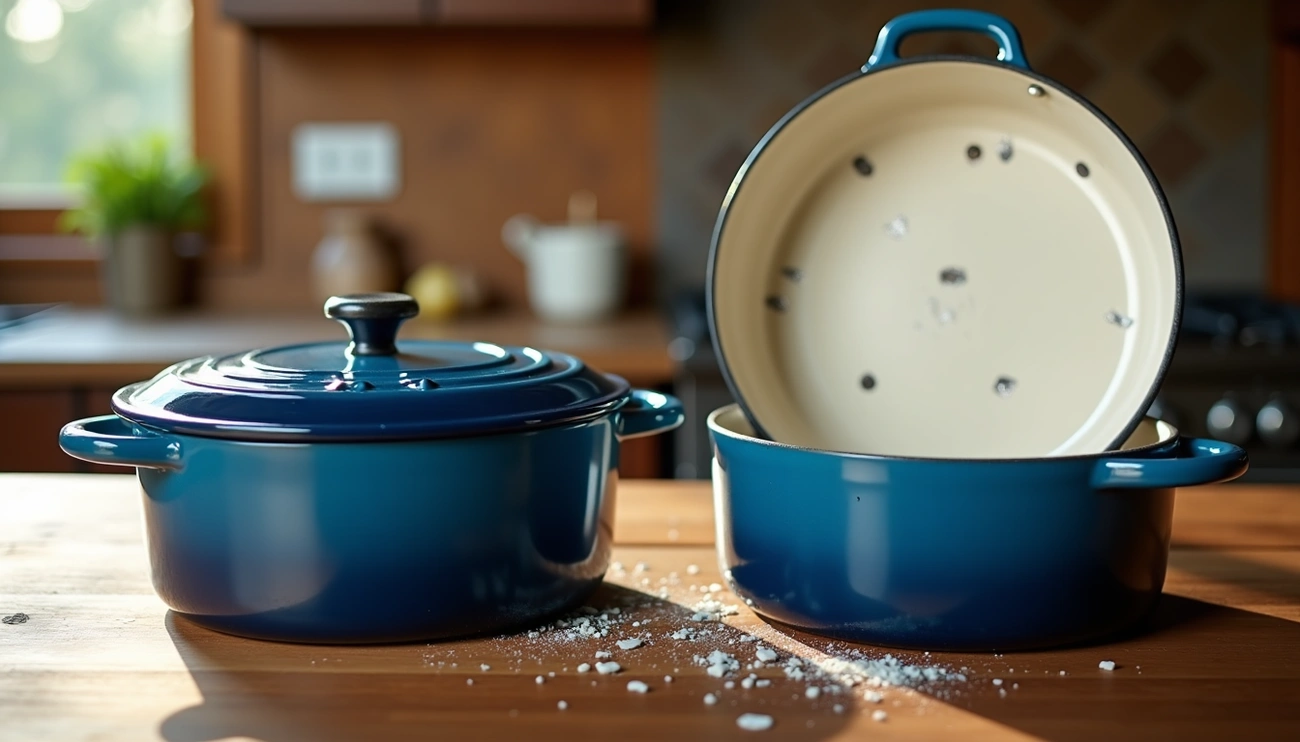
Le Creuset cookware is safe because it uses enameled cast iron free from PFOA and PTFE. The material resists chemical leaching under normal cooking up to 260°C (500°F). Enamel can chip with impact, and some older or colored glazes may contain trace heavy metals on the exterior.
Understanding Le Creuset Cookware Materials

What Le Creuset products are made of
Le Creuset manufactures cookware using several different materials, with enameled cast iron serving as their signature product since 1925. The company uses sand casting methods to create their cast-iron pieces. After the initial casting, workers hand-finish each item before applying at least two coats of enamel. The Signature range receives a minimum of three enamel coats for added durability.
All Le Creuset cast-iron cookware comes from their foundry in Fresnoy-le-Grand, France. Products made from other materials originate from different countries. Stainless steel items are produced in Portugal, while kettles and ceramics come from Thailand. China manufactures accessories and silicone products, and clay pots are made in Eswatini.
Beyond enameled cast iron, Le Creuset expanded their range to include tri-ply stainless steel cookware with an aluminum core sandwiched between stainless steel layers. Their non-stick collections feature anodized heavy-gage aluminum cores. The Toughened Non-stick PRO line uses a triple-reinforced coating, while the Essential Non-stick Ceramic collection provides a ceramic surface.
The difference between enameled cast iron and other materials
Enamel consists of glass melted under intense heat to create a protective layer atop cast iron. This coating renders the surface nonreactive, preventing it from breaking down or leaching chemicals when exposed to acidic ingredients at typical cooking temperatures. The enamel eliminates the need for seasoning and protects against rust and corrosion.
In contrast, bare cast iron requires regular seasoning to maintain its cooking surface and prevent rust. Acidic ingredients like tomatoes or wine can strip the seasoning from traditional cast iron pans. Enameled cast iron handles these acidic foods without concern.
Stainless steel cookware contains 18% chromium, 8% nickel, and 70 to 73% iron. Organic acids attack steel at cooking temperatures, causing iron, chromium, and nickel to discharge into food. Aluminum cookware reacts with acidic food, causing metal to leach unless the cookware undergoes anodization. Copper cookware requires coating with nickel, silver, tin, or stainless steel to prevent food from contacting copper directly.
Why material composition matters for safety
The human body requires certain elements like iron, zinc, copper, manganese, and chromium for physiological functions. However, these metals cause serious cellular toxicity when consumed beyond recommended levels. Elements including aluminum, cadmium, nickel, lead, and arsenic provide no physiological benefits. These metals create serious health consequences when entering the body through food intake.
Metal leakage during cooking can lead to cancer, cardiovascular disorders, gastrointestinal problems, and severe respiratory issues. Consequently, understanding what your cookware contains becomes crucial for long-term health. The accumulation of toxins over time raises concern, even when individual exposure levels seem low.
Enamel can chip when exposed to extremely high heat or aggressive scraping. Bits of enamel can enter food and expose the unseasoned metal underneath, which rusts when contacting air and moisture. This explains why knowing whether your cookware is truly non-toxic matters beyond marketing claims.
Does Le Creuset Have Lead and Cadmium?

XRF testing results across different colors
Independent testers using XRF analyzers have found lead, cadmium, and antimony across various Le Creuset products. XRF technology measures total metal content in materials, revealing what exists in the enamel coating itself. Multiple individuals conducted these tests over several years, examining both vintage and newer pieces.
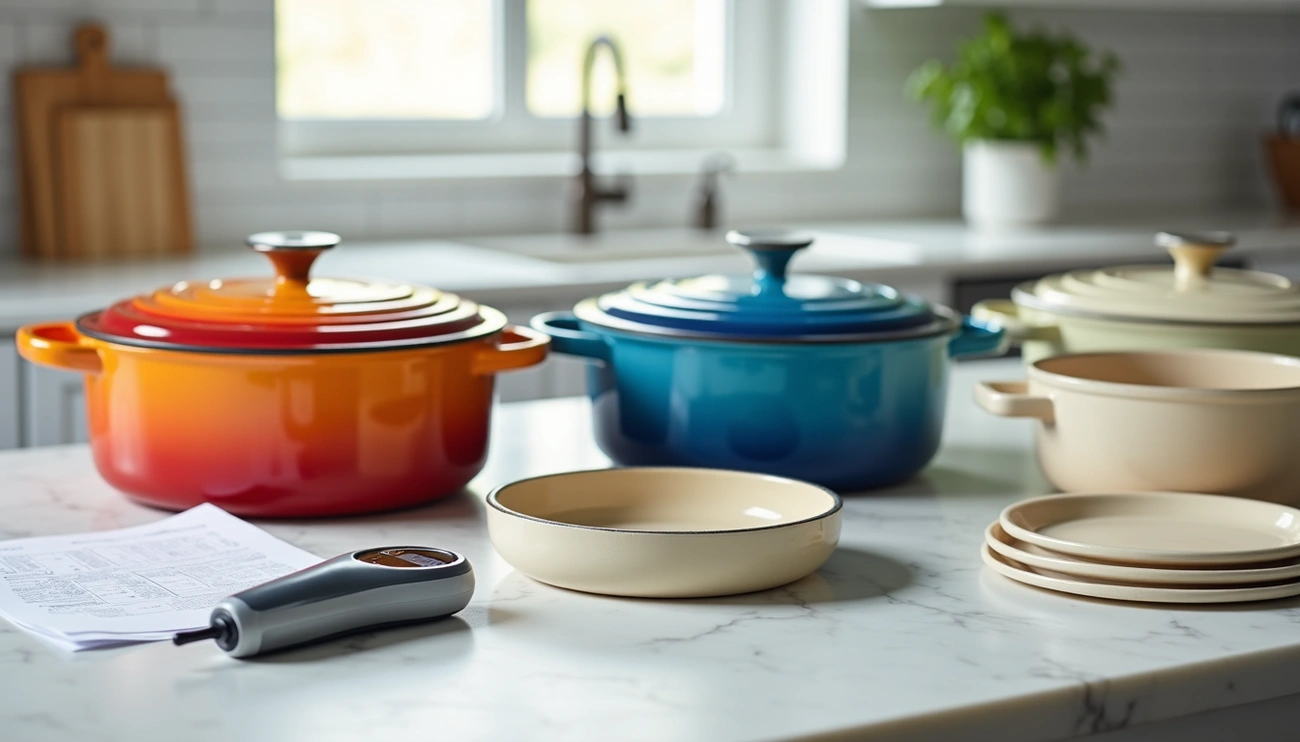
Red Le Creuset cookware has shown particularly high cadmium readings. One red roasting dish tested at 12,800 ppm cadmium on the exterior. Another red casserole measured 11,900 ppm cadmium in the exterior coating. Yellow pieces from around 2013 tested high in cadmium and antimony, with one yellow oval casserole containing 17,700 ppm cadmium. Orange and yellow colors similarly rank among the highest for heavy metal content.
Blue Le Creuset pieces tested considerably better. One blue item came back lead and cadmium-free on the interior and lead-free on the exterior, showing only low levels of cadmium outside. Another blue piece tested completely free of heavy metals. White or cream interiors generally fall within safe ranges for newer pieces, though older white or cream items can test positive for very high lead levels.
Which colors have tested positive for heavy metals
Tests revealed that bright exterior colors contain the highest concentrations. Red, yellow, and orange consistently show elevated cadmium readings. Some green varieties have tested positive for antimony compounds on interior surfaces. The age of your cookware matters. Pieces older than five years show higher likelihood of testing positive for lead and cadmium compared to current production.
Manufacturing location plays a role. China-made ceramic pieces tested poorly, showing lead and cadmium at high levels on both interior and exterior surfaces. French-made cast iron tested problematic for certain colors on the exterior while performing better in other shades.
Lead and cadmium in exterior vs interior surfaces
Colorful exterior coatings typically contain higher heavy metal levels than interior surfaces. Exteriors use cadmium-based pigments to achieve vibrant hues. The white interior of a yellow pan still contained antimony despite lower exterior cadmium. Another yellow pan tested with some lead on the inside surface.
Newer products tend to show trace levels of lead, cadmium, and antimony in food-contact interiors, with exteriors still registering high levels. A surprising number of varieties, including some whites, have antimony compounds in the interior coating. The interior enamel typically tests lead-free and cadmium-free per independent testing, though exterior colors contain traces of these metals.
Colors that are considered safer (Dune, Palm, Blue, White)
Le Creuset stated to customers that Dune and Palm colors contain no lead or cadmium on the exterior. Testing of these colors with XRF technology found only trace cadmium amounts on the exterior and no lead or cadmium on the interior. However, one tester noted finding trace levels of cadmium on the outside of both Dune and Palm during independent verification.
Blue shades performed well during testing. Samples were either non-detect for lead or registered very low levels under 20 ppm. Newer gray and beige colors tested fairly well according to some testers. White interiors generally stay within safe ranges depending on age, though cross-contamination in the factory can introduce low levels.
Does Le Creuset Have PFAS? Non-Stick Coating Safety

Le Creuset’s toughened non-stick range
Le Creuset sells a toughened non-stick range that has sparked debate about coating safety. The company states their products are PTFE and PFOA free, made using proprietary technology. Their marketing emphasizes a coating that’s four times tougher than standard non-stick surfaces, reducing the risk of peeling. Despite these claims, the reality around PFAS content tells a different story.
PTFE, FEP, and PFA in their non-stick products
Le Creuset’s official California chemical disclosures confirm their non-stick coating contains chemicals from the PFAS family, specifically PTFE, FEP, and PFA. PTFE (polytetrafluoroethylene) is part of the PFAS family of forever chemicals. FEP stands for perfluorinated ethylene propylene, and PFA refers to perfluoroalkoxy alkanes. The TNS Pro line contains PFAS for the non-stick surface, as stated on their website.
California’s AB 1200 law and Colorado’s PFAS Consumer Protection Act require cookware manufacturers to disclose presence of specific chemicals in handles and food-contact surfaces. These disclosure laws function as “right to know” regulations for any amount of listed chemicals. In light of growing consumer awareness about forever chemicals, Le Creuset introduced a PFAS-free pan range alongside their traditional non-stick products.
Temperature concerns and toxic fume release
PTFE-based coatings remain stable at normal cooking temperatures but begin degrading above certain thresholds. PTFE, FEP, and PFA coatings start breaking down and releasing toxic fumes above 200°C. FEP begins converting to gas at temperatures within typical searing ranges of 204-232°C. At 260°C and higher, these coatings potentially cause polymer fume fever if inhaled. Symptoms in humans generally don’t begin until Teflon heats to 350°C.
Le Creuset advises sticking to low and medium heats with their non-stick cookware. An empty pan reaches problematic temperatures within two to five minutes on high heat. When intact and used correctly, these coatings aren’t considered major ingestion risks, even if scratched, since they’re considered inert. The main concern remains thermal degradation from overheating rather than ingestion of flaked coating. However, scratched coatings do create microplastics.
PFAS-free ceramic coating options
Le Creuset’s Essential Non-stick Ceramic features an advanced ceramic coating made without PFAS. This ceramic range uses a heavy-gage aluminum core for heat distribution.
The ceramic coating contains no harmful chemicals released during normal use. Unlike their toughened non-stick range, ceramic non-stick uses reinforced coatings rather than PFAS-based formulations.
The ceramic coating covers the interior, exterior, and rim of every pot and pan. These ceramic pans are safe for dishwasher, metal utensils, and resistant to scratching, with oven-safety up to 550°F.
Understanding Leach Testing vs XRF Testing
What XRF testing measures
XRF technology uses X-ray fluorescence to determine elemental composition in materials. The analyzer excites a sample with primary X-rays, causing each element to produce characteristic fluorescent X-rays unique to that element. This non-destructive technique identifies what metals exist in cookware without damaging the piece.
XRF testing reveals the total metal content present in enamel coatings or substrates. However, it doesn’t indicate whether those metals will leach into food. A dish cannot present any lead hazard if it contains no lead, but if it tests positive for lead using XRF, it has the potential to cause issues and warrants further study.
How leach testing works
Leach testing measures how much metal actually transfers from cookware to food under simulated cooking conditions. Testers fill cookware to 80% capacity with a 4% acetic acid solution, then bring it to a simmer. Samples are collected after 15 minutes, 2 hours of simmering, and again after 24 hours at room temperature. Labs analyze these samples to determine exact metal concentrations that migrated into the solution.
In contrast, XRF testing is far less expensive and doesn’t test for what may or may not be leaching. Leach testing reflects real-life hazard and provides accurate, sensitive results.
FDA, California Prop 65, and EU safety standards
The FDA monitors leachable lead levels in cookware and collaborates with partners to implement strategies for lowering environmental contaminants in food. California’s Proposition 65 sets limits for lead and cadmium that are often much lower than federal FDA standards. EU regulations under LFGB are considered the gold standard, including stricter limits on extractable components and sensory testing.
Why products can contain metals but still pass leach tests
Metals embedded inside enamel substrates may not migrate to food surfaces. XRF identifies elements in cookware but tells you nothing about potential exposure to those elements. Metals inside materials often remain unable to leach out during normal use.
Does scratching or acidic food increase leaching?
Scratched and worn cookware behaves differently than new items. A dish used for years, run through dishwashers, and exposed to acidic foods is no longer the same as when first leach tested at manufacture. Acidic foods cause more metals to leach during cooking. Problems arise when crockery becomes scratched and worn, as acids can free lead from exposed glaze surfaces.
Safer Cookware Alternatives to Le Creuset

IKEA VARDAGEN enameled cast iron
IKEA’s VARDAGEN offers enameled cast iron at a fraction of Le Creuset prices. The line includes pots with matte black enamel interiors that don’t require oiling. These pieces work on all cooktops, including induction, and transition from stovetop to oven. IKEA backs their enameled cast iron with a 15-year limited warranty. Concerns exist about lead contamination even when manufacturers don’t intentionally add it.
Glass cookware options (Visions, Leaves and Trees)
Glass cookware provides a completely non-reactive surface. Visions and Leaves and Trees manufacture tempered glass pots and pans. Tempered glass handles sudden temperature changes without breaking and won’t leach chemicals into food. The transparent material lets you monitor cooking progress easily.
Cast iron alternatives (Lodge, Finex)
Lodge delivers excellent value, costing roughly one-eighth the price of boutique brands while providing 70-80% of the performance. Finex uses precision engineering with machined surfaces that season faster. Lodge requires more seasoning cycles but develops deeply bonded patinas for high-heat searing. Both brands use American iron.
Stainless steel considerations
Stainless steel resists corrosion and doesn’t react with acidic foods. Look for 18/8 or 18/10 grades indicating chromium and nickel percentages. Nickel and chromium may leach minimally when cooking acidic foods for extended periods, particularly with new cookware. Metal leaching stabilizes after the sixth cooking cycle.
Ceramic non-stick pans (GreenPan)
GreenPan’s Thermolon coating contains no PFAS, PTFE, lead, or cadmium on food-contact surfaces. The company provides end-to-end quality control through owned factories. Independent labs confirm their coatings emit no toxic fumes even when heated to 850°F.
Titanium cookware
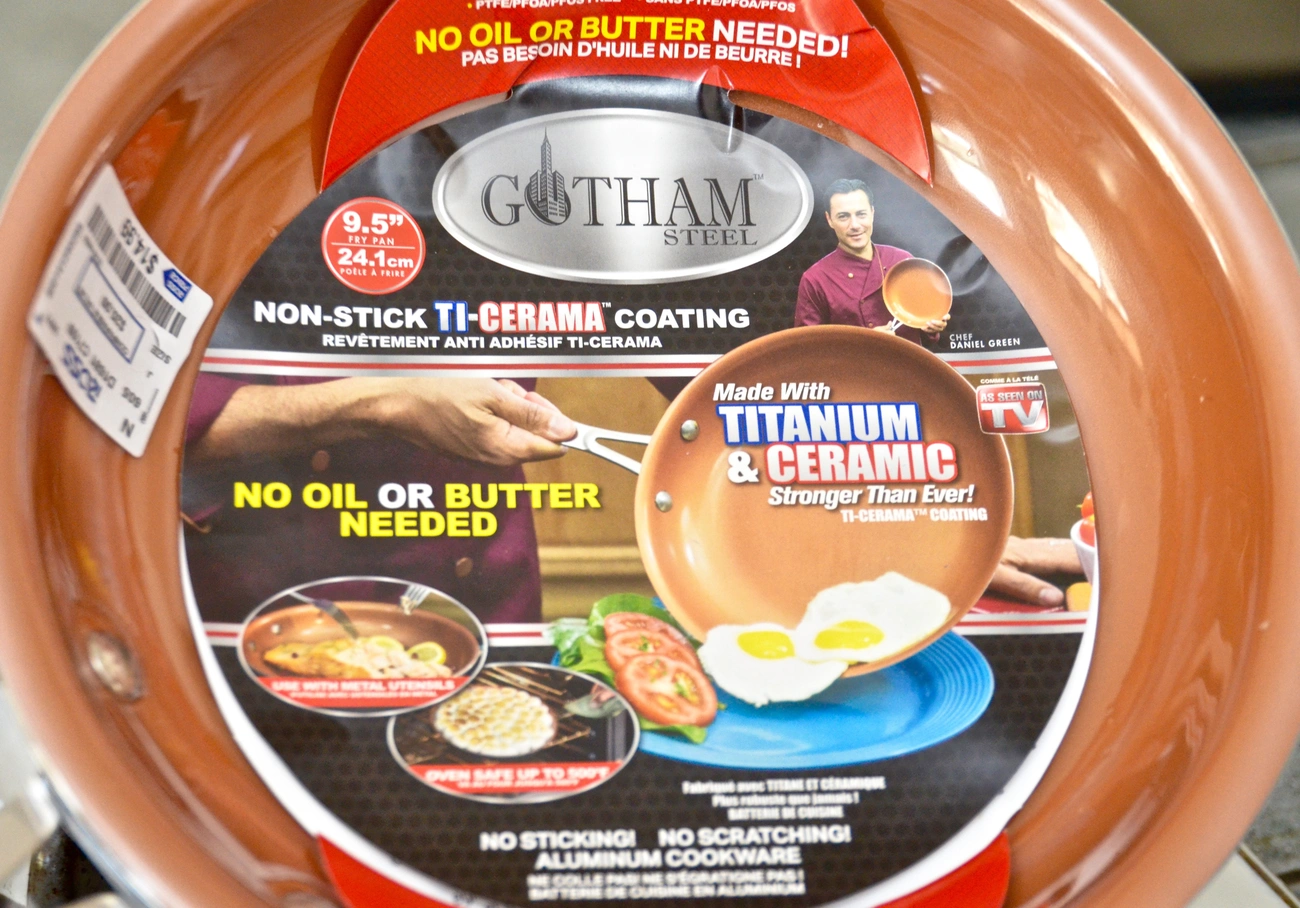
Pure titanium ranks among the safest cooking materials due to its biocompatibility. The metal forms a stable titanium dioxide layer that prevents leaching. Titanium conducts heat poorly, creating hot spots, and food tends to stick. Titanium-coated cookware usually features PTFE non-stick over aluminum cores, not pure titanium.
Conclusion
Le Creuset cookware does contain heavy metals in certain colors, particularly red, yellow, and orange varieties. XRF testing confirms cadmium and lead exist in exterior coatings, while some interiors show antimony traces. Their toughened non-stick range contains PFAS chemicals despite marketing claims. Above all, remember that testing reveals presence but doesn’t guarantee leaching under normal use.
Safer choices within the brand include Dune, Palm, and blue colors. For instance, these shades tested considerably lower for heavy metals. Alternatively, consider glass, well-seasoned cast iron, or ceramic options from brands committed to third-party testing. Your health matters more than brand prestige, so choose cookware that provides transparency about materials and safety testing.