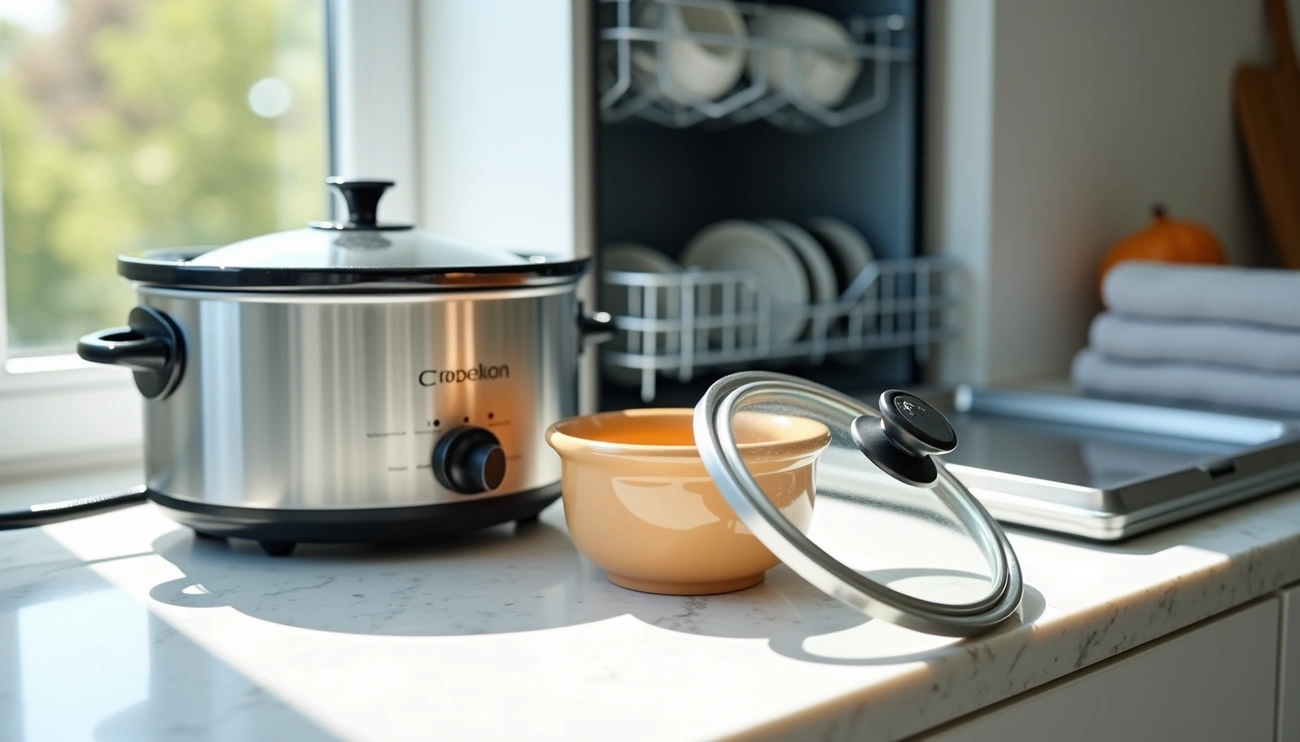
Yes, a Crock Pot can go in the dishwasher if it includes a removable stoneware insert and glass lid. Most modern slow cookers support dishwasher cleaning for these parts. Do not place the heating base in water or a dishwasher. Follow manufacturer instructions to prevent coating damage over 12–24 months.
Can You Put a Crock Pot in the Dishwasher?
Why the Entire Crock Pot Should Never Go in the Dishwasher
Placing your entire slow cooker in the dishwasher creates a dangerous situation that goes beyond simple appliance damage. The electrical base contains components that will fail when exposed to water. Water seeps into the heating element, control panel, and internal wiring, rendering your crock pot useless. The housing, plug, and cord should never be immersed in water or placed in the dishwasher for cleaning.
I’ve seen people assume that if individual parts are dishwasher safe, the whole unit must be too. This assumption is wrong and potentially hazardous. The electrical and electronic parts will sustain damage from water exposure. For this reason, you must separate the removable components from the heating base before any cleaning takes place.
Safety Risks of Dishwashing Electrical Components
The dangers extend beyond a broken appliance. Submerging electrical components in your dishwasher creates a serious shock hazard. Water damage to the electrical wirings in the hot plate can cause circuit shock. This puts you and your household at risk when you plug in or use the appliance afterward.
Water trapped inside electrical housings doesn’t dry quickly or completely. Moisture lingers in places you can’t see, corroding connections and creating short circuits. In other words, what seems like a simple cleaning shortcut can result in electrical fires or personal injury.
What the Manufacturer’s Manual Says
Crock-Pot’s official care instructions are clear and specific. Turn your unit off, unplug it from the electrical outlet, and allow it to cool before cleaning. Only dishwasher safe parts can be washed in the dishwasher or with hot, soapy water.
Manufacturers design their products with safety parameters that you shouldn’t ignore. The manual exists to protect both you and your investment. Reading through these guidelines before attempting any cleaning prevents accidents and extends your appliance’s lifespan.
Which Parts of a Crock Pot Are Dishwasher Safe
Can Crock Pot Insert Go in Dishwasher
Most removable stoneware inserts are designed to handle dishwasher cleaning without issue. Stoneware and lids are dishwasher safe according to manufacturer guidelines. The ceramic or stoneware material withstands the heat and water pressure, making cleanup straightforward.
However, placement matters. Position your insert on the top rack where it stays farther from the heating element and experiences gentler spray pressure. This protects the glaze from potential damage over time. Avoid placing a hot insert directly into the dishwasher, as thermal shock from sudden temperature changes can cause cracking. Let it cool completely first.
Can Crock Pot Lid Go in Dishwasher
Glass lids join the insert as dishwasher-safe components. Both the ceramic vessel and the glass lid can be washed in the dishwasher, though care should be taken to ensure they will not be chipped or cracked while in the dishwasher. Secure the lid properly so it doesn’t shift or clatter against other dishes during the wash cycle.
If your lid has a rubber gasket or venting valve, remove the gasket if possible and wash it by hand. This extends the seal’s lifespan and prevents deterioration from repeated high-heat exposure.
Accessories and Attachments
Some slow cookers come with additional accessories like thermometers and stirrers. Check your user manual before placing these in the dishwasher. Hand washing is the preferred method for these components. The materials used in accessories vary by model, and not all can tolerate dishwasher conditions.
Parts That Must Never Go in the Dishwasher
The heating base, plug, and cord should never be immersed in water or placed in the dishwasher for cleaning. Water damages internal wiring and controls, creating both safety risks and costly repairs. Avoid getting water into vents, controls, or around the power cord. Clean the base with a damp cloth and mild soap only, ensuring the unit is unplugged and completely cooled first.
How to Clean Your Crock Pot Safely
Clean your slow cooker after each use to prevent buildup and maintain performance. Most cleaning situations require nothing more than basic supplies you already have.
Hand Washing the Heating Base
Never submerge the base in water since it contains electrical components. Unplug the unit and wait until it’s completely cool. Use a sponge dampened with soapy water to wipe the exterior, wringing out excess water to prevent liquids from seeping in and damaging electrical components. Follow with a clean damp cloth to remove soap residue.
Cleaning Dishwasher-Safe Parts Properly
If your insert is dishwasher safe, let it cool completely before loading to prevent thermal shock. Place it on the top rack for gentler treatment. Some inserts are dishwasher-safe, which is another option for cleaning.
Easy Cleaning Method with Soap and Water
Once cool, remove the insert and use a rubber spatula to scrape out loose food bits. Wash the insert and lid with warm water using a sponge and dish soap. Dry everything completely with a dish towel before reassembling.
Deep Cleaning with Vinegar and Baking Soda
For stubborn residue, keep the insert in the warming base and fill with water just past the food line. Add 1/2 cup of vinegar for 3-quart models or 1 cup for larger models. Follow with an equal amount of baking soda, adding it slowly to allow bubbles to settle. Put the lid on, plug it in, and heat on low for one hour. After cooling, pour out the mixture and wash with soap and water.
Removing Stubborn Stains and Odors
Make a paste of baking soda and water for persistent stains, applying it to affected areas on a completely cool insert. Scrub with a soft sponge, then rinse and dry. White chalky rings are calcium deposits from mineral-rich water. Pour equal parts vinegar and water into the pot, wipe with a clean sponge, rinse, and dry.
Dishwasher vs Hand Cleaning: Best Practices
Benefits of Hand Cleaning Your Crock Pot
Hand washing gives you better control over the cleaning process. Many people believe cleaning by hand produces superior results. You can target stubborn spots with precision and avoid the risk of your stoneware being jostled around inside the dishwasher. This method also lets you inspect for cracks or chips during each wash.
When Dishwashing Makes Sense
Dishwashers use significantly less water than hand washing, making them the more efficient choice for regular cleanings. Hot water consumption can account for up to 20% of your energy bill, and dishwashers use much less hot water than washing by hand. When your insert and lid are confirmed dishwasher safe, this option saves both time and resources.
Preventing Thermal Shock and Damage
Stoneware is vulnerable to temperature fluctuations. Allow your insert to cool completely before washing to prevent cracking. Thermal shock occurs when abrupt temperature changes cause uneven expansion and contraction, resulting in warping or cracking. Use room temperature or warm water if you need to clean urgently.
Tips for Extending Your Crock Pot’s Lifespan
Regular cleaning prevents buildup that shortens your appliance’s life. You can extend longevity by cleaning regularly, avoiding high heat settings, and using a liner. Handle the stoneware carefully since chips create weak spots that can crack further during cooking.
Conclusion
Overall, keeping your crock pot clean doesn’t have to be complicated once you know which parts are safe for the dishwasher. The insert and lid can go straight into the dishwasher, but the electrical base requires careful hand cleaning. Follow these simple guidelines, and you’ll protect your investment while making cleanup easier. Your slow cooker will reward you with years of reliable service when you treat it properly.